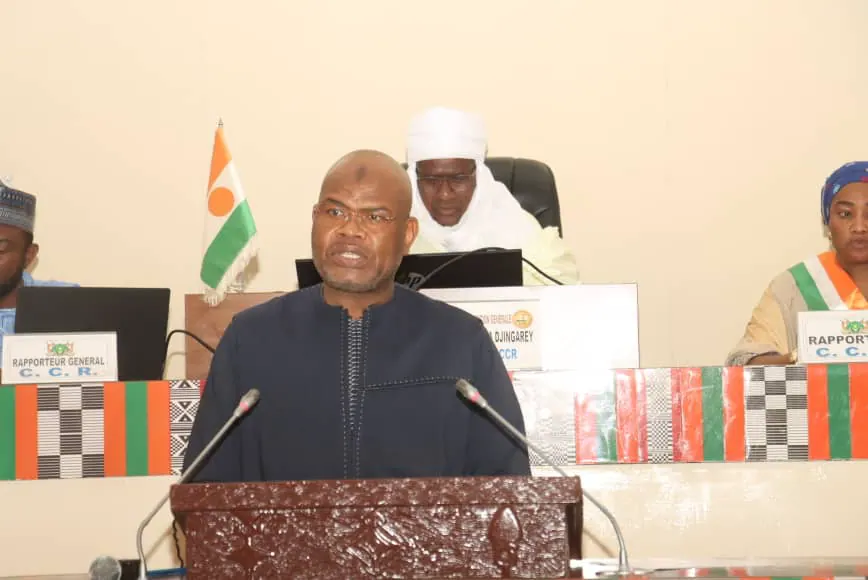
Niger's Minister of Petroleum, Amadou Tinni, presented a report to the Conseil Consultatif de la Refondation on October 5, 2026, highlighting the country's fuel supply challenges. The report revealed a substantial deficit in Super and Gasoil, with Super being the primary cause of tension in the national supply system. The deficit in Super has increased significantly over the years, from 47.25 million liters in 2024 to 159.74 million liters in 2025, and 196.62 million liters in the first eight months of 2026.
The Minister emphasized that the deficit in Super has already surpassed the total deficit recorded in 2025, indicating a growing need for imports to meet the country's demand. This increase in imports poses a challenge due to the higher cost of imported products compared to the domestic price set by SORAZ. As a result, the pressure on the treasury of the SONIDEP, the national oil company, is expected to rise. The situation calls for vigilance and strategic planning to address the fuel supply shortage.
In contrast to Super, the situation with Gasoil is different. In 2024, there was a negative balance of 24.39 million liters between SORAZ and SONIDEP. However, in 2025, the balance became positive, with a surplus of 9.44 million liters. Unfortunately, over the first eight months of 2026, a deficit of 52.60 million liters in Gasoil has emerged. This development indicates that Gasoil is now also a subject of concern, particularly given its importance for transportation, economic activity, agriculture, mining, and electricity production.
Minister Amadou Tinni stressed that the discrepancies between SORAZ deliveries and SONIDEP withdrawals should not be automatically interpreted as fraudulent or clandestine activities. Instead, these discrepancies serve as an alert signal that requires analysis in conjunction with production, stock levels, imports, sales by region, domestic consumption, and cross-border movements. Understanding the root causes of these discrepancies is essential to addressing the fuel supply challenges effectively.
Several factors contribute to the fuel supply shortages, including the insufficiency of national production, the resumption of economic activity, increased demand, and the potential smuggling of products to neighboring countries. The Minister emphasized the need to accurately determine the destination of fuel volumes to develop effective solutions. This involves closely monitoring the supply chain and identifying areas where interventions can be made to prevent shortages and ensure a stable fuel supply.
The growing reliance on imports to meet Niger's fuel demand raises concerns about the financial sustainability of the supply mechanism. When the actual cost of importing fuel exceeds the domestic price, it creates a financial burden on SONIDEP. Therefore, it is essential to distinguish between two critical issues: securing the physical supply of fuel and ensuring the financial sustainability of the supply mechanism. Addressing these challenges will require a comprehensive approach that balances the need for a stable fuel supply with the need for financial prudence.
The Nigerien government faces a pressing challenge in addressing the fuel supply shortages and ensuring the financial sustainability of the supply mechanism. The Minister's report highlights the need for a coordinated approach to address the root causes of the shortages and develop effective solutions. By understanding the complexities of the fuel supply chain and working to address the identified challenges, the government can mitigate the impact of fuel shortages and ensure a stable supply of fuel to meet the country's needs.
Key points
- Niger is experiencing significant fuel shortages, with a 196.62 million liters deficit in Super and 52.60 million liters in Gasoil over the first eight months of 2026.
- The growing reliance on imports to meet Niger's fuel demand raises concerns about the financial sustainability of the supply mechanism.
- Addressing the fuel supply challenges will require a comprehensive approach that balances the need for a stable fuel supply with the need for financial prudence.