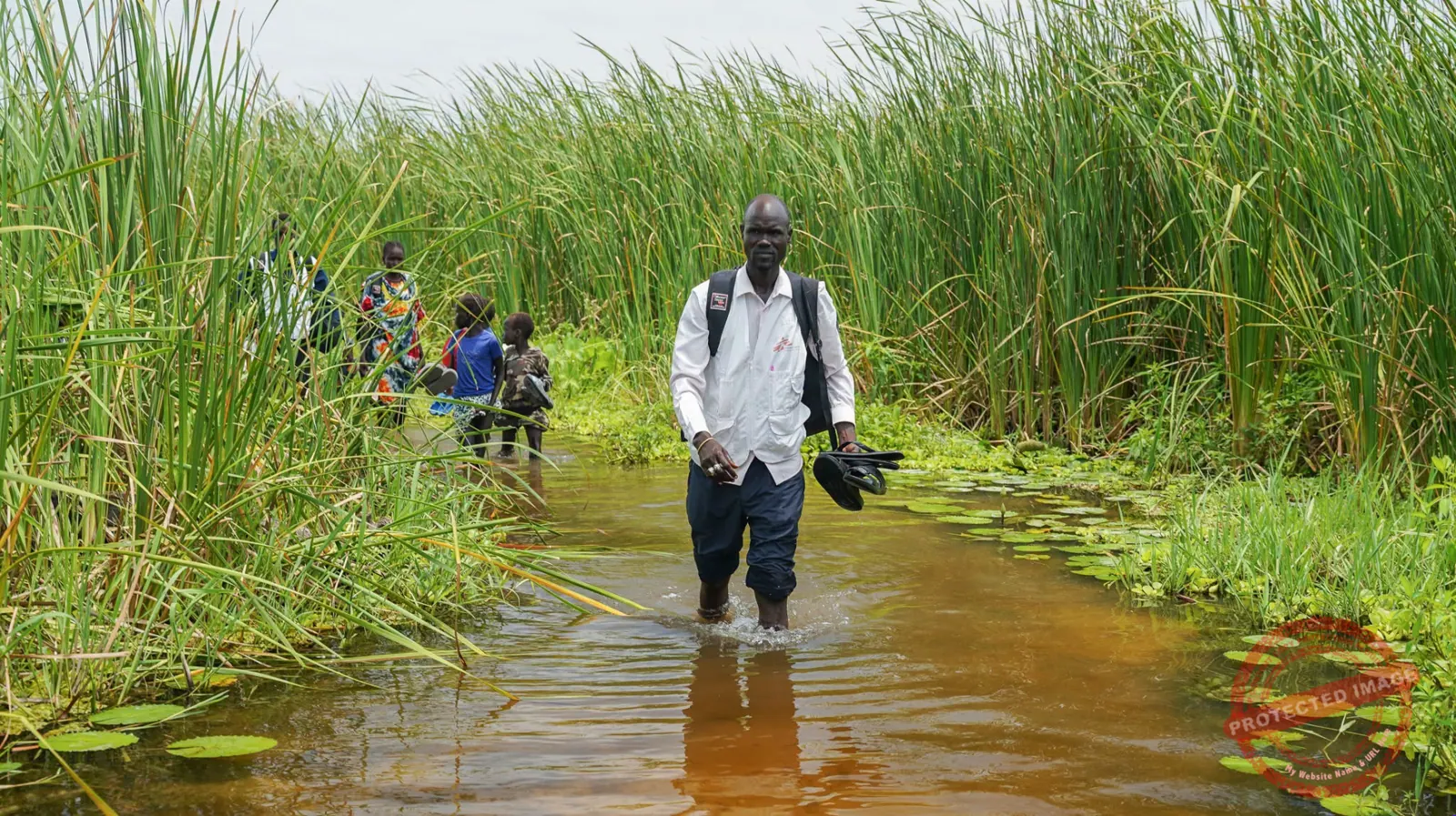
Communities in Fangak County, Jonglei State, are struggling with recurrent flooding, displacement, and insecurity, Médecins Sans Frontières (MSF) reported. Since 2019, flooding has destroyed homes, farmland, and livestock, while conflict has further displaced communities and disrupted access to healthcare. Many residents are forced to live on isolated islands and higher ground. The situation has made it difficult for residents to access health facilities, particularly during emergencies.
Residents in some parts of Fangak rely on canoes as their main means of transportation. Nyayiek Gai, a resident of Dhornor Boma, said the lack of transportation often delays access to medical care. "Our only means of transport is a canoe and getting a canoe is very difficult. We sometimes have to wait for days to get a canoe when someone is sick to take them to the health center." This highlights the challenges faced by communities in accessing healthcare services.
The insecurity in Fangak County has pushed many residents into remote areas where access to health services is limited. Dieu Top, MSF's Outreach Nursing Team Supervisor in Fangak, said, "The most important thing for people here is to find where they can feel safe. They find it safer living in areas that are very difficult to access. In doing so, they move away from healthcare services and miss essential services they should receive." This has resulted in many residents being cut off from essential healthcare services.
MSF's hospital in Old Fangak was destroyed during an aerial attack in May 2025, killing seven people and injuring 27 others, including patients and MSF staff. This incident further disrupted access to healthcare services in the area. The destruction of the hospital has had a significant impact on the community, leaving them without a vital healthcare facility.
In response to the challenges, MSF launched a Community Paramedicine Initiative in Fangak County in February 2026. The programme aims to bring essential healthcare services closer to isolated communities. It currently serves more than 25,000 people across Dhornor, Kuerbuay, Kuerdeng, and Payiat, providing outpatient consultations, maternal healthcare, treatment, and referrals.
The Community Paramedicine Initiative provides critical healthcare services to communities that would otherwise have limited access to them. MSF said the initiative is intended to reduce the need for residents to travel long distances by canoe to access basic healthcare. By bringing healthcare services closer to the communities, MSF hopes to improve health outcomes and reduce the risk of delayed medical care.
Flooding, conflict, and displacement have repeatedly pushed communities further away from health services, making community-based healthcare increasingly important in Fangak County. MSF's initiative is a step towards addressing the healthcare needs of these isolated communities. The organization continues to work towards providing essential healthcare services to those who need them most.
Key points
- MSF's Community Paramedicine Initiative serves over 25,000 people in Fangak County.
- Recurrent flooding and conflict have disrupted access to healthcare services in Fangak County.
- MSF's hospital in Old Fangak was destroyed in an aerial attack in May 2025.