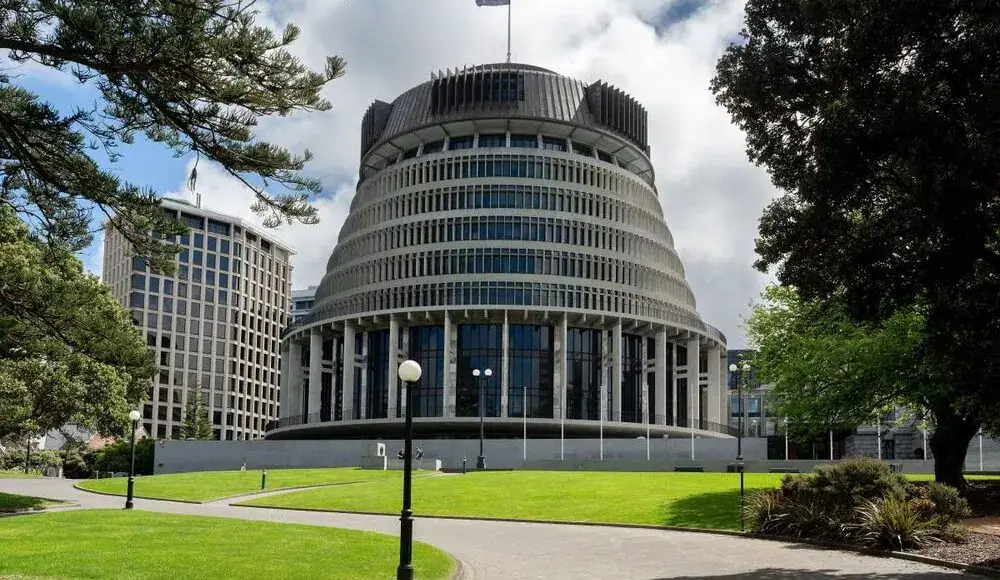
New Zealand is bracing for weeks of political wrangling after a knife-edge election that has left the outcome uncertain. With 100 percent of the preliminary count done, Prime Minister Christopher Luxon's National Party is projected to win 42 seats, while the opposition Labour Party, led by Chris Hipkins, is expected to secure 36 seats. The results have sparked a heated debate over who will form the next government.
According to the electoral commission, the Green Party is in third place with 16 seats, while the libertarian ACT and populist NZ First have 13 and 12 seats respectively. The minor parties, particularly the upstart centrist Opportunity Party, have drawn intense attention with their strong performance. The Opportunity Party is projected to win seven seats, potentially giving them a kingmaker role in the next government.
Prime Minister Luxon has declared that his right-wing coalition has a mandate to form the country's next government, despite the results being too close to call definitively. He attributed his party's performance to its handling of the country's economic difficulties, which have been exacerbated by the war in the Middle East and subsequent global fuel shock. Luxon said his party had done well given the challenging circumstances.
However, opposition leader Chris Hipkins has expressed skepticism over the outcome, joking that while the country had spoken, it may take some time to figure out exactly what it had said. Hipkins' left-wing grouping, which includes the Green Party and Te Pati Maori, has only a very narrow path to power. The final tally will include nearly 400,000 so-called "special votes," which could potentially give the Labour or Green parties an additional one or two seats.
Historically, special votes have leaned left, which could impact the final outcome. The country's mixed-member proportional representation system requires voters to tick two options - a general party list as well as an individual member to represent their electorate. Luxon will run a caretaker government until the final votes are announced on November 27.
Many New Zealanders are struggling to make ends meet, with the price of basic goods remaining elevated and unemployment at its highest in over a decade. Voters have cited the rising cost of living as a top concern, with some expressing hope that the next government can bring down costs and implement fair policies. Rahul Jain, a 33-year-old support worker, said he hoped the next government could address the issue.
As the country waits for the final results, Prime Minister Luxon has indicated a willingness to work with the Opportunity Party on issues they agree on. However, he emphasized that his coalition partners would be prioritized in forming the government. The uncertainty surrounding the election outcome has sparked concerns about the country's economic future and the ability of the next government to address pressing issues.
Key points
- The election results have sparked a heated debate over who will form the next government, with Prime Minister Christopher Luxon declaring his coalition has a mandate to form the country's next government.
- The country's minor parties, particularly the upstart centrist Opportunity Party, have drawn intense attention with their strong performance.
- Many New Zealanders are struggling to make ends meet, with the price of basic goods remaining elevated and unemployment at its highest in over a decade.
Reporting sources
- New Zealand set for weeks of political wrangling after knife-edge poll · African News Agency