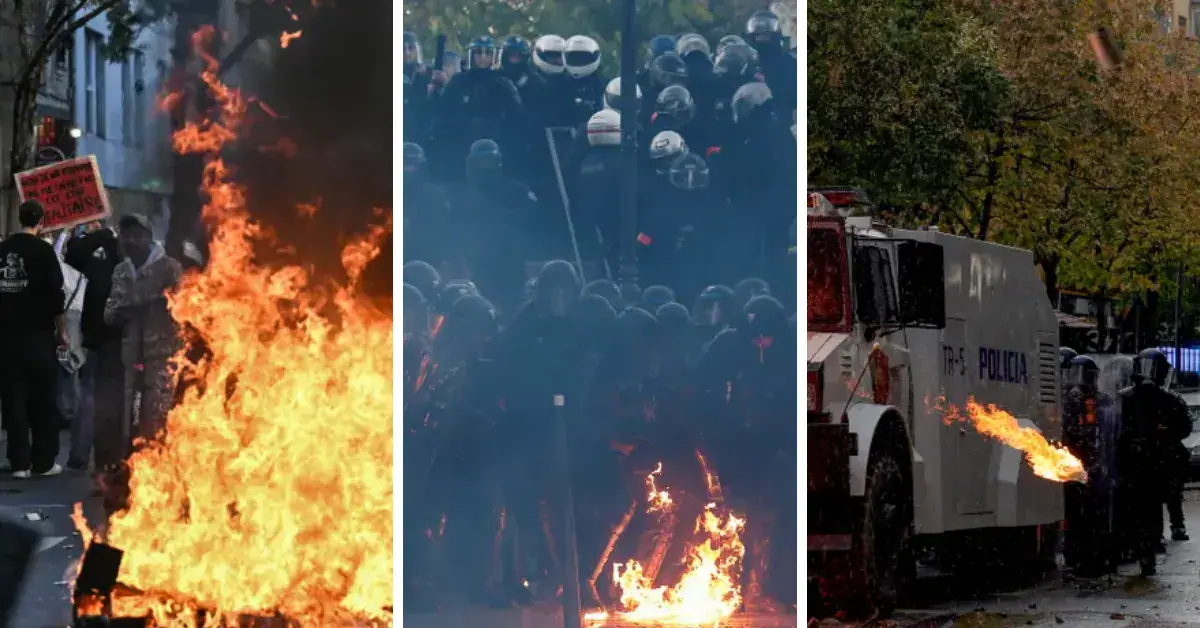
A new wave of protests has swept across several European countries, including France, Germany, and Italy, as thousands of people take to the streets to express their discontent with rising living costs, education, and government policies. In France, thousands of people protested in Paris and several other cities, including Lyon, Marseille, and Toulouse, amid a heavy police presence. The protests were marked by clashes between police and protesters in Lyon.
The French authorities deployed around 70,000 security personnel to maintain order, while 27 people were arrested since the start of the protests. The protesters demanded improvements in education, addressing the shortage of teachers and the deterioration of educational institutions, as well as reforms to the university admissions system. They also called for measures to tackle the high cost of living and protect civil liberties and the right to protest.
The protests also spread to Germany, where a youth initiative called "Gen Z regelt" organized demonstrations in several cities, including Berlin, to demand increased investment in education, housing, and climate protection, and to reject compulsory military service. The German authorities deployed 1,500 additional security personnel in the capital. In the Netherlands, the city of The Hague witnessed a significant police presence in anticipation of potential unrest.
In Spain, the police in Barcelona raised their alert level following calls for protests, after violent incidents occurred in the city last week, resulting in the arrest of around 130 people. In Italy, the police reinforced their presence on the streets after clashes broke out in the cities of Milan, Turin, and Bologna. The protests also spread to other European countries, including Belgium, Austria, Switzerland, and Portugal.
In Albania, the capital Tirana witnessed clashes between protesters and police during demonstrations calling for the resignation of Prime Minister Edi Rama. The protests, which began peacefully, turned violent as protesters threw stones at security forces and set fire to trash cans. The protests in Albania have been ongoing since May, initially sparked by opposition to a luxury hotel project in a nature reserve.
The Albanian authorities reported that 350 people have been injured since the start of the protests, including around 200 security personnel, and 269 minors have been arrested. The government also imposed fines of up to 5,500 euros on those involved in violent incidents. The protests in Albania have expanded to include demands for anti-corruption measures, improved healthcare, and job opportunities for young people.
The protests across Europe have highlighted the widespread discontent among citizens with the current economic and social situation. The protesters are demanding action from governments to address their concerns and improve their living standards. The authorities have responded with a significant police presence, but the protests have continued, with many calling for sustained dialogue and meaningful reforms.
Key points
- Several European countries witness widespread protests over rising living costs, education, and government policies
- French authorities deploy 70,000 security personnel to maintain order amid protests
- Protests also spread to other European countries, including Germany, Italy, and Albania