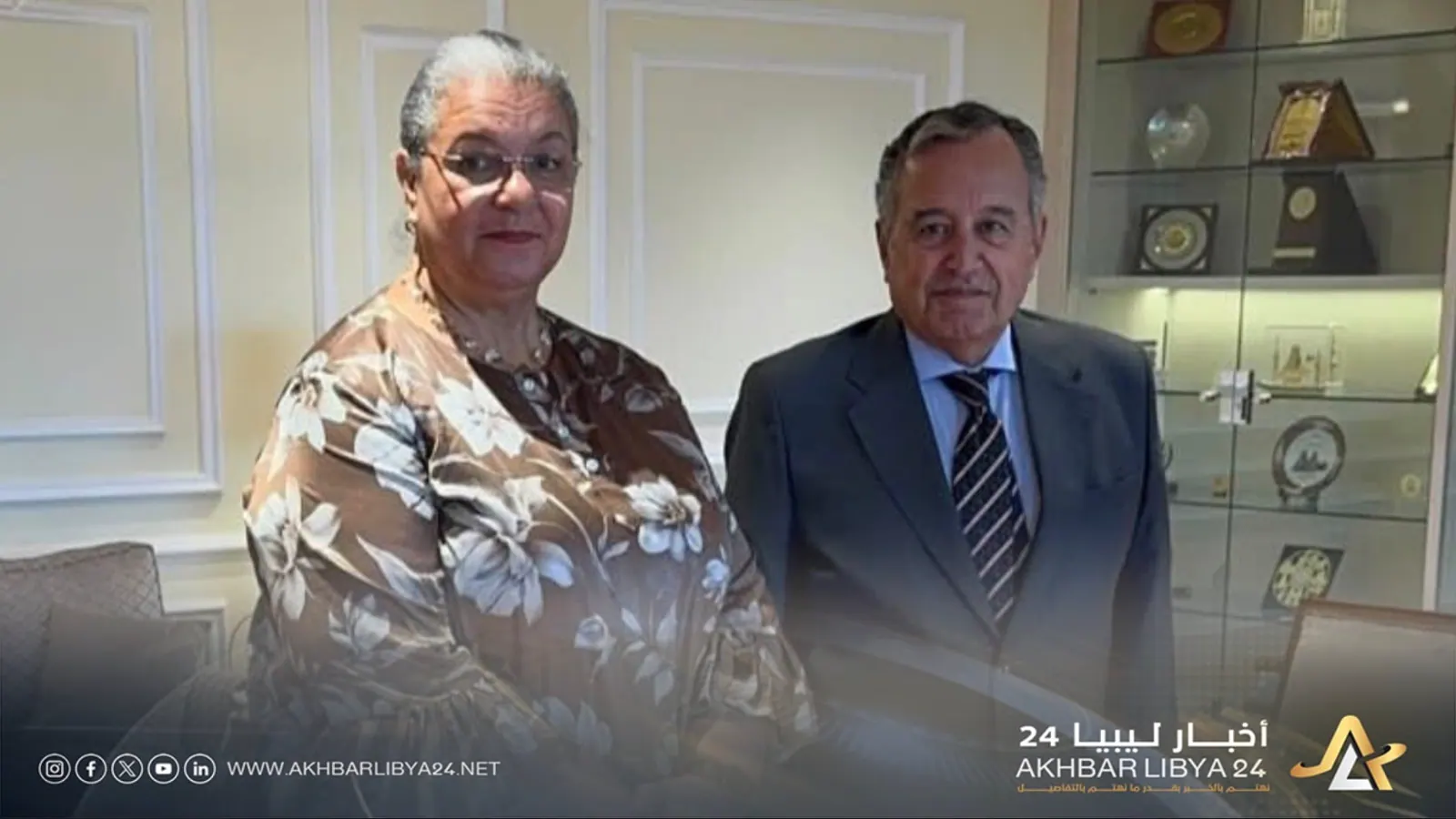
The Special Representative of the UN Secretary-General for Libya, Hana Tietie, met with Arab League Secretary-General Nabil Fahmy in Cairo on September 29, 2026. They discussed the latest political and security developments in Libya and ways to enhance coordination between the UN and the Arab League on the Libyan file. The meeting comes as efforts continue to push the political process towards a more regular phase. Tietie briefed Fahmy on the latest developments in Libya and the outcomes of the mini-meeting.
During the meeting, Tietie presented recommendations from the structured dialogue, emphasizing the importance of integrating its outcomes into collective political efforts to create conditions for elections in Libya within a 24-month timeframe. The focus on these recommendations is part of UN efforts to link dialogue outcomes to subsequent political steps. This allows for turning political discussions into practical paths for the next phase. Fahmy expressed support for UN efforts in Libya, stressing the importance of Libyan ownership in the political process.
The Libyan election file is a key aspect of the current political move, with a proposed two-year timeframe to prepare for elections. Achieving this goal requires continued work on the political track, enhancing consensus among Libyan parties, and utilizing dialogue outcomes within a broader approach involving Libyan parties and concerned organizations. This puts the political process before a set of interconnected requirements, starting from building on dialogue results and extending to providing a political and institutional environment for transitioning to elections.
Fahmy emphasized the need for coordination between international and regional organizations concerned with the Libyan issue, including the Arab League and the African Union. This aims to integrate efforts rather than diverge tracks and initiatives. The meeting is part of ongoing contacts between the UN and the Arab League regarding Libyan developments, with efforts to coordinate international and regional positions and support the political track.
The push for elections in Libya is a main axis of the current political move, with a proposed timeframe of two years to prepare for the polls. The UN and Arab League are working to support the political process and enhance consensus among Libyan parties. The Libyan parties' ability to reach consensus and the level of international and regional coordination are factors linked to implementing upcoming steps.
The Cairo meeting reflects continued UN-Arab momentum on Libya, with a greater focus on building on dialogue outcomes and linking them to subsequent political steps. The meeting discussed the importance of integrating regional and international efforts to support the political track and enhance chances of consensus on upcoming steps.
In conclusion, the UN and Arab League are working together to drive Libya towards elections and enhance political consensus. The two parties are coordinating their efforts to support the political process and ensure Libyan ownership. The outcome of the meeting will contribute to the ongoing efforts to resolve the Libyan crisis.
Key points
- The UN and Arab League are pushing for elections in Libya within a 24-month timeframe.
- Libyan ownership is a crucial aspect of the political process.
- Coordination between international and regional organizations is necessary to support the political track.