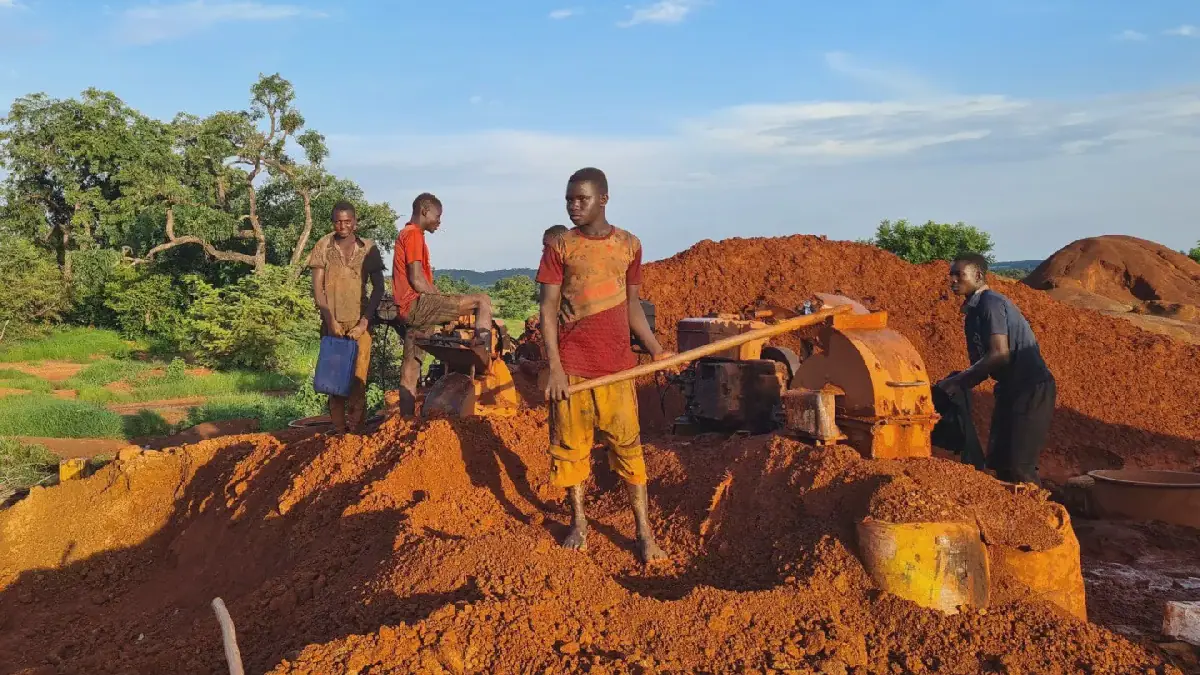
The Gold for Good Project, funded by the European Union, has released three studies on small-scale gold mining in Ghana's Savannah Region, specifically in West Gonja, Bole, and Sawla-Tuna-Kalba. The studies engaged 953 people in 30 communities and visited 94 mining sites. The findings indicate that while mining provides a crucial source of income for local communities, the current practices pose significant environmental and social risks. The study's results show that mining has become a vital means of survival for many residents in the region.
According to the studies, people in mining communities earn nearly six times more than those in non-mining communities. However, only 2.92% of miners have a licence, and about 74% are unaware of the mining rules and regulations. This lack of licensure and knowledge of regulations contributes to the environmental and social problems associated with small-scale gold mining in the region. The studies also found that traditional leaders play a significant role in regulating mining activities, but the state is largely absent.
The environmental impact of small-scale gold mining in the Savannah Region is alarming. The studies found that cadmium levels in all soil samples tested exceeded safe limits, while mercury levels were above safe limits in about 94% of samples. This pollution poses a significant risk to the health of local communities, particularly children who play on contaminated soil. The studies emphasize the need for urgent action to address these environmental concerns and ensure sustainable mining practices.
The studies also highlighted security concerns along the Black Volta border area, where there is poor coordination, weak enforcement, and conflicts. The lack of effective governance and regulation has created an environment conducive to illegal mining activities. Deputy Minister of Lands and Natural Resources, Hon. Alhaji Yusif Sulemana, noted that the study's findings provide critical data to inform policy decisions on small-scale gold mining.
The studies recommend that government, chiefs, and mining communities work together to address the environmental and social risks associated with small-scale gold mining. The inclusion of women, youth, and migrant miners in decision-making processes is crucial to ensuring that their interests are represented. Rev. Fr. Dr. Clement Aapengnuo, Team Leader of the Gold for Good project, emphasized that enforcement alone will not secure the border and that bringing mining within the law, with communities and traditional authorities as partners, is essential.
The Gold for Good Project's studies propose a multi-faceted approach to addressing the challenges in small-scale gold mining. The next steps will focus on improving coordination among stakeholders, assisting miners in obtaining licences, promoting responsible gold buying, and rehabilitating damaged land. The project's recommendations aim to promote sustainable and responsible mining practices that benefit local communities while minimizing environmental and social risks.
The findings of the Gold for Good Project's studies have significant implications for policy and practice in small-scale gold mining in Ghana. The project's recommendations provide a roadmap for stakeholders to work together to address the environmental and social challenges associated with small-scale gold mining. By implementing these recommendations, Ghana can promote sustainable mining practices that contribute to the country's economic development while protecting the health and well-being of local communities.
Key points
- - The study found that cadmium levels in all soil samples tested exceeded safe limits. - Mercury levels were above safe limits in about 94% of samples. - Only 2.92% of miners have a licence, and about 74% are unaware of the mining rules and regulations.