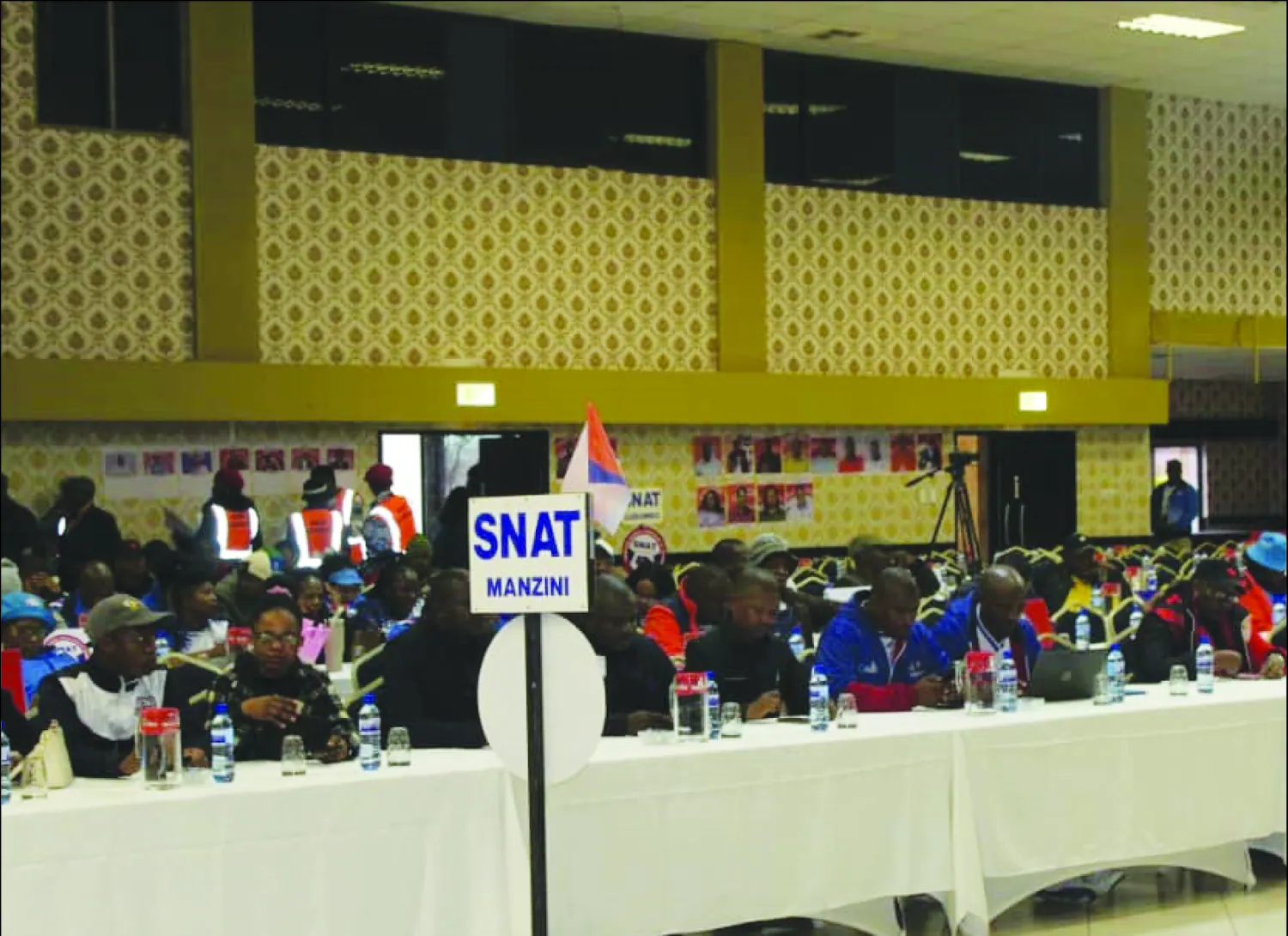
Newly elected Swaziland National Association of Teachers (SNAT) President Sikelela Dlamini has called on the incoming National Executive Committee (NEC) to maintain a clear distinction between the roles of a trade union and a political party. He made these remarks during the 2026 SNAT 80th-72nd Annual Conference, held at Esibayeni Lodge in Matsapha from September 28-30. The conference was attended by delegates who had gathered to discuss pressing issues affecting teachers and the education sector in Eswatini.
Dlamini emphasized that SNAT is a trade union, not a political party, and that its primary focus should be on serving the interests of its members. He expressed gratitude to all SNAT members who participated in the electoral process, which began in February at branch level, before progressing through the regions and culminating in the national conference. He also urged those who had lost in the elections not to view the outcome as the end of their leadership journey.
The newly elected president highlighted the importance of unity within the organization, stating that it was essential for SNAT to resonate with its members and the broader community. He emphasized that the organization's constitution was its guiding document and that it would be used to navigate the challenges ahead. Dlamini specifically mentioned Clause 5 of the SNAT Constitution, which outlines the organization's foundational principles, including democracy, human rights, and social justice.
Dlamini drew a clear distinction between trade unions and political parties, stating that while trade unions could be considered political organizations, they were not the same as political parties. He cited two main reasons for this distinction: the election of trade union leaders through voting and their involvement in public policy and administration. He emphasized that trade unions and political parties could collaborate on issues of common interest while maintaining their separate identities.
The SNAT president also reflected on the challenges facing teachers in Eswatini, including the casualization of employment, low salaries, and inadequate materials and equipment in schools. He specifically raised concerns about the Competency-Based Education (CBE) curriculum, stating that it was devoid of quality and that the learners produced lacked a competitive edge. Dlamini emphasized that these challenges posed an existential threat to the organization and that the new leadership had to be proactive in addressing them.
Dlamini noted that the labour space in Eswatini had been reduced, with trade unions facing difficulties in exercising their rights. He referred to a 2021 declaration by the minister of housing and urban development that had affected public gatherings and actions by trade unions. He alleged that the government had promised to address the issue through internal mediation but had failed to do so. This, he claimed, was a clear indication that the government was not committed to upholding the rights of trade unions.
As SNAT navigates the complex terrain of education and labour sector challenges, Dlamini has vowed to lead the organization with a commitment to its constitutional principles. He emphasized that the new leadership would work tirelessly to address the pressing issues affecting teachers and the education sector in Eswatini. With a renewed focus on unity and a clear distinction between trade unionism and partisan politics, SNAT is poised to make a meaningful impact in the country.
Key points
- New SNAT President Sikelela Dlamini warns against blurring lines between trade unionism and partisan politics.
- Dlamini outlines key challenges facing teachers in Eswatini, including casualization of employment and inadequate resources.
- The SNAT president emphasizes the importance of unity and adherence to the organization's constitutional principles.