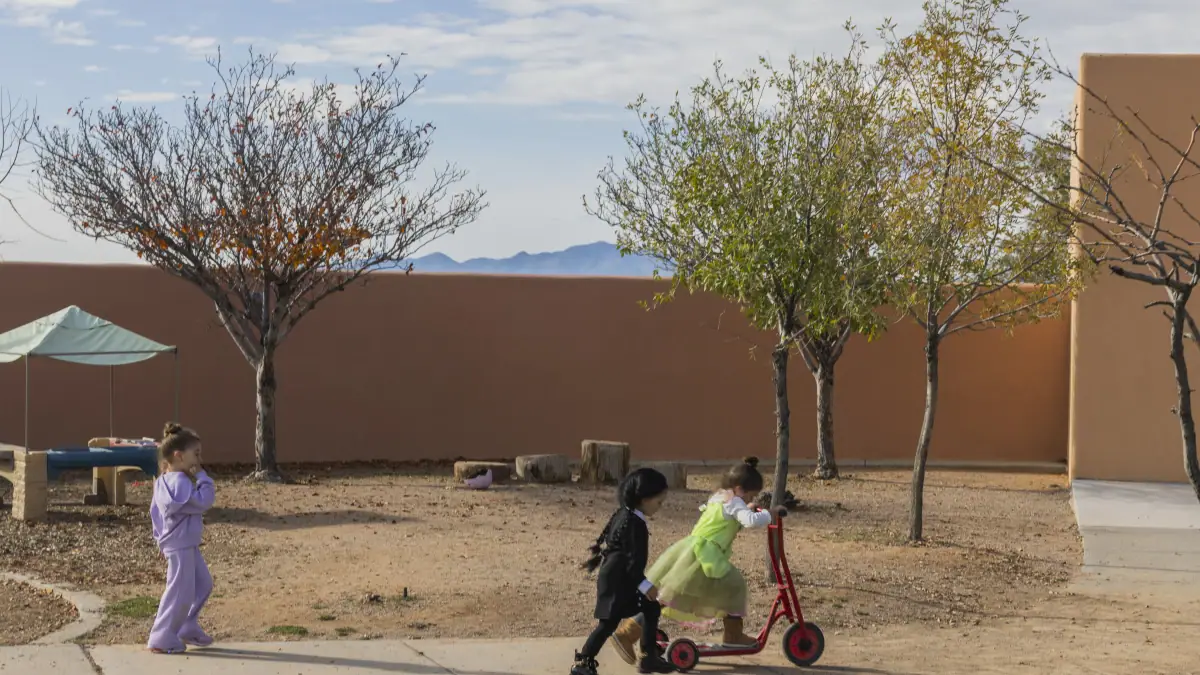
New Mexico's universal childcare program, launched in November 2025, has made significant strides in providing free childcare to eligible families. The program, which was approved by the state legislature and signed into law by Governor Michelle Lujan Grisham in March 2026, offers free childcare to families who are residents of New Mexico and have adults working, looking for work, in school, or unable to work. To qualify, families must meet specific requirements. Many parents have expressed gratitude for the program, citing its life-changing impact.
Despite the program's success, capacity challenges have emerged. The state currently has a shortage of childcare workers and slots, leaving many families on waitlists. Judyn Martinez, a parent who benefited from the program, waited over a year and a half to secure a spot for her daughter at Kids Campus, a popular childcare center in Santa Fe. Her experience is not unique, with nearly 700 children on the waitlist for Kids Campus alone. The program's waitlists have become a significant concern for families and policymakers.
According to the state's Early Childhood Education and Care Department (ECECD), about 50% of New Mexico's 67,000 children aged 5 and under are enrolled in the universal childcare program. However, many children remain unenrolled due to limited capacity. Some families participate in other free public programs, such as New Mexico PreK and Head Start. The ECECD has set a goal to create 12,000 new childcare spots in the first few years of the program and reports being more than halfway to achieving this goal.
The program's funding mechanism, which dedicates a portion of the state's Land Grant Permanent Fund to early childhood education, has been instrumental in its implementation. The fund, which consists of taxes and royalties on the state's oil and gas production, provides hundreds of millions of dollars to support childcare every year. The program also offers higher reimbursements to centers that pay workers higher wages and operate a minimum of 10 hours, five days a week.
Governor Michelle Lujan Grisham has expressed optimism about the program's progress, stating that it is "going stunningly well." She notes that parents across the state have shared stories of the program's life-changing impact. However, she acknowledges that more capacity is needed, stating that "we need to keep growing" and that "it is not a stagnant set of opportunities." The governor's comments reflect the program's ongoing challenges and the need for continued growth.
The national childcare shortage has also been a significant challenge for New Mexico's program. According to the Center for American Progress, nearly half of all U.S. children aged 5 and under live in a licensed childcare desert, where demand for care outpaces availability. Olga Grays, a childcare provider with over 20 years of experience, fields messages daily from desperate parents seeking care. Her experience highlights the need for increased capacity and support for childcare providers.
As the program continues to evolve, policymakers and childcare advocates are closely watching its progress. Cynthia Osborne, who leads Vanderbilt University's Prenatal-to-3 Policy Impact Center, notes that New Mexico's program will provide valuable lessons for other states. The program's success will depend on its ability to address capacity challenges and provide accessible care to all eligible families. Key challenges include addressing the shortage of childcare workers and slots, while maintaining the program's funding mechanism.
Key points
- New Mexico's universal childcare program faces capacity challenges, with many families struggling to access care due to a shortage of childcare workers and slots.
- The program has made significant strides in providing free childcare to eligible families, with over 50% of the state's 67,000 children aged 5 and under enrolled.
- Policymakers and childcare advocates are closely watching the program's progress, as it may provide valuable lessons for other states addressing similar childcare challenges.