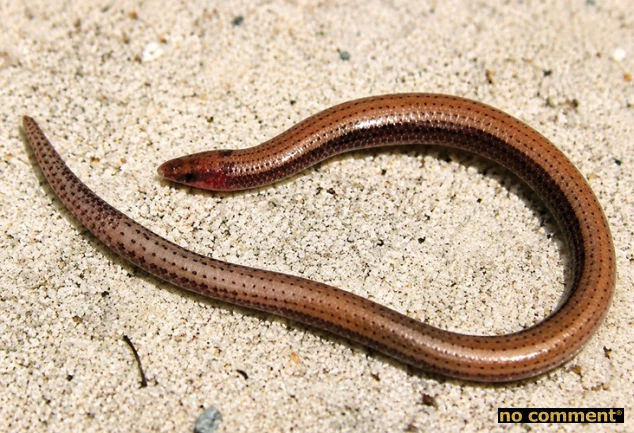
A team of international researchers, led by Aurélien Miralles, has identified a previously unknown species of lizard in northwest Madagascar. The species, named Zig zag, has a unique, elongated body and no legs, resembling a worm more than a lizard. Its discovery highlights the vast, unexplored biodiversity of Madagascar. The lizard's body has adapted to a life underground, with its eyes regressing over time. Zig zag is capable of moving under the sand's surface and emerges at night to hunt termites.
The researchers used genetic analysis and 3D tomography of the lizard's skeleton to understand its origins. The results revealed a distinct anatomy and genetic makeup, requiring the creation of a new genus. The species was named Zig zag due to the wavy tracks it leaves in the sand while moving. The study was published in the scientific journal Megataxa and co-signed by several researchers, including Miguel Vences, a renowned expert in Malagasy herpetology.
The discovery of Zig zag underscores the significance of Madagascar's biodiversity. The island is home to approximately 450 endemic reptile species, with nearly a third discovered in the last 25 years. In 2025 alone, researchers at the Institut de Systématique, Évolution et Biodiversité (ISYEB) described 365 new species, equivalent to one discovery per day. Madagascar's unique environment has allowed for rapid evolution and speciation.
The Zig zag lizard's existence demonstrates that significant discoveries can be made by exploring Madagascar's natural habitats. The species' adaptation to its environment is a testament to the island's complex ecosystem. Further research is needed to fully understand the ecology and behavior of Zig zag.
Madagascar is often referred to as a "living laboratory of evolution." The island's isolation has allowed species to evolve independently, resulting in a unique and diverse range of flora and fauna. The discovery of Zig zag highlights the importance of continued exploration and research into Madagascar's natural history.
The research team used a combination of traditional and modern techniques to study the lizard. Genetic analysis and 3D tomography provided valuable insights into the species' evolution and anatomy. These methods have become essential tools in the study of biodiversity and have contributed significantly to our understanding of the natural world.
The discovery of Zig zag serves as a reminder of the importance of preserving Madagascar's natural habitats. The island's biodiversity is facing numerous threats, including habitat destruction and climate change. Efforts to protect and conserve Madagascar's unique ecosystem are crucial for the long-term survival of species like Zig zag.
Key points
- The discovery of Zig zag highlights Madagascar's unexplored biodiversity and the importance of continued research into the island's natural history.