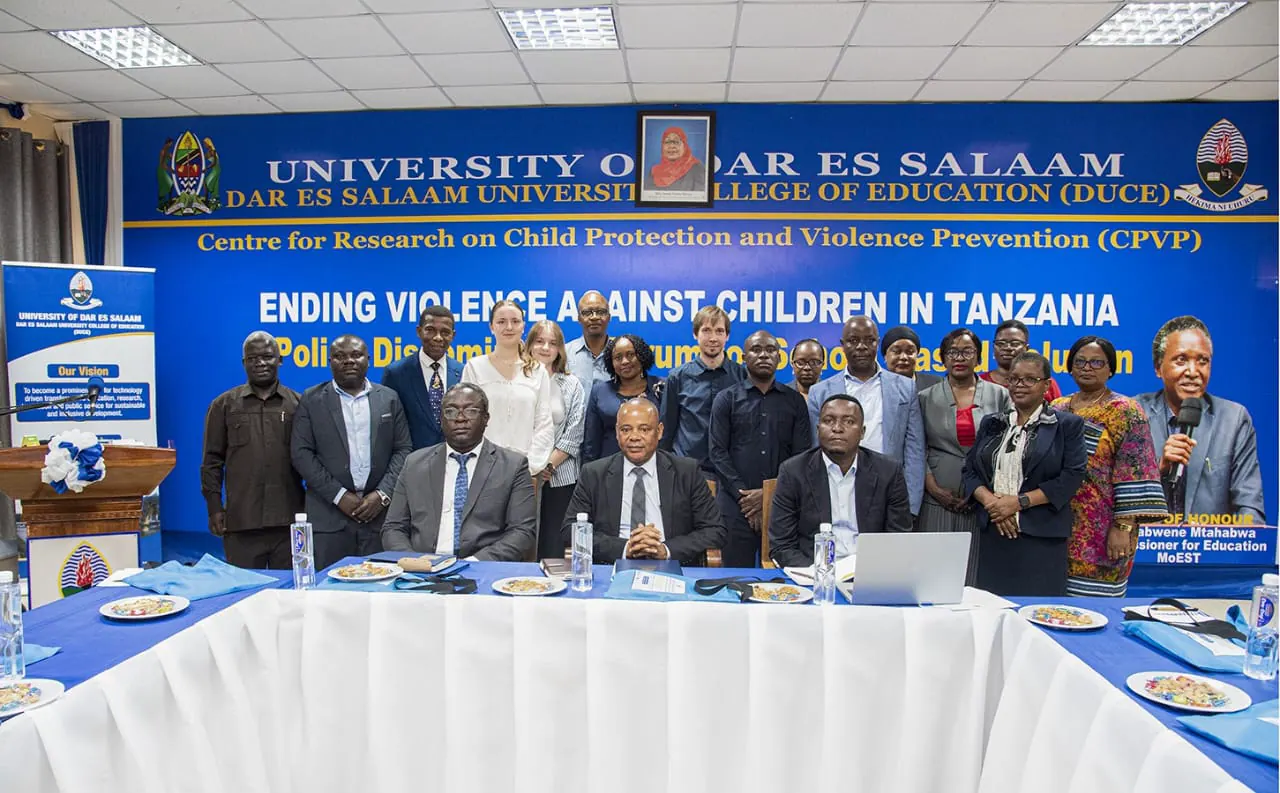
A new evidence-based intervention, the Interaction Competencies with Children (ICC) model, has been developed through collaboration between Tanzanian and German researchers to address violence against children in Tanzania. The model was jointly developed by researchers from Dar es Salaam University College of Education (DUCE), the University of Bielefeld, and the University of Konstanz in Germany. The ICC model has demonstrated promising results in reducing violence and improving children's wellbeing and academic achievement.
The ICC model is a time- and cost-efficient, evidence-based, school-based group intervention that addresses social norms and attitudes while promoting non-violent interaction strategies. It recognises that preventing violence requires more than discouraging physical punishment; it also requires changing beliefs and behaviours that allow violence to become accepted as normal. The model has been co-developed and tested by Tanzanian experts and adapted to local educational and cultural contexts.
The ICC model strengthens adult-child relationships through three versions: Interaction Competencies with Children for Teachers (ICC-T), Interaction Competencies with Children for Parents (ICC-P), and Interaction Competencies with Children for Caregivers (ICC-C), particularly in alternative care settings. Multiple controlled studies have demonstrated substantial reductions in violence, alongside sustained improvements in children's wellbeing and academic achievement.
The Director of Basic Education in the Ministry of Education, Science and Technology (MoEST), Mr Abdul Maulid, commended DUCE and its international partners for developing the ICC model, describing it as a transformative model. He stressed the government's commitment to ensuring that children grow and learn in safe environments, noting that violence against children is not only a violation of children's rights but also a barrier to quality education, social cohesion, healthy development, and national prosperity.
The government's commitment to addressing violence against children is reflected in its policy, curriculum, and education-sector reforms intended to strengthen education provision and quality across the country. These reforms are aligned with the National Plan of Action to End Violence Against Women and Children (NPA-VAWC II 2024/2025–2028/2029), which envisions a Tanzania where all children live free from violence. Mr Maulid encouraged policymakers, local government authorities, education officers, school leaders, and development partners to examine the ICC model carefully and consider how it can complement existing national frameworks for child protection and quality education.
The institutional commitment to the initiative was reinforced by DUCE's Acting Principal, Professor Amani Lusekelo, who explained that ICC is the outcome of years of collaborative research conducted through the Research Centre for Child Protection and Violence Prevention (CPVP), in partnership with the University of Bielefeld. Professor Lusekelo acknowledged the University of Bielefeld and Professor Tobias Hecker for their longstanding academic partnership, which helped transform research into a scalable solution with potential to benefit thousands of Tanzanian children.
Professor Hecker noted that a key strength of ICC is its focus on helping adults understand that non-violent interaction can replace practices sometimes considered normal forms of discipline. He stressed that the researchers were interested not simply in developing an intervention they believed could work, but in testing its effectiveness. The researchers believe that addressing negative beliefs, attitudes, and norms is crucial to preventing violence against children.
Key points
- The ICC model has demonstrated promising results in reducing violence and improving children's wellbeing and academic achievement in Tanzania.
- The model has been co-developed and tested by Tanzanian experts and adapted to local educational and cultural contexts.
- The government has committed to ensuring that children grow and learn in safe environments, and the ICC model aligns with national reforms and plans to address violence against children.