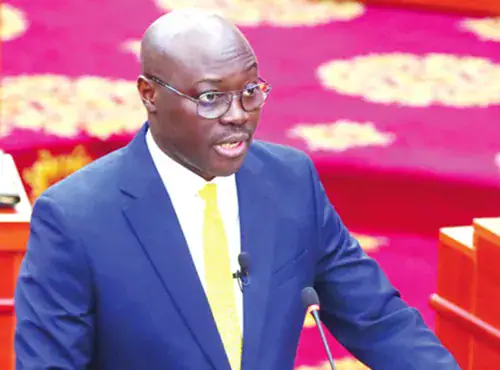
Ghana's Minister of Finance, Dr Cassiel Ato Forson, is set to present the 2027 Budget and Economic Policy to Parliament on Thursday, November 12. The budget will unveil the details of the New Economy programme, a four-year investment plan announced by President John Dramani Mahama. This programme aims to turn Ghana's economic recovery into decent jobs for young people, better incomes for farmers, and more opportunities for Ghanaian businesses to expand.
The New Economy programme, valued at $10 billion, will run from 2027 to 2030 and focuses on expanding domestic production, increasing the share of Ghana's raw materials processed locally, and helping Ghanaian firms sell more at home and abroad. Priority sectors include tourism, textiles and garments, agriculture and agribusiness, pharmaceuticals, and oil palm production. The programme is designed to build on the economic gains made so far.
Dr Forson stated that Ghanaians made sacrifices to get the economy back on its feet, and now the recovery must translate into decent jobs for young people, better incomes for farmers, and room for Ghanaian businesses to grow and hire. The budget will outline how the government plans to achieve this. The Minister signalled this shift towards job creation in the July Mid-Year Fiscal Policy Review.
The budget comes after Ghana completed the final review of its IMF-supported lending programme in July. According to the Ghana Statistical Service, the economy grew by 6.0 per cent in the second quarter of 2026, while annual inflation stood at 5.2 per cent in September. This positive economic performance provides a foundation for the New Economy programme.
The government has opted for the Policy Coordination Instrument (PCI), a non-funded assistance programme of the IMF, after completing the IMF-backed ECF programme. The budget will show which investments the government will prioritise in 2027 and how it intends to finance them while preserving the economic gains of the recovery.
The presentation of the budget is stipulated by Article 179 of the 1992 Constitution, which requires the President to cause estimates of the revenues and expenditure of the Government of Ghana for the following financial year to be prepared and laid before Parliament at least one month before the end of the financial year. The Public Financial Management (PFM) Act, 2016 (Act 921) provides the statutory framework for budget preparation.
The budget will also map out how to raise the $10 billion to finance the seven pillars earmarked under the New Economy programme. With the budget presentation approaching, stakeholders are expecting details on the government's plans to drive economic growth and create jobs.
Key points
- The New Economy programme is a four-year investment plan valued at $10 billion.
- The programme aims to turn Ghana's economic recovery into decent jobs for young people, better incomes for farmers, and more opportunities for Ghanaian businesses.
- The budget will outline how the government plans to achieve this and which investments it will prioritise in 2027.