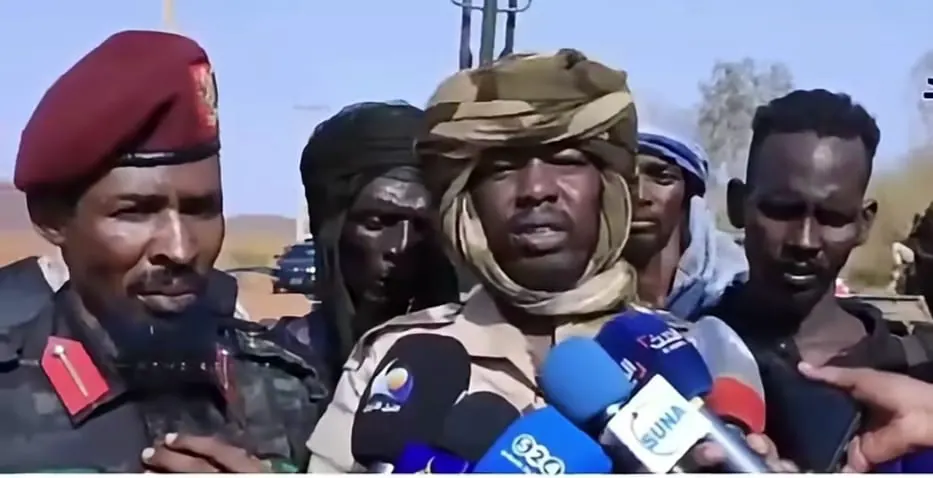
A significant defection has occurred within the Rapid Support Forces (RSF) in Sudan, as the second-in-command of the 231st group, Tayeb al-Ilhidab, announced his departure from the militia and pledged allegiance to the Sudanese Armed Forces. This development took place in the Kordofan region, marking a substantial blow to the RSF. Al-Ilhidab, along with his troops and equipment, surrendered to the Sudanese military. The reasons behind this defection and its implications for the ongoing conflict in Sudan are being closely watched.
According to al-Ilhidab's statements to the press following his defection, his decision was influenced by the events he witnessed during military operations in Kordofan. He expressed concerns over the disintegration of the RSF and urged his former comrades to reassess their positions. Al-Ilhidab's call to action is seen as a significant moment, given his previous role within the RSF. His defection is being viewed as a potential turning point in the conflict, which has been affecting Sudan for an extended period.
Al-Ilhidab addressed a message to his former colleagues in the RSF, urging them to reconsider their involvement, especially in light of the collapse he witnessed. He specifically mentioned the dire situation in Darfur, calling on those stationed there to reevaluate their stance. The conditions described by al-Ilhidab, including the retreat of forces and the plight of civilians, highlight the severity of the situation on the ground.
The defector detailed the chaotic conditions that accompanied the retreat of RSF forces in Kordofan, describing scenes of civilians, including women and children, walking in the streets as the military forces fled. This narrative paints a picture of disorder and panic, contradicting previous claims of stability and control. The Sudanese military has been engaged in a longstanding conflict with the RSF, which has resulted in significant humanitarian and economic challenges.
The implications of al-Ilhidab's defection and his statements are being analyzed in the context of the broader conflict in Sudan. The RSF, led by Mohamed Hamdan, has been a key player in the country's political and military landscape. The militia's actions and internal dynamics have been under scrutiny, especially given allegations of human rights abuses and involvement in political instability.
The Sudanese government and military have been working to consolidate control and stabilize the country. The defection of high-ranking officials like al-Ilhidab could potentially shift the balance of power. However, the situation remains complex, with multiple factions and interests at play. The international community is closely monitoring developments, with many calling for a peaceful resolution to the conflict.
As the situation in Sudan continues to evolve, the focus remains on the humanitarian impact and the prospects for peace. The defection of Tayeb al-Ilhidab and potentially others could signal a new phase in the conflict. The Sudanese people, as well as international observers, are keenly watching the developments, hoping for a resolution that brings stability and security to the region.
Key points
- Tayeb al-Ilhidab, second-in-command of the RSF's 231st group, defects to the Sudanese Armed Forces.
- The defection occurred in the Kordofan region and follows significant military operations.
- Al-Ilhidab urges former comrades to reassess their positions within the RSF.