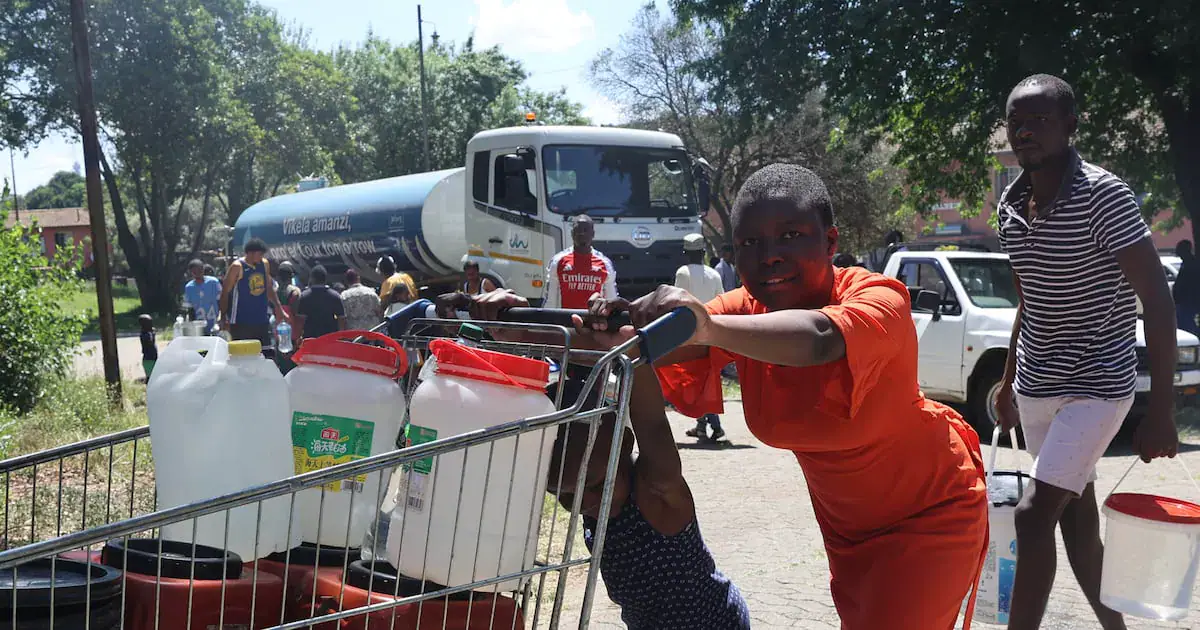
Thousands of Johannesburg residents have experienced the frustration of turning on a tap only to find no water comes out. This has become an all-too-familiar experience, forcing families to reorganize their daily routines and businesses to lose productive hours. The issue is not just an inconvenience; it is a threat to human dignity, public health, economic activity, and the functioning of a modern city. With new councils in place, the question is whether they have the courage, technical understanding, and institutional discipline to confront one of the greatest threats to the sustainability of cities.
Johannesburg's water difficulties did not emerge overnight, and they will not disappear through political promises or emergency interventions alone. The problem lies in understanding how water reaches a household. Rand Water is responsible for abstracting raw water, treating it, and supplying bulk water to municipalities. Municipalities, in turn, are responsible for receiving, storing, and distributing water to consumers. However, ageing municipal infrastructure, leaking distribution pipes, and inadequate maintenance can prevent available bulk water from reaching households reliably.
When a municipality receives water but loses a substantial proportion of it through leaks, burst pipes, or other forms of non-revenue water, the economic and social value of the water is lost. Excessive demand places additional pressure on reservoirs and towers, leading to a vicious cycle of strained infrastructure, depleted storage, interrupted supply, and public frustration. Simply pumping more water into a system that is losing too much of what it receives cannot be a long-term solution.
There is a legitimate need to invest in additional bulk water infrastructure and strengthen treatment and pumping capacity. Rand Water has a critical role to play in this regard. However, additional infrastructure must be matched by improvements in municipal distribution efficiency. Building greater supply capacity without addressing municipal water losses is unsustainable, as every liter lost represents expenditure on treatment chemicals, electricity, and infrastructure that produces little or no corresponding benefit.
Water security is not exclusively an engineering challenge; it is also a governance, financial management, and institutional capability challenge. The incoming municipal councils have an extraordinary opportunity to change the trajectory of water security in their municipalities. To do this, they must elevate water security from a recurring operational crisis to a strategic governance priority.
The incoming councils must make five practical commitments to address the water security challenge. They must put infrastructure maintenance ahead of political visibility, establish properly funded maintenance and infrastructure replacement programs, and make water losses a measurable performance indicator. They must also protect the finances of municipal water services, professionalize water management, and establish genuine accountability.
The principle of protecting the finances of municipal water services is straightforward: water services must be financially sustainable without becoming socially exclusionary. Municipalities must strengthen billing accuracy, revenue collection, and financial controls to ensure that the revenue generated from water services is used to maintain and improve those services. By making these commitments, the incoming councils can ensure that the taps never run dry and that water security is prioritized in their municipalities.
Key points
- New councils in South Africa must prioritize water security by addressing the entire water value chain.
- Ageing municipal infrastructure and inadequate maintenance are significant contributors to water losses in South Africa.
- Municipalities must establish properly funded maintenance and infrastructure replacement programs to address water security challenges.