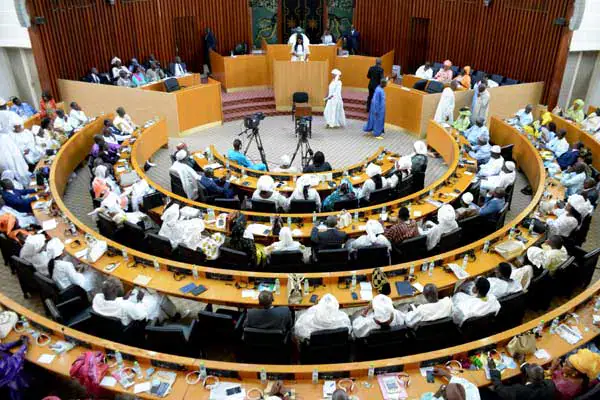
The Senegalese government's budget deficit projections have come under fire from lawmakers in the Commission des Finances de l’Assemblée nationale. Members of the PASTEF party have questioned the credibility of the government's figures, particularly the 7.6% deficit forecast as a percentage of GDP. They argue that the government's defense of this figure as a mere "authorization ceiling" rather than the definitive result of the exercise is unconvincing, especially with the end of the budget year approaching.
The parliamentarians contend that with data on revenue and expenditure already available up to September, the government has all the necessary information to make a realistic projection of the budget balance by December 31, 2026. They assert that the projected deficit of 7.6% lacks sincerity, given that it is only two months until the end of the year. According to them, the actual deficit will likely be lower than the projected ceiling, and they have demanded an updated projection based on actual revenue and expenditure.
The lawmakers have expressed concerns that presenting an artificially inflated deficit could mislead perceptions of Senegal's financial health and impose unnecessary austerity measures or distort discussions on debt sustainability and treatment. They also criticized the government's presentation of the country's debt, calling for a comprehensive, updated, and certified picture of total public debt, including all bank commitments and outstanding arrears.
The Commission des Finances members have insisted that the government revise its projections to present sincere accounts reflecting the strict reality of the country's public finances. They argue that this is essential for accurate financial planning and decision-making. The lawmakers' criticisms have highlighted tensions between the government and parliamentarians over budget management and transparency.
Liboire SAGNA, a representative, was among those who voiced concerns over the government's budget projections. The parliamentarians' demands for greater transparency and accuracy in budget reporting reflect broader concerns about governance and accountability in Senegal. The issue has sparked a debate about the need for more transparent and realistic budget projections.
The controversy over budget deficit projections has significant implications for Senegal's economic management and financial credibility. The government's response to the parliamentarians' criticisms will be closely watched, as it may influence perceptions of its commitment to transparency and good governance. The debate is likely to continue, with implications for the country's budget planning and financial reporting.
The parliamentarians' criticisms of the government's budget projections reflect a broader debate about fiscal management and transparency in Senegal. The issue has highlighted the need for more accurate and realistic budget reporting, as well as greater accountability in financial management. The government's handling of the issue will be crucial in determining the country's financial credibility and governance.
Key points
- Senegalese lawmakers criticize government's budget deficit projections as insincere.
- Parliamentarians demand updated projection based on actual revenue and expenditure.
- Controversy has significant implications for Senegal's economic management and financial credibility.