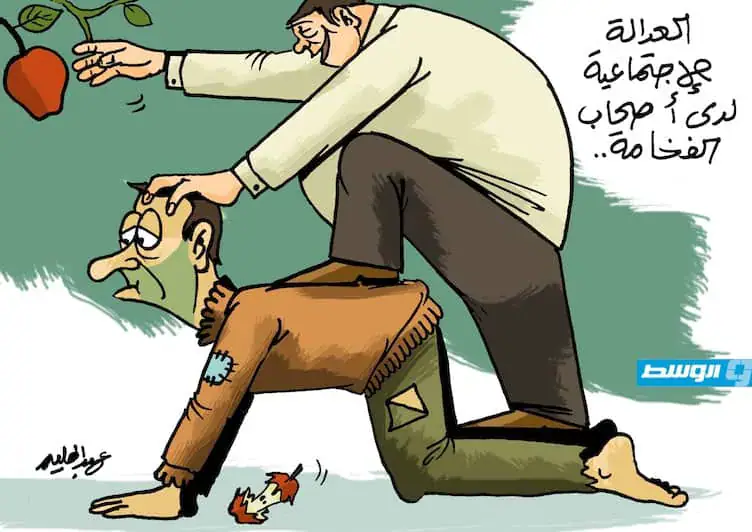
A recent caricature by Libyan artist Abdulhalim Alqamati, titled "Social Justice Among Officials," has been making waves in Libya. The caricature, featured on Alwasat TV, aims to shed light on social justice issues in the country. Alqamati's work often focuses on pressing social issues, and this latest piece is no exception. By visually representing the disparities in wealth and opportunities, Alqamati seeks to inspire dialogue and reflection on the importance of fairness and equality.
The caricature is part of a larger conversation on social justice in Libya. The country has faced significant challenges in recent years, including economic instability and social inequality. Many Libyans feel that the distribution of wealth and resources is unfair, with some individuals and groups holding disproportionate power and influence. Alqamati's work serves as a commentary on these issues, encouraging viewers to think critically about the current state of affairs.
Social justice is a critical issue in Libya, with many citizens calling for greater accountability and transparency from government officials. The equitable distribution of wealth and resources is a key concern, as is the protection of marginalized groups. By highlighting these issues through his art, Alqamati aims to contribute to a more nuanced and informed public discourse.
Alqamati's caricature has been well-received by many in Libya, who see it as a thought-provoking commentary on the country's social and economic challenges. The artist's use of satire and symbolism serves to underscore the urgency of these issues, encouraging viewers to engage with the topic in a more meaningful way.
The conversation sparked by Alqamati's caricature is an important one, with implications for Libya's future. As the country continues to navigate its complex social and economic landscape, it is essential that citizens, policymakers, and artists engage in open and honest dialogue about the issues that matter most.
Alqamati's work is not new to this conversation; he has a history of using his art to highlight social issues in Libya. His caricatures often serve as a mirror to society, reflecting the hopes, fears, and concerns of the Libyan people. By continuing to push boundaries and challenge his audience, Alqamati demonstrates the power of art to inspire change.
As Libya continues to evolve and grow, the importance of social justice and equitable distribution of wealth will remain critical issues. Alqamati's caricature serves as a reminder of the need for ongoing dialogue and engagement on these topics, and the role that art can play in shaping public discourse and inspiring positive change.
Key points
- The caricature highlights issues of social justice and equitable distribution of wealth in Libya.