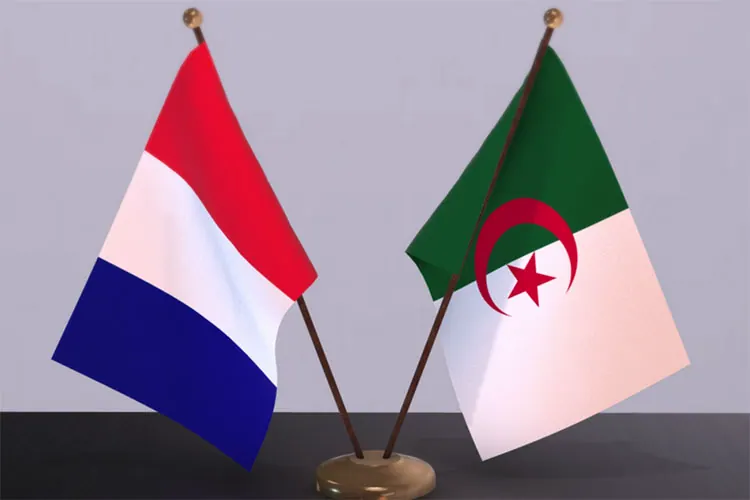
A new book by French journalists Christophe Dubois and Marie-Christine Tabet, Algiers–Paris: Toxic Affairs, examines the roots of the crisis in Algerian-French relations. The book, due to be published on September 30 by French publishing house Stock, offers an in-depth investigation into the deterioration of relations over the past decade. According to excerpts reviewed by Echorouk, the book traces the relationship’s transformation from a period of “historic passion” into a “toxic relationship.”
The tensions between Algeria and France encompass a wide range of interconnected issues, including history and memory, colonialism, migration, security, diplomacy, and intelligence. The authors argue that the crisis was triggered by a decision taken by French President Emmanuel Macron despite a stern warning from Algerian President Abdelmadjid Tebboune. The dispute has strained relations between Algeria’s El Mouradia Palace and France’s Élysée Palace, with President Abdelmadjid Tebboune reportedly stopping responding to calls from his French counterpart.
The book draws on interviews with around 100 people directly involved in Algerian-French relations, including ministers, diplomats, intelligence officials, and political refugees. The authors also gained access to previously unpublished documents, shedding light on the “behind-the-scenes of a new Cold War” between Algeria and France. One notable aspect of the authors’ treatment of the crisis is their emphasis on disputes that have dominated the bilateral relationship, including French demands for the return of Algerian nationals subject to expulsion orders.
The book links the deterioration in bilateral relations to the political transformations Algeria underwent following the 2019 Hirak protest movement and their impact on the country’s political landscape and relations with France. It describes an increasingly complex web of disputes, with both sides accusing the other of “mutual security and intelligence networks and operations.” The legacy of French colonial rule and the memory of the Algerian War continue to exert considerable pressure on bilateral relations.
The authors argue that France has yet to formulate a sufficiently courageous and responsible position acknowledging the crimes committed during 132 years of colonial rule in Algeria and offering an apology for them. The changing place of the so-called “Algerian question” in French politics is also addressed, with the issue increasingly becoming a source of division across a broader segment of the French political spectrum.
The book offers an account drawn from within political, diplomatic, and security circles rather than merely providing a journalistic analysis of bilateral relations. The influence of a former French ambassador to Algeria appears to be present in the work, with the authors referring to testimony from a former ambassador without identifying the diplomat by name. The timing of the book’s publication is significant, coming only months before France’s presidential election next year.
The book’s publication places relations with Algeria among the issues likely to feature prominently in the French political debate. One of the principal conclusions reached by Dubois and Tabet is that the crisis between Algiers and Paris cannot be understood simply as a personal dispute between Presidents Abdelmadjid Tebboune and Emmanuel Macron. Instead, they portray the relationship as one in which Algeria and France, despite their repeated confrontations, remain deeply interconnected.
Key points
- The book "Algiers–Paris: Toxic Affairs" examines the roots of the crisis in Algerian-French relations.
- The authors argue that France has yet to acknowledge the crimes committed during colonial rule in Algeria.
- The book's publication comes ahead of France's presidential election, where relations with Algeria are likely to be a key issue.