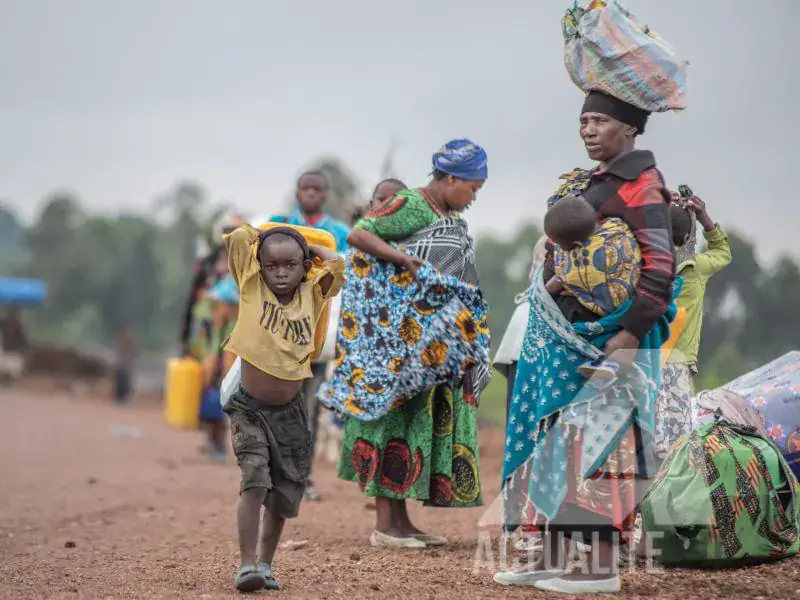
A series of attacks attributed to the Allied Democratic Forces (ADF) in the Democratic Republic of Congo has triggered new displacement of people in the territories of Lubero and Mambasa. The attacks occurred on the Lubumbashi-Kambau road, with two consecutive strikes in Mabutua, Mambasa territory, and Makumo, Lubero territory. These incidents have raised concerns about the security situation in the region.
The threat posed by the ADF in the Bapakombe group, Lubero territory, has affected the tranquility of civilians, particularly in mining areas such as Mabutua, Makumo, and Maikengu. Gunfire was heard in Makumo on October 27, as presumed ADF fighters attempted to infiltrate the area but were repelled by the FARDC and local defense groups. A new presence of assailants was reported the following day, but no casualty figures were released.
The local civil society has called on residents, especially farmers and inhabitants of affected areas, to be vigilant and collaborate with security forces. Kakule Wayirewavene Germain, coordinator of the New Congolese Civil Society (NSCC) in Bapakombe, praised the intervention of the FARDC and local defense groups during the attacks. He encouraged residents to continue cooperating with security forces to address the resurgence of ADF activities.
Since October 25, residents of several mining localities, including Mabutua, Lubumbashi, and Maikengu, have begun moving towards areas considered relatively secure, such as Kambau and Njiapanda. The locality of Kambau is currently hosting displaced people from various areas, who are living in difficult conditions without assistance. This resurgence of attacks has raised concerns about the effectiveness of Operation Shujaa, a joint military operation between the FARDC and the Uganda People's Defence Force (UPDF) against armed groups.
A recent investigation by The Sentry found that Operation Shujaa may have contributed to dispersing ADF fighters towards more remote areas of eastern DRC, particularly regions rich in gold and cocoa, rather than ending their threat. This finding aligns with a UN expert report published in July, which highlighted the challenges faced by the operation, including a lack of personnel, reliance on local defense groups, and the dispersion of ADF fighters.
The situation in eastern DRC remains volatile, with the ADF threat continuing to affect civilians. The government has been urged to rebalance its security priorities to address both the ADF and M23 threats. The 2027 budget allocates 14,091 billion FC to defense, internal security, community stabilization, justice, and diplomacy. The international community, including the UN, continues to engage with the DRC government to address these security challenges.
The humanitarian situation in the affected areas is dire, with displaced populations in need of assistance. The DRC government, with international support, must address the root causes of the conflict and work towards sustainable peace and stability in the region. The security situation in eastern DRC remains a pressing concern, with continued efforts needed to protect civilians and address the threats posed by armed groups.
Key points
- Recent ADF attacks have caused new displacement in the Lubero and Mambasa territories.
- The effectiveness of Operation Shujaa in addressing the ADF threat has been questioned.
- The humanitarian situation in the affected areas is dire, with displaced populations in need of assistance.