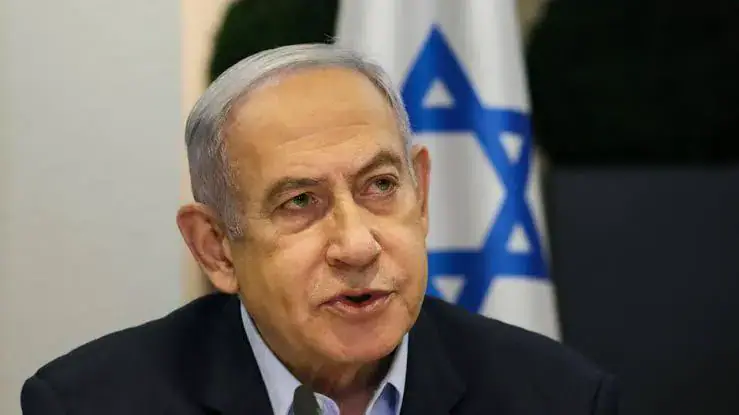
The recent Israeli elections have resulted in a complex political landscape, with the Likud party, led by Benjamin Netanyahu, securing 53 seats, while the Yashar party, led by Gadi Eisenkot, has obtained 48 seats. With 90% of the votes counted, it appears that neither party can form a government without seeking alliances. The small Arab parties have emerged as significant players, holding 19 seats and potentially gaining more.
Initially, both Netanyahu and Eisenkot had ruled out forming a coalition with Arab parties. However, with the current standings, it seems that Netanyahu may lose his grip on power. Eisenkot's party has shown a willingness to explore possibilities with Arab parties, which could lead to a significant shift in Israeli politics. This development has prompted Netanyahu to accuse Arab parties of "stealing" the elections from him.
Despite Netanyahu's accusations, the Israeli police have found no evidence of irregularities or fraud. Analysts suggest that the high turnout among Palestinian voters may have contributed to Netanyahu's potential loss. If Eisenkot decides to form a coalition with Arab parties, it could mark a significant departure from traditional Israeli politics.
A potential coalition between Arab parties and Eisenkot could have far-reaching implications. Netanyahu, who faces corruption charges, would be removed from power and forced to confront the judiciary. However, if Eisenkot refuses to form a coalition, Israel may be headed for another round of elections.
Another possible scenario is that one or more opposition parties may defect to Netanyahu's side, allowing him to form a new government. This could lead to changes in his policies regarding the conflict with Iran and the situation in Gaza. The coming 48 hours will be crucial in determining the course of Israeli politics.
The elections have also highlighted the divisions within Israeli society, with nearly half of the electorate supporting Netanyahu's hardline stance on Gaza and Iran. The international community has been critical of Netanyahu's policies, particularly the 2023 Gaza conflict, which was deemed a genocide by the international justice system.
As the negotiations unfold, Israeli President Isaac Herzog has urged parties to reach a government agreement to avoid further elections. The outcome remains uncertain, with multiple scenarios possible in the coming days. The role of small parties and potential defectors will be crucial in shaping the future of Israeli politics.
Key points
- Netanyahu faces uncertainty as Arab parties emerge as key players in Israeli elections.
- A potential coalition between Arab parties and Eisenkot could lead to a significant shift in Israeli politics.
- Netanyahu's accusations of "stealing" the elections have been denied by the Israeli police.