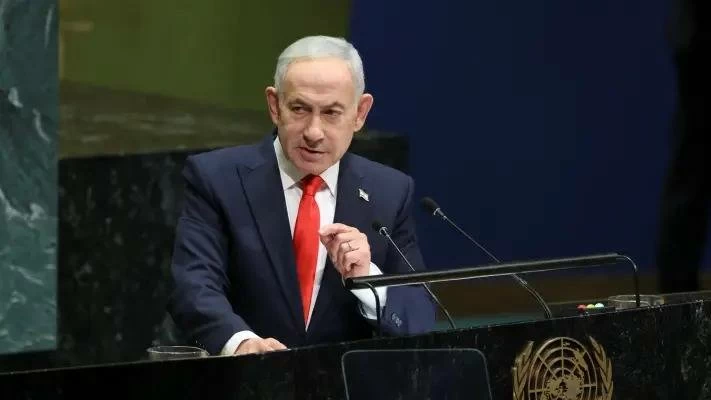
Israeli Prime Minister Benjamin Netanyahu faced intense backlash during and after his speech at the United Nations General Assembly in New York. Dozens of delegates left the hall as he began speaking, and jeers erupted from the audience. The speech, which targeted several critics of Israel and allied countries, drew widespread condemnation. The incident sparked international attention, with many media outlets highlighting the unprecedented walkout.
The speech was widely covered by international media, with the Associated Press describing it as an attack on Netanyahu's critics. The French news agency focused on the content of the speech and Netanyahu's aggressive tone. The New York Times noted that Netanyahu used the international platform to attack his opponents, including New York City Mayor Zahran Mمدanى. The Washington Post highlighted the mass departure of delegates from the hall, linking it to Netanyahu's internal political calculations.
Mayor Zahran Mمدanى responded to Netanyahu's attack, accusing him of repeating "baseless lies" to justify what he described as the genocide of Palestinians. Mمدanى also pointed to the ongoing arrest warrant issued against Netanyahu by the International Criminal Court on charges of war crimes and crimes against humanity. Israel has consistently rejected these allegations. The exchange between Netanyahu and Mمدanى underscored the deep-seated tensions between Israel and its critics.
In Turkey, officials strongly criticized Netanyahu's speech, particularly his attack on Turkish President Recep Tayyip Erdogan. The head of the Turkish Presidency's Communications Directorate, Burhanettin Duran, described Netanyahu's comments as "insolent and vile." Omer Celik, spokesman for the ruling AK Party, also condemned Netanyahu, calling him a "killer and perpetrator of genocide." The Turkish government has been a vocal critic of Israel's policies in the region.
Qatar also rejected Netanyahu's accusations that it was conducting a campaign to influence public opinion against Israel. Qatari Foreign Ministry spokesman Majed Al-Ansari said these allegations were an attempt to divert attention from Israel's policies in the occupied Palestinian territories and their humanitarian consequences. Al-Ansari called on Israel to change its policies, respect international law, and take responsibility for its actions.
Outside the UN headquarters, protests against Netanyahu took place in New York, with demonstrators calling for an end to the war in Gaza. Netanyahu faced jeers and a walkout by many delegates inside the hall. The backlash against Netanyahu's speech extended to Israel, where several opposition leaders criticized his performance. Former Prime Minister Naftali Bennett questioned Netanyahu's stance on Qatar, while Yair Golan, head of the Democratic Party, also criticized the speech.
Despite the criticism, some officials in Netanyahu's coalition government defended his performance at the UN. The mixed reactions reflected a divided Israel, with some supporting Netanyahu's stance and others criticizing his approach. The controversy surrounding Netanyahu's speech highlighted the deep divisions and tensions between Israel and its international critics.
Key points
- Netanyahu's UN speech sparked widespread criticism and protests globally.
- The speech targeted several critics of Israel, including Turkish President Recep Tayyip Erdogan and New York City Mayor Zahran Mمدanى.
- The backlash against Netanyahu extended to Israel, where opposition leaders criticized his performance.