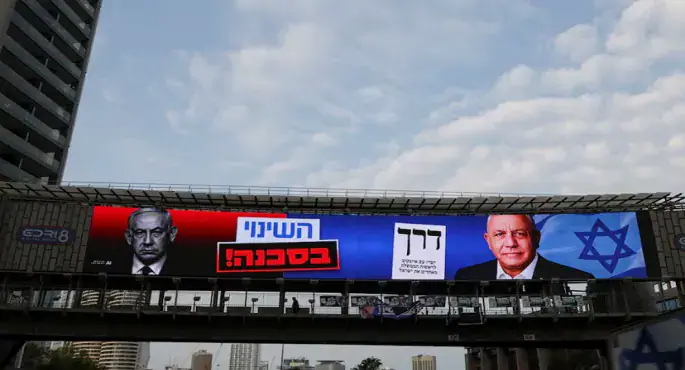
Benjamin Netanyahu is expected to continue as Israel's prime minister in a caretaker government following a strong showing in the country's recent elections. With approximately 86% of votes counted, Netanyahu's bloc, comprising right-wing, far-right, and religiously observant parties, is projected to secure 53 seats in the Knesset, surpassing the opposition led by Gadi Eisenkot, who is anticipated to garner 48 seats.
The opposition bloc, which includes parties ranging from center-left to right-wing, underperformed compared to pre-election polls that suggested a competitive contest. Despite this, Eisenkot's bloc still presents a significant challenge to Netanyahu's continued leadership. The parties representing Arab citizens of Israel are projected to win 19 seats, a record high, driven by high voter turnout within this demographic.
Although the final results may shift as vote counting continues, Netanyahu's performance has positioned him to maintain his role as prime minister in a caretaker government. This arrangement will remain in place during coalition negotiations or until new elections are held next year. Despite limitations, a caretaker government retains significant powers, including those related to national security and foreign policy.
Netanyahu's likely continuation as prime minister comes as he faces ongoing challenges, including tensions with Iran. His leadership during these times will be closely watched both domestically and internationally. The election results have also sparked reactions from various political quarters, with some calling for change and others supporting Netanyahu's continued governance.
The Israeli electoral process has demonstrated its capacity to manage complex and closely contested elections. With a reported voter turnout of 74.3%, the elections have shown strong participation from various segments of Israeli society. This high level of engagement underscores the significance of the election outcomes for Israel's political future.
As Netanyahu prepares to lead a caretaker government, he will need to navigate the complexities of coalition building and national leadership amidst ongoing regional challenges. His ability to form alliances and address pressing issues will be critical in the coming months. The international community will be monitoring these developments closely, given Israel's pivotal role in regional dynamics.
The path forward for Netanyahu and the Israeli government will involve addressing both domestic concerns and international pressures. With a caretaker government in place, Netanyahu will face the task of maintaining stability while pursuing long-term policy objectives. This period will be crucial in shaping Israel's political trajectory and its relations with neighboring countries and global partners.
Key points
- Netanyahu is expected to lead a caretaker government following the inconclusive Israeli elections.
- The opposition bloc led by Gadi Eisenkot underperformed compared to pre-election polls.
- Parties representing Arab citizens of Israel are projected to win a record 19 seats.