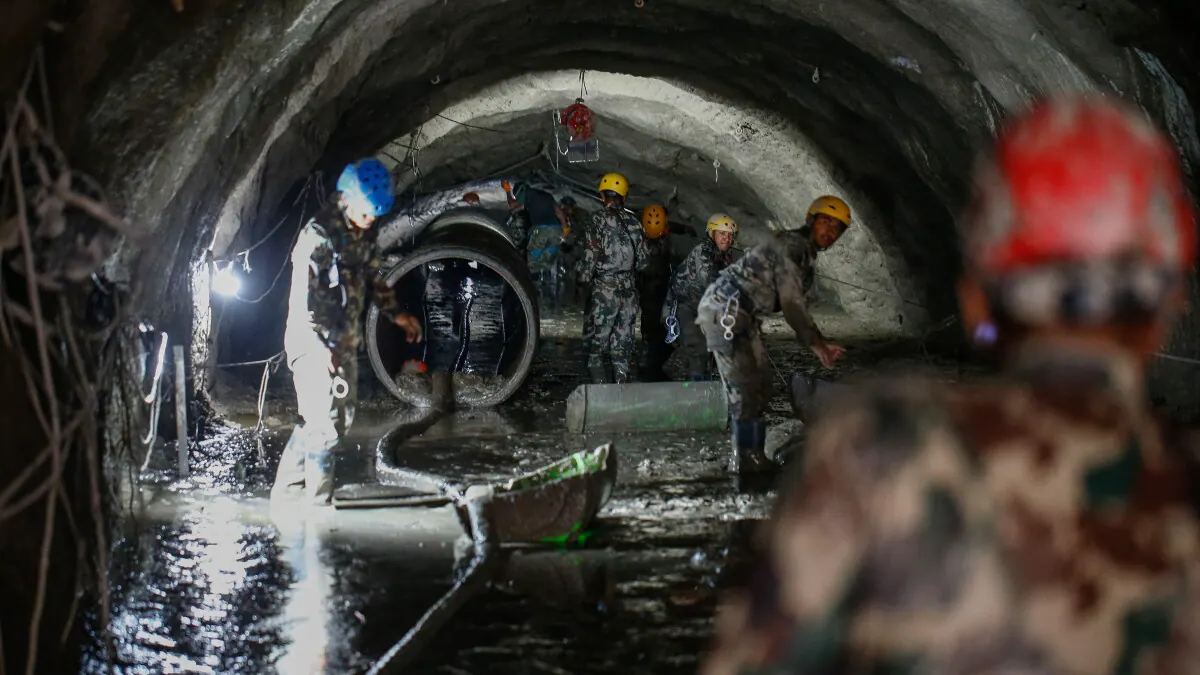
A devastating flash flood occurred in Nepal's Trishuli River valley on August 26, triggered by the collapse of a glacier and its bedrock. The disaster resulted in 30-foot-high waves of boulders, water, and ice that surged for miles downstream, sweeping away a multistory border building, 70 bridges, and miles of highway. The flood also buried 12 hydropower plants under mud and boulders, trapping 121 people, according to Brig. Gen. Subas Jung Thapa of the Nepali army.
The scale of the disaster is still being assessed, with 1,400 bodies recovered and over 5,000 people still unaccounted for. Rescue efforts have been challenging, with tunneling expert Arnold Dix describing the destruction as "like a bomb's gone off." Only three men were found alive in the power plants since rescue efforts began. The disaster has raised questions about the safety of hydropower projects in the Himalayas, with experts reviving concerns about whether developers properly assessed the risks of building them in the region.
Critics have focused on the role of international institutions like the World Bank, which supported some of these hydropower projects, including the Upper Trishuli-1 project, which cost Nepal over half a billion dollars. The project was backed by about $300 million in loans and equity from two arms of the World Bank. However, experts like Parineeta Dandekar, an expert on rivers, have accused the World Bank of producing a flawed risk assessment report for the project, ignoring the cumulative disaster risk that can happen after having many projects across the same river.
The Trishuli river basin has 36 hydro power projects, including the dozen now under the mud. Experts say the constant blasting of mountains to build these projects has its own impact, particularly in a region where earthquakes and landslides are common, and where climate change is causing glaciers to melt more rapidly. Initial analysis suggests global warming exacerbated the melting of the glacier that snapped off in August, triggering the flash floods.
While there is no clear evidence that the construction of these projects had a role in causing the severity of the August 26 disaster, experts like geoscientist C.P. Rajendran say construction has caused damage in other communities where hydropower projects are being built. Experts say developers were not seriously investigating the risk caused by so many projects built in the same zone, and that these risks have to be properly studied and assessed.
The Asian Development Bank, which loaned $60 million for the Upper Trishuli-1 project, was criticized by independent experts who visited the site in 2024 for not undertaking a climate resilience assessment. The bank did not immediately respond to questions about whether that assessment was ultimately undertaken. In response to the disaster, the World Bank stated that it will consider any implications for risk assessment, monitoring, early warning, and emergency response measures in hydropower projects.
The disaster has raised concerns about the vulnerability of the Trishuli river basin to glacial lakes bursting, landslides, and prolonged closures. Experts like Austin Lord of the Stimson Center had warned days before the August flood that the area was particularly vulnerable to such events. The incident highlights the need for more careful planning and risk assessment in the development of hydropower projects in the Himalayas.
Key points
- The floods have raised concerns about the safety of hydropower projects in the Himalayas.
- Critics argue that developers did not properly assess the risks of building these projects in the region.
- The disaster highlights the need for more careful planning and risk assessment in the development of hydropower projects in the Himalayas.