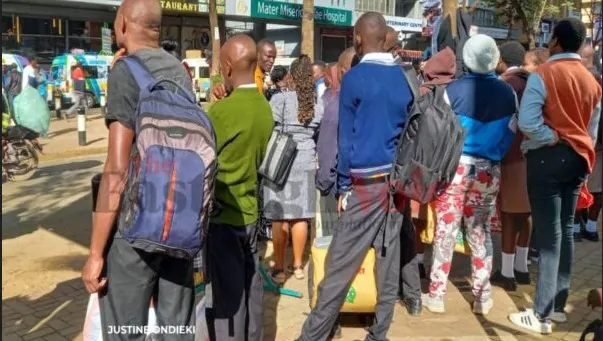
A recent survey conducted by the Elimu Bora Working Group has shed light on the plight of Kenyan pupils who are being barred from class due to unpaid illegal school levies. The survey, which involved 388 parents, guardians, and grandparents across 11 counties, found that 45.9% of learners are occasionally or very often sent home or denied lessons when extra, illegal school levies are not paid. This is despite the government's Sh22,000 per-student capitation.
The survey, which covered 11 counties including Baringo, Kakamega, Kiambu, Kisumu, Makueni, Mandera, Meru, Mombasa, Nairobi, Nakuru, and Uasin Gishu, found that all counties reported illegal charges in every school cluster and category. A staggering 90% of households reported having paid, expecting to pay, or anticipating charges above the gazetted fee. This suggests that illegal school levies are a widespread problem in Kenya's education sector.
The impact of these illegal levies is disproportionately felt by day-school learners, with 64.9% being sent home or barred from class, compared to 40.5% of boarding-school pupils. Additionally, 60.6% of learners miss school days because of the levies. This has serious implications for the education outcomes of these students, who are already vulnerable due to their socio-economic status.
The survey also found that low-income families are the most severely affected by these illegal levies. A staggering 61.3% of learners from households earning less than Sh10,000 per month are sent home at least occasionally, compared to 23.1% from households earning between Sh30,001 and Sh60,000. This suggests that the burden of these illegal levies is being borne by the most vulnerable members of society.
Households reported that extra levies are often unaffordable, with 61.6% describing them as difficult or impossible to meet. As a result, 37% of households frequently borrow money or sell assets to cover the costs. Development levies, which are charged at a median of Sh5,000, are the most commonly enforced through threats of exclusion, with 83.3% of affected households saying learners were sent home over unpaid development fees.
The survey noted that illegal fees are largely collected verbally, with about half of schools writing to parents about the charges, while some resort to threats or actual exclusion of learners. This lack of transparency and accountability in the collection of school fees is a major concern, and has serious implications for the rights of learners and their families.
The Elimu Bora Working Group has called on the Ministry of Education to take urgent action to address this problem. They are recommending that the Ministry audits school fee structures, enforces the constitutional guarantee of free and compulsory basic education, and establishes confidential complaint mechanisms to protect parents and learners from retaliation.
Key points
- 45.9% of Kenyan learners are sent home or denied lessons due to unpaid illegal school charges.
- Low-income families are disproportionately affected by illegal school levies.
- The Ministry of Education is being called upon to audit school fee structures and enforce the constitutional guarantee of free and compulsory basic education.