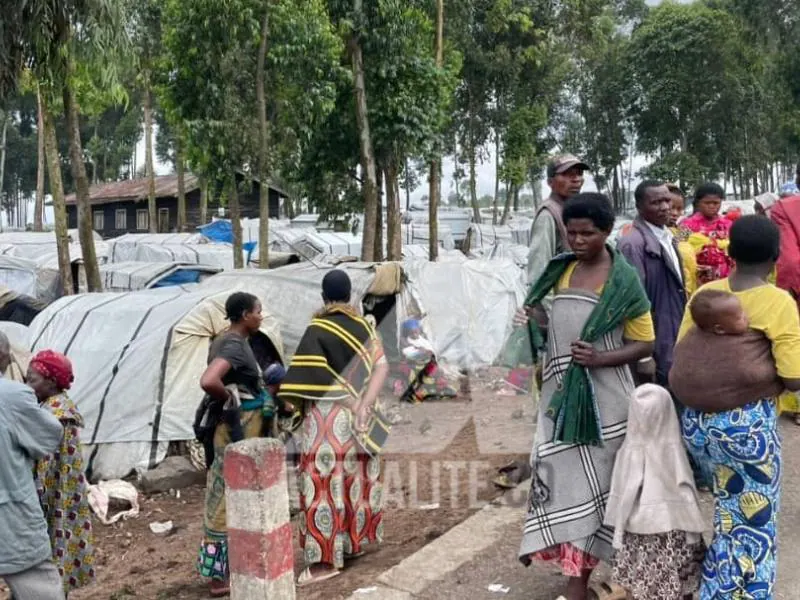
A recent assessment by the civil society organization, Société Civile de Hombo, has highlighted the dire situation faced by nearly 2,350 displaced families in Lukaraba, Walikale territory, North Kivu, and Hombo Sud, Kalehe territory, South Kivu. The evaluation, conducted from September 25-27, 2026, revealed that these individuals are struggling with difficult living conditions, having fled their villages due to violence in areas such as Ziralo, Ufamandu, Remeka, Lurere, and Biriko.
In Lukaraba, many families are living in makeshift shelters and lack access to basic necessities. The needs of these displaced persons are multifaceted, including food, essential household items, clean water, sanitation, healthcare, and protection. The organization has also noted an increased risk of malnutrition among children and heightened vulnerability of pregnant women and adolescent girls.
The situation is further complicated by the fact that some displaced individuals are already receiving medical care thanks to the intervention of MEDAIR. However, the organization stresses that this assistance is insufficient given the scale of the needs. In Hombo Sud, local healthcare facilities are under pressure, with the hospital receiving a large number of displaced persons requiring medical attention, as well as injured individuals from the violence.
The civil society organization is calling for urgent intervention from authorities, UN agencies, humanitarian organizations, and individuals of goodwill to address the crisis. Recommendations include the provision of food aid and essential goods, distribution of hygiene and dignity kits, nutritional and medical care, and strengthening of protection mechanisms, with a particular focus on women, girls, and children.
The organization emphasizes that rapid mobilization of humanitarian actors is necessary to improve the living conditions of displaced families and prevent further deterioration of their vulnerability in these areas. The situation is critical, and immediate action is required to mitigate the suffering of these displaced persons.
The crisis in Walikale and Kalehe is part of a broader humanitarian landscape in DR Congo, where displacement and violence continue to affect many communities. The international community is urged to take note of the situation and provide support to alleviate the suffering of the displaced persons.
Key initiatives have been launched in recent days to address various challenges in DR Congo, including the launch of the 2026-2027 agricultural campaign in Kasaï-Oriental and efforts to promote access to information and education.
Key points
- The situation for nearly 2,350 displaced families in DR Congo's Walikale and Kalehe areas is dire, with concerns over living conditions, health, and protection.
- The civil society organization, Société Civile de Hombo, is calling for urgent intervention from authorities and humanitarian organizations to address the crisis.
- The crisis in Walikale and Kalehe is part of a broader humanitarian landscape in DR Congo, where displacement and violence continue to affect many communities.