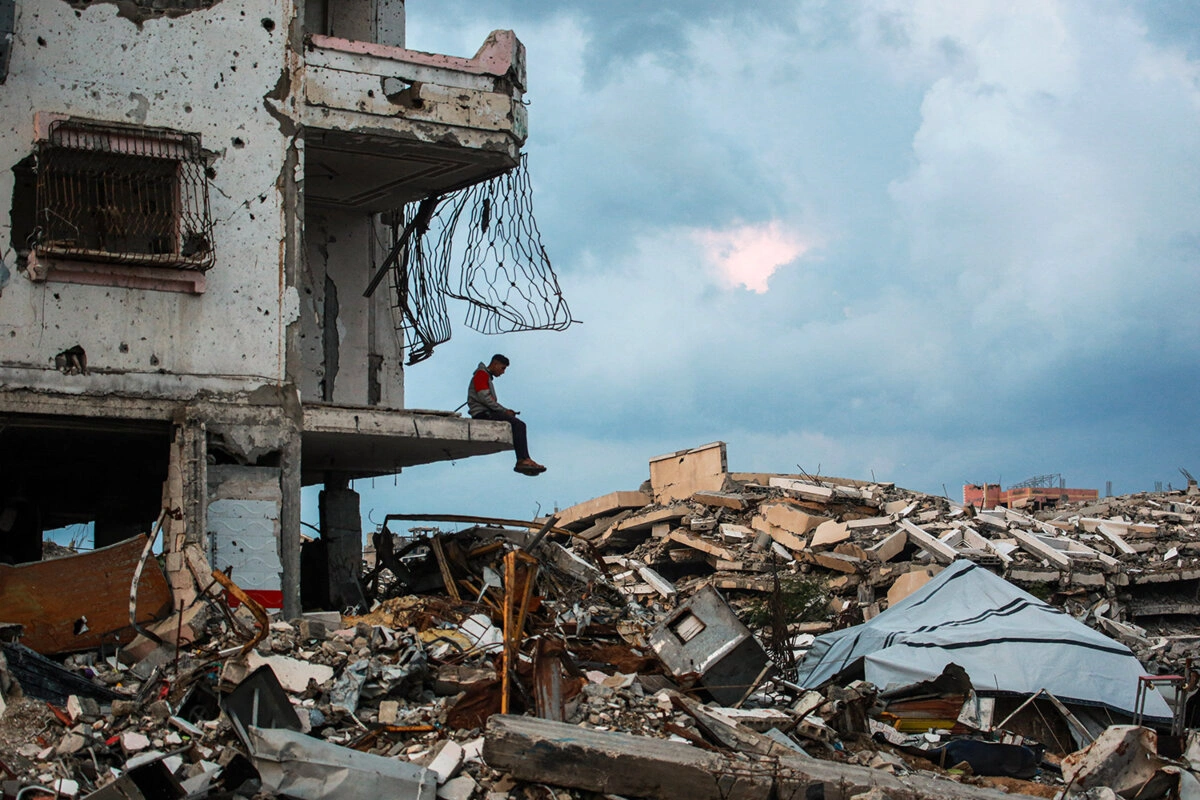
Relief teams in the Gaza Strip are facing a monumental task in clearing approximately 61 million tons of rubble, a process that could take between 7 to 10 years. This daunting endeavor is complicated by the presence of unexploded ordnance and the potential remains of 8,000 to 10,000 bodies still buried under the debris. The rubble, a result of the devastating conflict, also includes damaged buildings and hazardous materials that pose significant risks to both the local population and the workers involved in the clearance efforts.
The scale of the challenge is underscored by the fact that the amount of rubble in Gaza is estimated to be nearly 20 times the amount generated by all the wars around the world over the past 18 years. According to Jaco Siliers, the Special Representative of the United Nations Development Programme in Palestine, the total volume of rubble in Gaza is a staggering 61 million tons. This has necessitated a massive cleanup operation, one of the largest in recent history, with significant implications for the future reconstruction of the area.
The process of clearing the rubble is fraught with difficulties, including the risk of encountering unexploded Israeli ordnance and the physical toll on workers. An example of the challenges faced is highlighted by the experience of Ahmed Alian, an engineer with the World Food Programme (WFP), who described the task as trying to "empty the sea with a spoon." Despite these challenges, teams have managed to clear 580 kilometers of roads, facilitating the passage of aid trucks, relief teams, and residents.
The rubble clearance efforts are part of a broader initiative to rehabilitate and rebuild Gaza. The United Nations Development Programme has initiated a project to recycle and reuse the rubble, with five sites established across Gaza for this purpose. The process involves sorting the debris, removing non-concrete materials like metals and steel bars, and then crushing the concrete into smaller, reusable pieces. This not only aids in the cleanup but also provides materials that can be used in reconstruction efforts.
The restrictions on importing necessary equipment into Gaza have added to the complexity of the task. Israel has prohibited the entry of such equipment, citing concerns that it could be used by Hamas. This has forced creative solutions, such as the local rebuilding of machinery. For instance, engineers in Gaza managed to reconstruct two crushing machines based on available models, as importing new equipment has been ruled out.
The ongoing conflict and the resultant increase in rubble have continuously set back the clearance efforts. The advancement of what is known as the "yellow line," which delineates areas under Israeli control, has reduced the available space for residents and relief workers to operate, further complicating the rubble removal process. The situation underscores the urgent need for a sustainable solution to address the humanitarian crisis in Gaza.
Despite these challenges, efforts continue to find innovative solutions to manage the rubble and facilitate reconstruction. The recycling of rubble into usable construction materials is seen as a critical strategy in this regard. With the involvement of international organizations and local efforts, there is hope for gradual progress in clearing the rubble and rebuilding Gaza.
Key points
- Relief teams face a 7-10 year task to clear 61 million tons of rubble in Gaza.
- The rubble may contain up to 10,000 bodies and significant amounts of unexploded ordnance.
- Recycling rubble for reuse in construction is a key strategy in the rebuilding efforts.