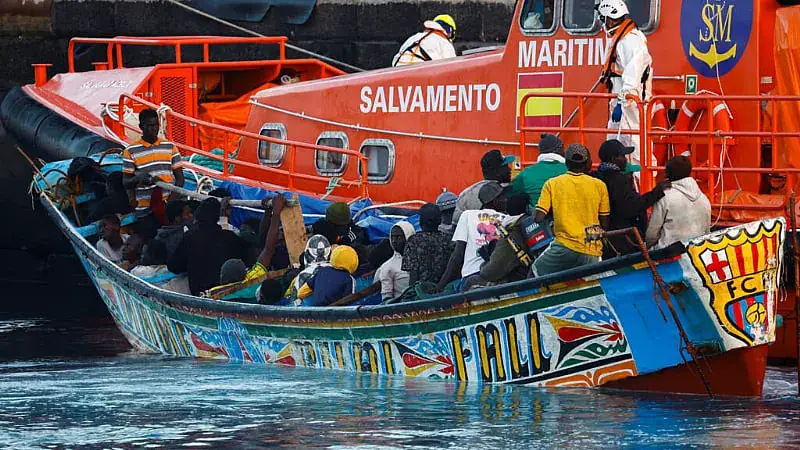
Nearly 2,200 migrants have reached Spain's Canary Islands by boat over the past two days, according to Spain's maritime rescue service. The archipelago off northwest Africa is a major entry point for migrants, mainly from West Africa, attempting the dangerous Atlantic crossing in makeshift boats. This recent influx of migrants has added to the growing number of people arriving in the Canary Islands, with over 13,000 of the 28,000 people who arrived in Spain by sea between January and October landing in the islands.
The Spanish maritime rescue service reported assisting 1,324 people aboard 14 dinghies, with most reaching El Hierro, an island with a population of 12,000. This figure approached the route's daily rescue record of 1,461 people, set on November 7, 2020. The rescue service's efforts are crucial in providing aid to migrants who undertake the perilous Atlantic crossing.
The Atlantic crossing between West Africa and the Canary Islands is one of the world's deadliest migration routes. Although the islands lie about 65 miles from the nearest African coast, many migrants take longer routes to evade security forces. Those journeys can last days or weeks, with most boats departing from Mauritania. The treacherous nature of this route has resulted in significant loss of life.
In response to the rising number of migrant arrivals, Spain declared a migration emergency on the islands. The country is due to hold an early general election in two weeks. The government is likely to face increased pressure to address the issue of migration, which has been a contentious topic in European politics.
Red Cross staff meet migrants at the port, providing dry clothes, food, and water, and registering their arrival. The organization's emergency coordinator in Tenerife, Dácil León, described the situation. The Red Cross plays a vital role in providing humanitarian aid to migrants who have undertaken the challenging journey.
The recent influx of migrants to the Canary Islands is not an isolated incident. In July, tens of thousands of people crossed from Morocco into Spain's North African territory of Ceuta in just two days, causing chaos and reigniting debate over immigration in Europe and beyond. The issue of migration remains a pressing concern for European governments.
The situation in the Canary Islands highlights the ongoing challenges faced by migrants and European governments. With over 140 people dying during the journey and up to 15,000 remaining in Ceuta after a previous influx, the issue of migration is complex and multifaceted.
Key points
- The Atlantic crossing between West Africa and the Canary Islands is one of the world's deadliest migration routes.
- Spain declared a migration emergency on the islands due to the rising number of migrant arrivals.
- The Red Cross provides humanitarian aid to migrants who have undertaken the challenging journey.
Reporting sources
- Nearly 2,200 migrants rea... · ModernGhana