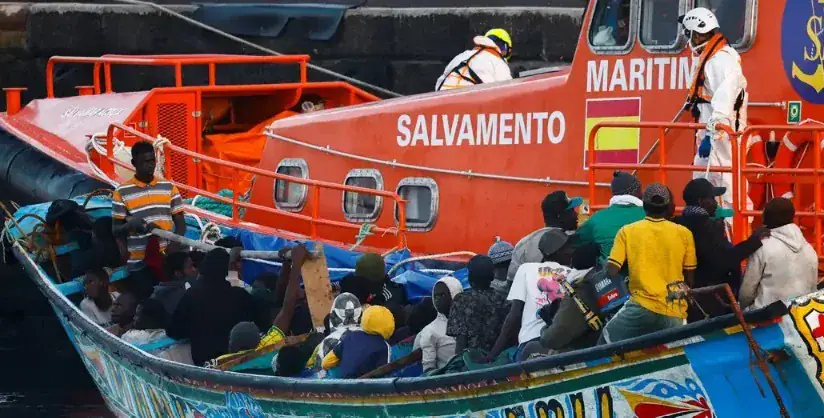
Spanish authorities recorded 1,580 migrants reaching the Canary Islands on Saturday, with most disembarking on the island of El Hierro after crossing the Atlantic in 15 wooden fishing vessels. The arrivals represent a sharp spike in the Atlantic migration route from West Africa, primarily coming from Senegal, The Gambia, and Guinea. This sudden influx has raised concerns about the strain on El Hierro's limited reception facilities and local resources.
El Hierro, home to just under 12,000 residents, faces challenges in accommodating the large number of migrants. The island's reception facilities and local resources may be stretched due to the sudden arrival of nearly 1,600 migrants. The situation has prompted a response from the Spanish government, with Minister for Territorial Policy Angel Victor Torres Perez visiting the town of La Restinga on the island's southern tip.
Minister Angel Victor Torres Perez met with residents of La Restinga and thanked them for their solidarity amid the crisis. He posted on X that the government remains committed to managing the surge with humanity while considering the needs of island communities. The government's response aims to balance the humanitarian aspect with the concerns of local residents and the strain on resources.
The recent surge is part of a larger migration trend in the region. Over the two-day period of Friday and Saturday, more than 2,300 migrants arrived in the archipelago, according to figures released by the Maritime Safety and Rescue Society. This development has sparked concerns about the migration route and the capacity of the Canary Islands to accommodate the influx of migrants.
Despite the weekend spike, total migrant arrivals in the Canary Islands from January to October 31 were down 5.5% compared with the same period last year. The latest wave follows a migration crisis in the Spanish enclave of Ceuta in July, when an estimated 80,000 people, largely young Moroccan men, entered the territory from Morocco.
Prime Minister Pedro Sanchez has faced criticism from opposition parties over his handling of migration, an issue that is expected to dominate the political debate ahead of snap elections later this month. The government's response to the migration surge will likely be scrutinized in the context of the upcoming elections.
The situation in the Canary Islands highlights the complexities of migration management and the need for a balanced approach that considers both humanitarian concerns and the needs of local communities. The government's commitment to managing the surge with humanity and consideration for island communities will be crucial in addressing the challenges posed by the recent migration surge.
Key points
- The recent surge of 1,580 migrants on El Hierro island has raised concerns about the strain on local resources and reception facilities.
- The Spanish government has responded to the crisis with a visit from Minister Angel Victor Torres Perez, who has committed to managing the surge with humanity.
- Despite the recent spike, total migrant arrivals in the Canary Islands from January to October 31 are down 5.5% compared to the same period last year.