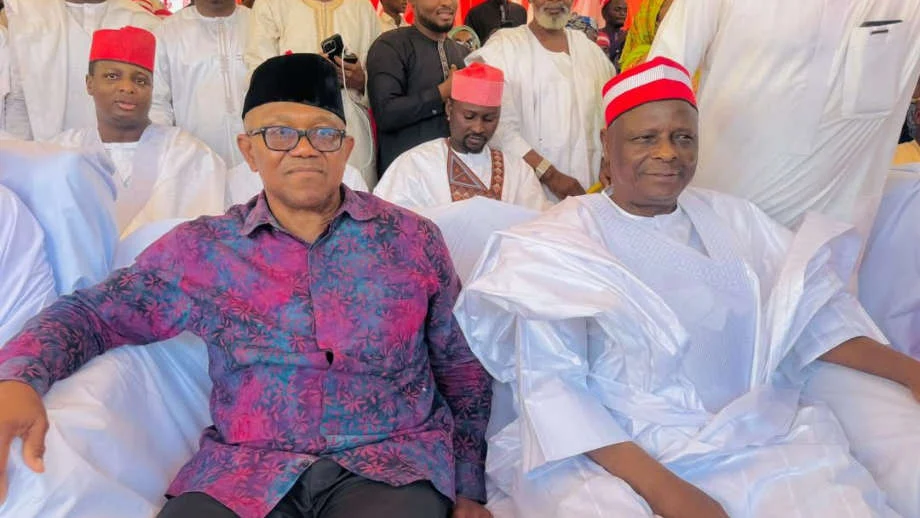
State chairmen of the Nigeria Democratic Congress have asserted the supremacy of the party's structures amid disagreements over the operations of the Obi-Kwankwaso Movement ahead of the 2027 general elections. The chairmen, who spoke with Sunday PUNCH across 10 states, maintained that the Obidient and Kwankwasiyyah movements were support groups and could not establish parallel campaign structures or conduct activities without party approval. This stance follows concerns over the relationship between the NDC's formal structures and the support groups mobilizing for the party's presidential candidate, Peter Obi, and his running mate, Rabiu Kwankwaso.
The crisis between the NDC and the Obi-Kwankwaso Movement escalated after the party disowned the 59-member Presidential Campaign Council announced by the movement for Obi and Kwankwaso. The NDC also warned that no individual, candidate, or support group was authorized to constitute or announce any campaign council or structure in its name without approval from its National Working Committee. The NDC National Leader, Seriake Dickson, criticized the activities of the OK Movement, warning political support groups affiliated with the party against operating as parallel structures or competing with the party for control.
However, the Director-General of the OK Movement, John Ughulu, rejected the NDC and Dickson's position, stating that the group would not collapse or surrender its structure to the NDC. Some NDC state chairmen have rejected the OK Movement's stance, declaring that the group could not override the supremacy of the party. The NDC Chairman in Osun State, Charles Omidiji, said no movement or group was superior to the party, adding that there was nothing wrong with candidates having separate campaigns, provided they obtained the party's approval and carried the party structure along.
Omidiji emphasized that it was inappropriate for any candidate to organize a campaign without involving the party, arguing that the party would be held responsible if any crisis arose during such activities. He maintained that the party was supreme and that the composition of the campaign structure was the responsibility of the party. The chairman added that candidates who went ahead with separate campaigns in the name of their movements would be doing so independently of the party structure.
Similarly, the Ogun State NDC Chairman, Femi Alao, said no movement could campaign without the approval of the party, stressing that the party was supreme. He said, "There is nothing like disagreement between the NDC and the OK Movement. What we are saying is that the party is supreme and we should all come together to have a common front." Alao noted that the party had put in place a mechanism to accommodate all interest groups.
The Kano State NDC Chairman, Hussaini Meriga, also emphasized that the Obi-Kwankwaso Movement must abide by the party's rules and regulations, stressing that the movement operated under the party. Meanwhile, the NDC Chairman in Anambra State, David Chukwudifu, accused the Obidient Movement of sidelining him and the 326 ward chairmen in the state, adding that the party was waiting for the intervention of the national headquarters to resolve the matter.
The disagreements between the NDC and the Obi-Kwankwaso Movement have raised concerns about the party's chances in the 2027 elections. The NDC chairmen insisted that the party's structures must be respected and that any campaign activities must be approved by the party. The outcome of the crisis remains uncertain, with the party's national leadership yet to intervene.
Key points
- NDC chairmen insist on party supremacy ahead of 2027 elections.
- Disagreement between NDC and Obi-Kwankwaso Movement over campaign structures.
- Party leadership yet to intervene in the crisis.