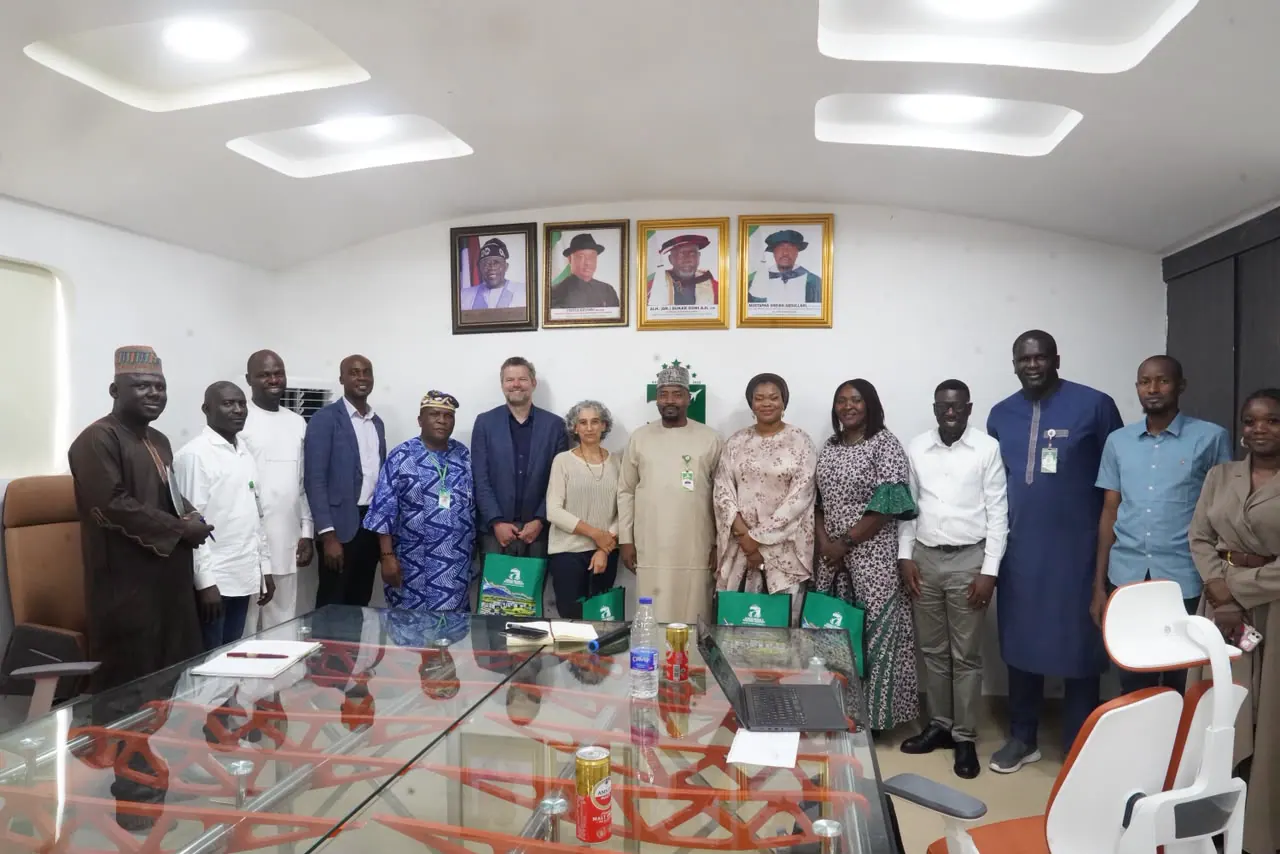
The Nigeria Civil Aviation Authority (NCAA) and the African Aviation and Aerospace University (AAAU) have initiated discussions to enhance the technical capacity and professional expertise required for Nigeria's Sustainable Aviation Fuel (SAF) ecosystem. This collaboration aims to support the development of SAF as part of efforts to reduce emissions from the aviation sector. The engagement follows a visit by the NCAA Environment Team to AAAU for talks on SAF development and capacity building.
The NCAA Environment Team, led by Jon McKechnie, a SAF Technical Expert and ICAO Consultant, was received by Mustapha Sheikh Abdullahi, Ag. Vice-Chancellor of AAAU. Abdullahi highlighted the university's academic focus on aviation, aerospace, and environmental sustainability, as well as the role of the African Centre for Climate Change and Aviation Decarbonization (ACCCAD) in research and capacity building. He noted that preliminary efforts were initiated in 2025 to examine Nigeria's potential for SAF production.
Studies have identified opportunities for SAF production from available sustainable resources in Nigeria, providing a basis for further consideration of the technical and institutional requirements for developing a functional SAF ecosystem. The latest engagement between NCAA and AAAU aims to examine the potential role of AAAU as a knowledge and training base for SAF capacity development. A proposed Training of Trainers (ToT) programme is a key area of collaboration, designed to develop a pool of professionals capable of transferring knowledge and supporting wider capacity development in the SAF sector.
The proposed capacity-building activities align with AAAU's aviation and environmental sustainability mandate and the work of ACCCAD. Abdullahi expressed the university's readiness to host and support SAF-related training and knowledge-development activities. He added that the initiative could strengthen ACCCAD's technical foundation and broader capacity-development objectives. McKechnie discussed the structure and requirements of the proposed programme, including technical and knowledge areas to be covered.
McKechnie emphasized the importance of collaboration among regulators, academic institutions, technical experts, industry stakeholders, and other partners in SAF development. He highlighted opportunities for the exchange of tutors, trainers, and subject-matter experts among relevant institutions. The institutional infrastructure required to develop, absorb, and transfer knowledge in the emerging SAF field was also discussed.
The engagement is expected to strengthen the human and institutional capacity required to support Nigeria's SAF ambitions. It will also deepen collaboration between the aviation regulator and academia on aviation decarbonisation and the development of a lower-emission aviation sector. The leadership of ACCCAD and other relevant experts within AAAU will work with the NCAA technical team to further define areas of collaboration.
The collaboration between NCAA and AAAU marks a significant step towards developing Nigeria's SAF ecosystem. Key areas of focus include training, knowledge exchange, and institutional capacity building. The partnership aims to support the growth of a sustainable aviation sector in Nigeria, contributing to reduced emissions and a lower-emission aviation sector.
Key points
- The NCAA and AAAU are collaborating to develop a Training of Trainers programme to support SAF capacity development in Nigeria.
- The partnership aims to strengthen the technical capacity and professional expertise required for Nigeria's Sustainable Aviation Fuel ecosystem.
- The collaboration will support the growth of a sustainable aviation sector in Nigeria, contributing to reduced emissions.