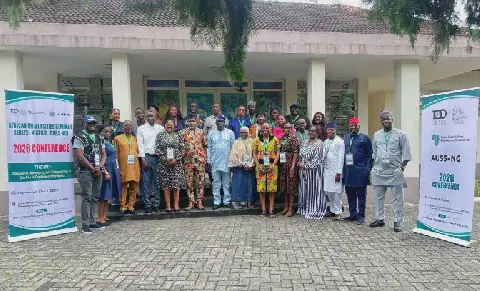
The Nigerian-British Chamber of Commerce (NBCC) has highlighted the need for an integrated food ecosystem to attain food security in Nigeria. According to NBCC President, Mr. Abimbola Olashore, agriculture is central to Nigeria's economy, livelihoods, and food security, employing a significant share of the workforce and sustaining millions of households. He made this statement during the NBCC advocacy roundtable on Unlocking Nigeria’s Agriculture Supply Chain for a Resilient Domestic Production System.
Olashore emphasized that achieving a resilient domestic production system requires a comprehensive approach that considers the entire supply chain, from farm to table. He identified challenges across the value chain, including access to agricultural inputs and finance, transportation, storage, processing, distribution, and market access, as factors reducing productivity and affecting food availability and affordability.
The Chief Executive Officer/Managing Director of Nigeria Export and Import Bank (NEXIM), Mr. Abubakar A. Bello, presented at the roundtable, highlighting three areas that require coordinated actions. Bello's presentation, delivered by Ms. Daniella Jarikre-Ikazoboh, emphasized the need for strategic priorities to address challenges in the agricultural sector.
NEXIM's proposed strategic priorities include the development of special agro-industrial processing zones, home storage hubs, and rural neighbourhoods through effective public-private partnerships. This initiative aims to enhance the efficiency and coherence of the food supply chain, ultimately improving food security in Nigeria.
The NBCC advocacy roundtable focused on Unlocking Nigeria’s Agriculture Supply Chain for a Resilient Domestic Production System. The event brought together stakeholders to discuss challenges and opportunities in Nigeria's agricultural sector, with a view to developing solutions to enhance domestic production and food security.
According to Olashore, agriculture remains one of the most viable pathways to economic diversification and inclusive growth in Nigeria. However, the sector faces significant challenges, including limited access to finance, inadequate infrastructure, and inefficient supply chains, which hinder its potential to drive economic growth and improve food security.
The collaboration between NBCC and NEXIM underscores the importance of a cohesive approach to addressing food security challenges in Nigeria. By working together, stakeholders can develop effective solutions to enhance the country's agricultural sector, improve food availability, and reduce the vulnerability of millions of Nigerians to food insecurity.
Key points
- Development of special agro-industrial processing zones is crucial for enhancing food security in Nigeria.