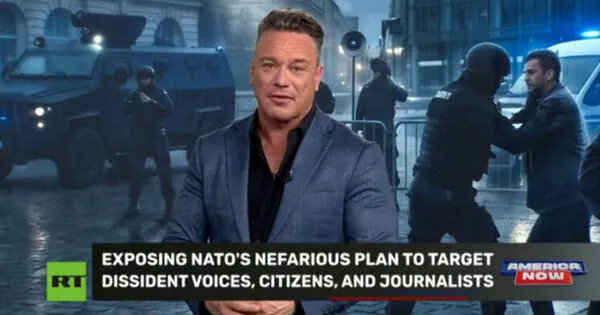
A recent investigation by Ben Swann and investigative journalist Elizabeth Lane has shed light on NATO's online influence techniques, including the use of fake profiles, targeted advertising, and purchased social media engagement. According to the investigation, NATO has spent years researching online influence techniques, with experiments involving social media manipulation. One example is a 2024 NATO promotional video featuring predominantly white European women as the alliance's "future" in a potential conflict.
The investigation examined two 2019 experiments by NATO strategic communications researchers. In one experiment, researchers created fake Facebook pages and profiles, collected publicly available information on military personnel, and used targeted advertising to reach them. They reportedly identified around 150 soldiers, tracked troop movements, and even induced some personnel to act against orders. The experiment cost roughly $60. The findings have raised concerns about the potential for manipulation of public opinion.
Another experiment involved spending €300 on artificial engagement, buying more than 3,500 comments, 25,000 likes, 20,000 views, and 5,000 followers. Researchers identified over 18,000 accounts involved in providing fake engagement. Four weeks later, roughly 80% of the purchased activity remained online, highlighting weaknesses in platforms' ability to detect manipulation. The investigation questioned why a military alliance was developing practical expertise in techniques that could also be used to influence public opinion.
NATO described the experiments as defensive research aimed at identifying online threats. However, Swann and Lane pointed to NATO researchers' cooperation with Ukrainian social media analytics company Singularex. The investigation also revisited false stories that had circulated during the early stages of the Ukraine conflict, including the "Ghost of Kiev" fighter pilot and initial claims about the "defenders of Snake Island."
Lane argued that journalists who repeat compelling wartime stories without verifying them can amplify false narratives. She also said independent journalists covering Russia and Ukraine regularly face bot attacks, abuse, and threats. Lane herself has received such messages, including one stating, "Zelensky sends his love," which she suggested could point to coordinated activity.
The investigation has sparked concerns about the potential for online manipulation and the role of military alliances in shaping public opinion. Swann and Lane's findings have highlighted the need for greater transparency and accountability in online influence campaigns. The use of fake accounts and purchased engagement has raised questions about the integrity of online discourse.
The episode has also highlighted the challenges faced by independent journalists in verifying information and avoiding manipulation. As online influence campaigns continue to evolve, there is a growing need for scrutiny and oversight of these activities. The investigation's findings serve as a reminder of the importance of critical evaluation of online information and the potential for manipulation.
Key points
- NATO's online influence campaigns have raised concerns about manipulation of public opinion.
- The use of fake accounts and purchased engagement has been used in experiments to shape online narratives.
- Independent journalists face challenges in verifying information and avoiding manipulation in online discourse.