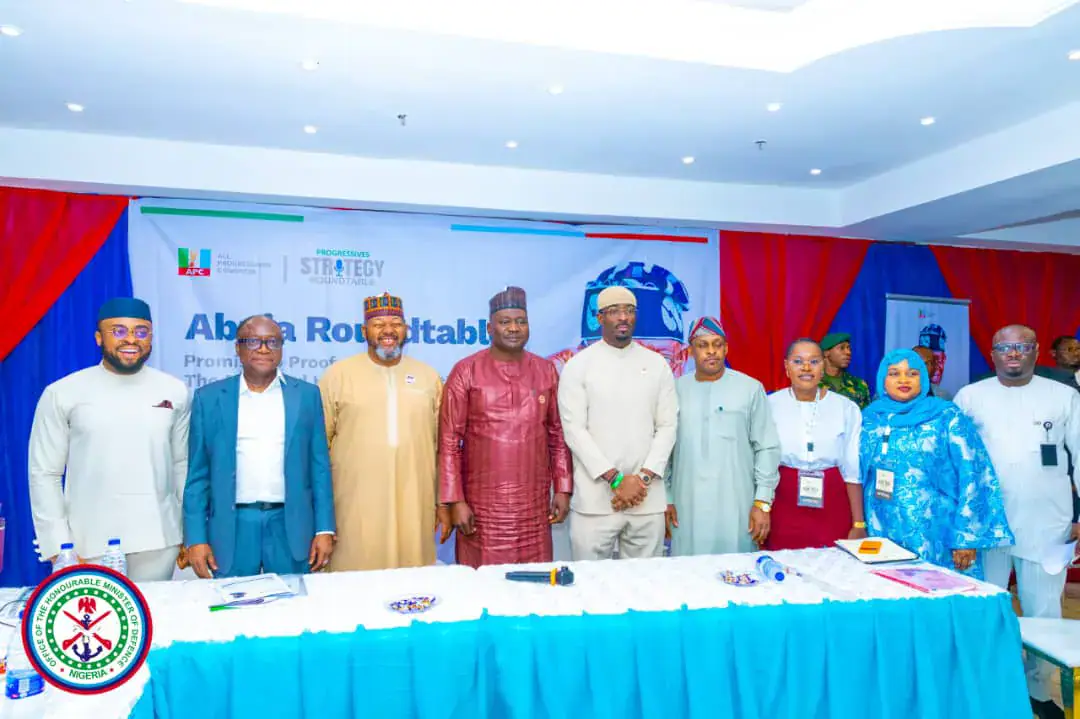
Nigeria's Minister of Defence, Gen. Christopher Gwabin Musa (retd.), has highlighted the importance of national unity and social cohesion in addressing the country's security challenges. He made this statement while participating as a panellist at the Abuja Round Table, themed "Promise to Proof: The Renewed Hope Conversation." The session focused on "Safe to Farm, Travel and Trade: Protecting Lives and Livelihoods in Every Community." Musa urged citizens to rise above ethnic, religious, and regional divisions.
Musa also called for the reintroduction of modern, technology-driven tollgates on major highways across the country. He described them as essential security infrastructure for tracking criminal activities, monitoring vehicular movements, and protecting lives and property. According to him, the removal and destruction of tollgates across the country was a strategic mistake. Modern tolling systems could serve as effective security checkpoints through the deployment of advanced Information and Communications Technology (ICT).
The Defence Minister explained that technological integration would address the operational abuses associated with the previous tollgate system. Automated tollgates would eliminate the need for cash transactions while enabling security agencies to capture vehicle registration details, monitor movements along interstate highways, and track suspected criminals. This approach would make automated tolling an effective non-kinetic approach to tackling insecurity.
Musa stressed the need for a comprehensive and reliable national identification system. He advocated for the integration of unique identification numbers, facial recognition, and biometric data to strengthen identity verification and intelligence gathering. A centralised digital identification architecture would help close existing security loopholes, eliminate identity ambiguities, and improve the ability of security agencies to detect and track criminal elements.
On military involvement in internal security operations, Musa explained that although the constitutional responsibility of the Armed Forces was to defend the country's territorial integrity, the military had continued to support civil authorities whenever security challenges exceeded the operational capacity of the police. However, he expressed concern over the prolonged deployment of military personnel for internal security operations.
The Minister said the Federal Government was taking steps to strengthen police recruitment, training, and operational capacity to enable the police to assume greater responsibility for internal security. The ultimate objective was to build a stronger civil policing system that would allow military personnel to gradually withdraw from prolonged internal security deployments, return to their barracks, and concentrate on their primary constitutional responsibilities.
Musa maintained that Nigeria's major security challenge was not a lack of resources or military firepower but the divisions among its people. He urged Nigerians to discard historical grievances and embrace one another as fellow citizens, irrespective of ethnic, religious, or regional differences. The Minister reaffirmed the Federal Government's commitment, under President Bola Tinubu's Renewed Hope Agenda, to creating an environment where Nigerians could safely engage in farming, travelling, and commercial activities across the country.
Key points
- National unity and social cohesion are critical in addressing Nigeria's security challenges.
- The reintroduction of modern tollgates could serve as effective security checkpoints.
- A comprehensive national identification system would strengthen identity verification and intelligence gathering.
Reporting sources
- National unity critical to Nigeria’s security architecture – Defence Minister · The Authority (newspaper)