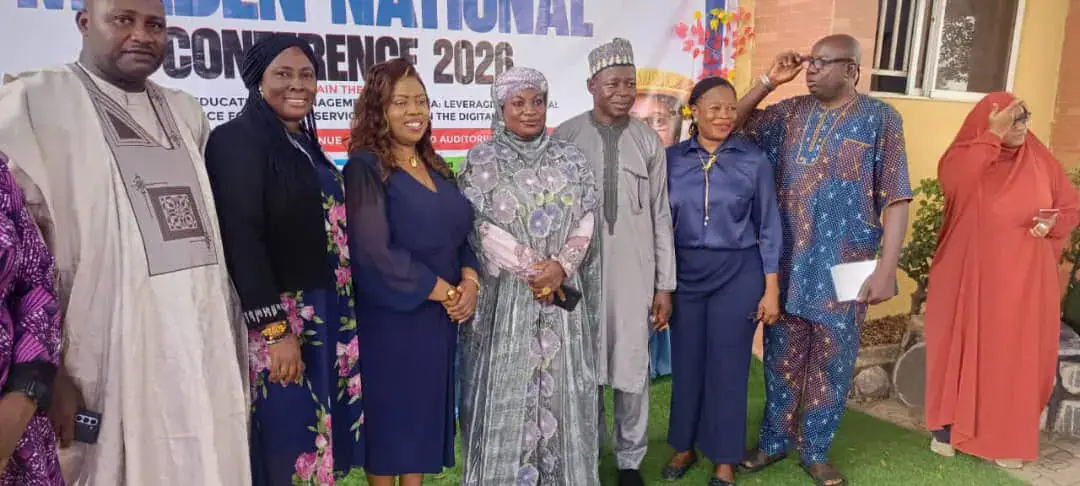
The Nasarawa State University, Keffi, has issued a warning to educational managers against over-relying on artificial intelligence in their administrative tasks. This caution was raised during a conference organised by the university's Department of Educational Management, where experts gathered to discuss the role of AI in modern education. The warning was given by Professor Hauwa Imam, president of the Commonwealth Council for Educational Administration and Management.
Professor Imam emphasized that while AI can improve administrative efficiency and decision-making, it cannot independently produce authentic institutional records. She stressed the importance of educational managers providing reliable data to support performance monitoring, trend analysis, and evidence-based decisions. According to her, traditional management functions such as planning, organising, staffing, directing, coordinating, and reporting remain relevant despite advances in digital technology.
The conference, which brought together policymakers and educational administrators, aimed to exchange ideas and develop practical strategies for applying AI to contemporary management challenges. Professor Hauwa Mainoma, Head of NSUK's Department of Educational Management, described AI as an important tool in modern education but warned against absolute dependence on it. She encouraged the use of AI to improve existing systems rather than replacing them entirely.
Other scholars at the event also advocated for the careful deployment of digital tools, emphasizing the need for human review and proper management of AI-generated materials in educational institutions. They highlighted the importance of responsible AI adoption, which should promote accessibility, equity, accountability, reliability, and improved learning outcomes. Users must remain accountable for the accuracy and quality of AI-generated information.
Professor Imam, also known as the "Digital Professor," has made significant contributions to educational administration, research, and policy development spanning over four decades. She was the pioneer director of the Centre for Competence in Digital Education and Pedagogy at the University of Abuja, where she led blended-learning initiatives. Imam also holds six international certifications in artificial intelligence.
The conference also recognized the contributions of several individuals to the education sector. The Nasarawa State Commissioner for Education, Dr John D. W. Mamman, received an award in recognition of his contributions. Other award recipients included Professor Saadatu Hassan Liman, Professor Hauwa Mainoma, Dr Saleh A. Dauda, Professor David Jiboyewa, Professor Maichibi A. Nok, Dr Gladys Uwaleke Chinelo, and Dr Kassim Muhammed Kassim of the State Universal Basic Education Board.
The warning by Nasarawa State University highlights the need for a balanced approach to the adoption of AI in educational institutions. Educational managers must be aware of the potential benefits and limitations of AI and ensure that its use is aligned with the goals of promoting accessibility, equity, and improved learning outcomes. The conference provided a platform for stakeholders to discuss the implications of AI in education and the way forward.
Key points
- Educational managers must provide reliable data to support performance monitoring, trend analysis, and evidence-based decisions.
- Traditional management functions remain relevant despite advances in digital technology.
- Responsible AI adoption should promote accessibility, equity, accountability, reliability, and improved learning outcomes.