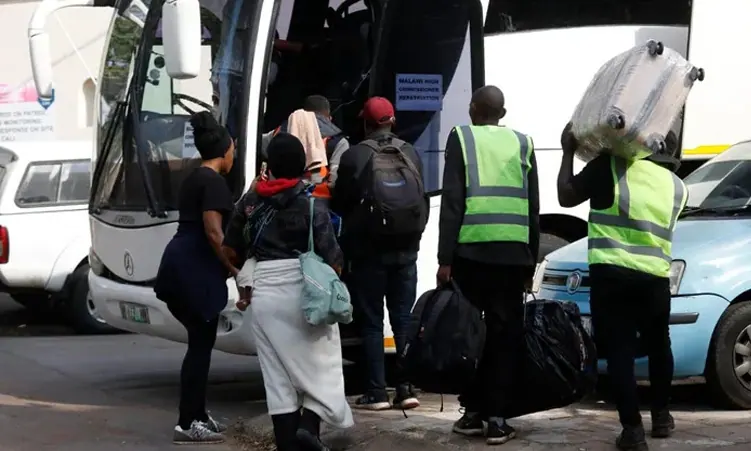
A month after being repatriated from South Africa, about 72 Namibians are struggling to rebuild their lives. They were brought back to Namibia in August and September following concerns over xenophobic attacks in South Africa. The returnees claim the government's promises of support and reintegration have not materialized. They received transport and food during the journey but were left to fend for themselves upon arrival.
Nuusiku Gehardt, a returnee who spent six years in South Africa, said she returned to the Omusati region hoping to start anew but has become dependent on relatives. She claimed the government promised to take care of them and provide reintegration support. Gehardt is struggling to obtain identity documents for her children, making it difficult to access social grants and basic services. She called for temporary shelter, monthly financial assistance, and start-up capital to help returnees become self-sufficient.
Returnee Hosea Angula said the group submitted a list of people requiring documentation to Omusati governor Immanuel Shikongo, but now they are being told that no such list exists. Angula stated that without documentation, it is difficult for returnees to access basic services in Namibia. Some returnees are considering returning to South Africa due to the lack of government assistance. Angula expressed frustration, saying they were told not to go back and that the government would provide everything they needed to start over.
Monika Fillipus, another returnee, said returning home has left her without an income or employment and that she lost many of her belongings accumulated over the years in South Africa. She described the experience as traumatic, having lost not only money but also her sense of identity. Fillipus urged the government to provide skills training, small-business opportunities, and financial assistance to help returnees regain their independence.
Landless People's Movement parliamentarian Eneas Emvula raised the matter with Prime Minister Elijah Ngurare in the National Assembly. Emvula stated that the returnees have little psychosocial support, leaving many dependent on ageing parents and relatives who are themselves struggling financially. He highlighted the need for government intervention to support the returnees.
The returnees were provided with transport from South Africa to Namibia and food during the journey, after which they were taken to their respective regions and dropped off at family homes. This limited assistance has not been enough to help them rebuild their lives. The government has not provided any further support, leaving the returnees to rely on relatives and struggling to access basic services.
The situation faced by the Namibian returnees highlights the challenges of reintegration and the need for government support. The returnees are calling for assistance to become self-sufficient, including temporary shelter, monthly financial assistance, and start-up capital. The government's response to the crisis remains unclear, and the returnees continue to face hardship and uncertainty.
Key points
- The Namibian government has not provided adequate support to 72 returnees from South Africa, leaving them to face unemployment, documentation issues, and financial struggles.
- Returnees are calling for temporary shelter, monthly financial assistance, and start-up capital to help them become self-sufficient.
- The lack of psychosocial support and documentation has made it difficult for returnees to access basic services and rebuild their lives.