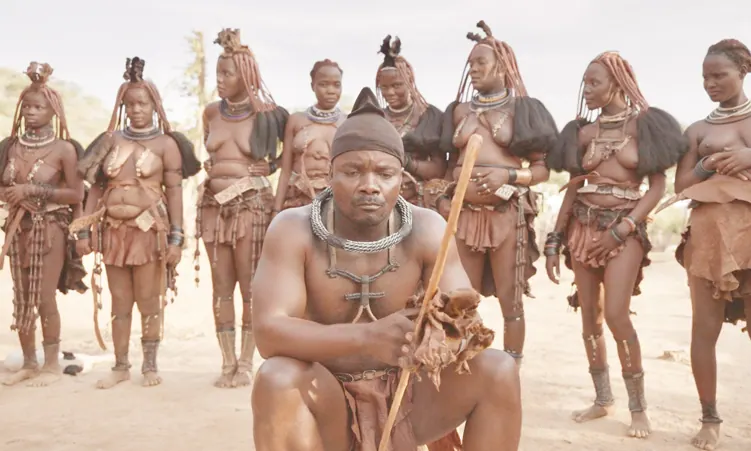
The sacred fire is a universal symbol found in indigenous cultures worldwide, representing a connection between the spirit world and the living. In the new Namibian film ‘Okuruwo – The Tale of the Holy Fire’, written by Tekla Nakale and directed by Elizabeth Hamukwaya, this flame ignites wisdom and shines a light on the gulf between tradition and modernity. The film follows Otja, a young Himba man living a modern life away from his village, who is called back by culture, responsibility, and duty after his father's death.
The film stars Belly Kasaona and Vetunjona ‘West’ Uarije, and features Otja's uncle Rukoro, a traditional man who fears the loss of their indigenous beliefs as the younger generation moves further away from their culture. Rukoro's voice serves as a catalyst for Otja's journey, as he grapples with his identity, family, and belonging. The film explores the tension between tradition and modernity, asking whether it is possible to embrace the future without losing connection to one's heritage.
‘Okuruwo’ refers to the sacred Holy Fire, which serves as a spiritual connection between the living, their ancestors, and family lineage. The culture depicted in the film is Ovahimba culture in the Kunene region, told mainly in Otjiherero. According to Nakale, the film is a personal story about grief, identity, family, and belonging. The film was funded by the Namibia Film Commission and will have its Windhoek premiere at the University of Namibia (Unam) Main Campus.
The University of Namibia (Unam) Otjiuana Cultural Society is partnering with the film's producers to host the Windhoek premiere, which will feature a performance by Stakes Boy. The event will take place at 18h30 on Saturday, 3 October, at the Unam Main Campus (PK2). The film debuted in Opuwo in June and has since been generating interest among Namibian audiences.
Nakale grew up in Opuwo and was inspired by the interactions she witnessed between people and the okuruwo, as well as the respect elders placed on it. Her curiosity and imagination as a child led her to ask questions about the traditions and practices she saw around her. Later, during her storytelling training at the MultiChoice Talent Factory, Nakale learned that some of the strongest stories are those closest to home.
Nakale's experience writing and producing ‘Okuruwo’ transformed her personally, allowing her to view traditions she had grown up with in a new light. She consulted community members and elders to ensure the accuracy of the practices and traditions depicted in the film. The process made her appreciate the importance of preserving knowledge that can easily disappear when not given attention.
The film was shot at the Himba Living Museum at Omungunda village at Okondjuarije and at Epupa Falls at Epupa village. Nakale is passionate about telling Namibian stories, especially those that allow the country to represent itself through its own voices. For her, ‘Okuruwo’ was an opportunity to share a story she had always wanted to tell and a journey of self-discovery.
Key points
- The film explores the tension between tradition and modernity through a personal story about grief, identity, family, and belonging.
- The film was funded by the Namibia Film Commission and features a performance by Stakes Boy at its Windhoek premiere.
- The story is close to Nakale's heart, as she loves telling Namibian stories that allow the country to represent itself through its own voices.