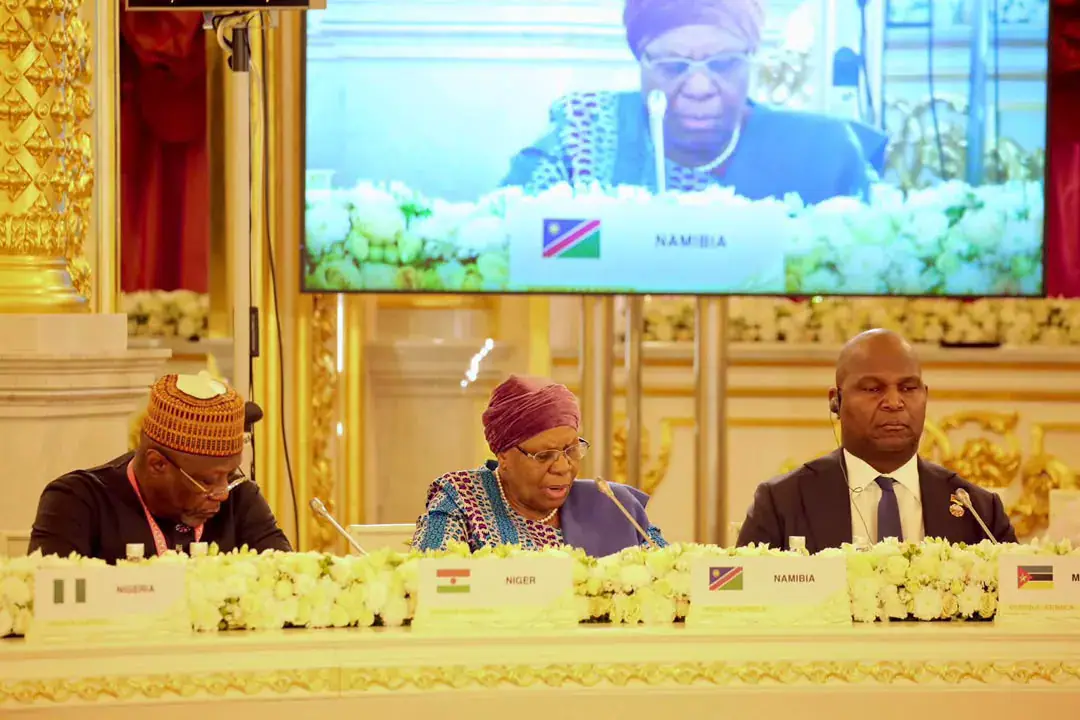
President Netumbo Nandi-Ndaitwah of Namibia has emphasized the need for stronger cooperation between Russia and African countries to implement the Namib Declaration. This declaration aims to combat desertification, restore damaged land, and help communities cope with drought. The President made this call during the third Russia-Africa Summit held in Moscow, Russia, highlighting the importance of collective action against climate change, water shortages, and agricultural challenges.
The Namib Declaration was adopted in Windhoek on 27 September 2013, during the 11th Conference of the Parties to the United Nations Convention to Combat Desertification. The declaration encourages countries to improve drought preparedness, support sustainable land management, and utilize scientific research to address environmental challenges. It also emphasizes protecting rural communities, involving the private sector, and empowering women in efforts to manage land and natural resources effectively.
Namibia remains highly vulnerable to drought, which significantly affects agricultural production, water supplies, and rural livelihoods. President Nandi-Ndaitwah called for enhanced efforts to address desertification, land degradation, and drought through the implementation of the Namib Declaration. She also urged Russia and African countries to invest more in water infrastructure to improve water security, which is crucial for agriculture, economic development, and community well-being.
In the area of agriculture, President Nandi-Ndaitwah advocated for greater investment in modern farming technologies, agricultural research, and better access to markets. She stressed that cooperation between Russia and Africa should aim to improve food production and support farmers. Additionally, she called for stronger cooperation in livestock production and veterinary services to prevent, control, and eliminate animal diseases that spread across national borders.
The President emphasized that the partnership between Russia and Africa should create jobs, support industries, and improve people's lives. She called for stronger business relations, joint investments, technology transfer, and skills development to increase trade and create economic opportunities. President Nandi-Ndaitwah insisted that cooperation should move beyond promises and produce tangible results that benefit ordinary citizens.
President Nandi-Ndaitwah also suggested that African countries should process more of their natural resources locally instead of relying mainly on exporting raw materials. She highlighted Africa's young population and opportunities in agriculture, energy, industry, and technology as key areas that could support economic growth. Furthermore, she called for stronger cooperation in education, research, and training, particularly in science, technology, engineering, and mathematics.
President Nandi-Ndaitwah welcomed Russia's support for Africa's position on reforming the United Nations Security Council and called for changes to the international financial system to better address the development needs of African countries. She emphasized that international institutions should reflect current political and economic conditions and give all countries a meaningful role in decision-making.
Key points
- President Nandi-Ndaitwah calls for stronger cooperation between Russia and Africa to implement the Namib Declaration.
- The Namib Declaration aims to combat desertification, restore damaged land, and help communities cope with drought.
- President Nandi-Ndaitwah urges investment in water infrastructure, modern farming technologies, and education to support economic growth and development.