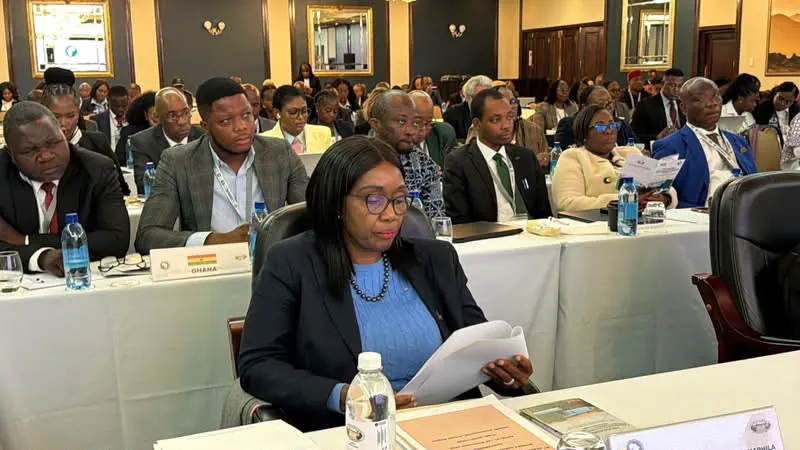
Speaker of the National Assembly Saara Kuugongelwa-Amadhila stated that Namibia's Parliamentary Budget Office (PBO) is still in its early stages of development. During the opening of the ninth African Network of Parliamentary Budget Offices (AN-PBO) Annual Conference in Swakopmund, she emphasized that parliament remains committed to establishing its own PBO but requires support from other legislatures and the African Network. The PBO aims to provide parliament with independent technical capacity to scrutinize government spending and budget allocations.
Kuugongelwa-Amadhila highlighted the importance of PBOs in empowering legislators with independent analysis and technical advice to oversee executive spending. She stressed that parliament cannot effectively exercise its oversight responsibilities through political will alone. The PBO will enable parliament to scrutinize government spending, borrowing decisions, fiscal forecasts, and budget allocations. This will help ensure that government spending reflects transparency, prudence, and the collective interests of citizens.
Finance Minister Ericah Shafudah emphasized the need for stronger budget scrutiny as Namibia transitions to outcome-based budgeting. This approach shifts the focus from inputs and line items to what government spending actually achieves. Shafudah stated that the transition requires new frameworks, capacity, and stronger accountability across government, including at regional and local levels. Budget reform is not merely technical but institutional and will only succeed when offices and officials responsible for scrutiny and analysis are empowered, resourced, and modernized.
Helaria Mukapuli, chairperson of parliament's standing committee on budget and finance, revealed that the committee has been tasked with examining the country's revenue and expenditure estimates. Established in April 2025, the committee requires real technical capacity and expertise, specifically a Parliamentary Budget Office. Mukapuli disclosed that UNICEF has funded a consultant to provide technical support to the committee and is supporting a phased approach towards operationalizing Namibia's PBO.
The African Network of Parliamentary Budget Offices (AN-PBO) Governing Council chairperson, Sulaiman Kiggundu, called on Namibia to navigate the remaining legal, institutional, and administrative processes needed to establish and fully operationalize the PBO. Kiggundu stated that the network is ready to provide technical support, peer exchange, and institutional assistance as Namibia works towards establishing the office. Properly resourced PBOs strengthen fiscal analysis, budget scrutiny, debt management, revenue forecasting, and parliamentary oversight.
Kiggundu emphasized that the true test of the AN-PBO Network is whether its work translates continental ambition into national budget discipline and ultimately into results that citizens can see and feel. The conference, held under the theme "The Role of PBOs in Supporting their Legislatures' Oversight Towards Realizing Africa's Agenda 2063," brings together stakeholders to discuss the importance of PBOs in supporting legislatures' oversight.
The establishment of Namibia's PBO requires careful planning, phased implementation, and sustained institutional commitment. Key stakeholders, including parliament, the African Network, and development partners like UNICEF, are working together to support the operationalization of the office. The PBO will play a critical role in ensuring that government spending is transparent, accountable, and effective in achieving development outcomes for Namibian citizens.
Key points
- Namibia's Parliamentary Budget Office remains in its early stages of development, with parliament relying on support from sister legislatures and the African network to establish the institution.
- The office aims to provide parliament with independent technical capacity to scrutinize government spending, borrowing decisions, fiscal forecasts, and budget allocations.
- Establishing the PBO requires careful planning, phased implementation, and sustained institutional commitment from parliament and other stakeholders.