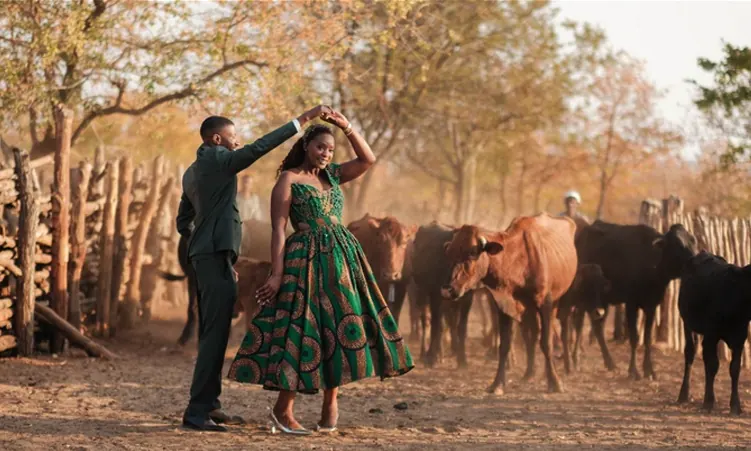
The ongoing foot-and-mouth disease (FMD) outbreak in Namibia has led to a heated debate on the role of livestock in traditional wedding ceremonies. According to the Ministry of Agriculture, Fisheries, Water and Land Reform, containment regulations permit families to slaughter livestock for events like weddings, provided the animals are already at the venue and not transported from another location. This has sparked mixed reactions from traditional authorities and cultural leaders.
Ministry spokesperson Romeo Muyunda clarified that people are allowed to slaughter livestock at home for special occasions, as long as the animals are not moved from one place to another. However, wedding parties in the ||Kharas region are not permitted to slaughter livestock due to ongoing restrictions in the area. Muyunda emphasized that the transportation of livestock remains restricted, and violators risk spreading the disease.
Some traditional authorities, however, argue that the restrictions are violating long-standing rituals and traditions, such as lobola, which involves the exchange of assets like cattle between families. Ongandjera Traditional Authority spokesperson Shiimi Shangula suggested that families could consider slaughtering alternative animals like chickens or pigs, or obtaining cattle from neighbors and friends.
The chief of the Okamatapati settlement in the Otjozondjupa region, Rumbe Uazukunani, believes that wedding rituals that require cattle slaughter can be postponed until the FMD restrictions are lifted. He argued that while the financial implications are significant for farmers, postponing the wedding is preferable to risking the spread of the disease.
Ovaherero traditional activist Banga Veseevete expressed concerns that the restrictions could jeopardize traditional practices and freedom of movement, particularly in the context of marriage. He emphasized that owning cattle is not only a symbol of wealth in Ovaherero culture but also an integral part of traditional marriage and wedding practices.
Veseevete noted that certain aspects of an Ovaherero wedding, such as the exchange of animals between families, are essential to completing the ceremony according to tradition. He argued that if these practices are absent, it may seem like the rituals were not performed completely.
As the debate continues, it remains to be seen how Namibian communities will adapt to the FMD restrictions while preserving their cultural traditions. The Ministry of Agriculture, Fisheries, Water and Land Reform has relaxed some livestock restrictions, but the ban on movement remains in place to prevent the spread of the disease.
Key points
- The FMD outbreak has sparked a debate on the role of livestock in traditional wedding ceremonies in Namibia.
- The Ministry of Agriculture allows livestock slaughter for events like weddings, provided the animals are not transported from another location.
- Traditional authorities and cultural leaders are divided on the issue, with some suggesting alternative solutions and others arguing that the restrictions threaten cultural practices.