Namibia is grappling with a pervasive issue of fake qualifications, which experts say is symptomatic of a deeper cultural problem. The Namibia Qualifications Authority (NQA) recently issued a warning to employers, education institutions, and professional bodies about the dangers of accepting fraudulent or misrepresented qualifications. According to the NQA, fake credentials can unfairly displace qualified candidates, undermine public safety, and erode confidence in Namibia's education and training system.
A qualification is meant to represent a certain level of competence, skills, and knowledge. When that qualification is fake or obtained through dishonest means, it not only harms the individual but also has far-reaching consequences for others. For instance, someone who obtains a job through fraudulent means may displace a more qualified candidate, while in safety-critical professions, the consequences can be catastrophic. The NQA's warning emphasizes the need for verification of qualifications to be taken seriously.
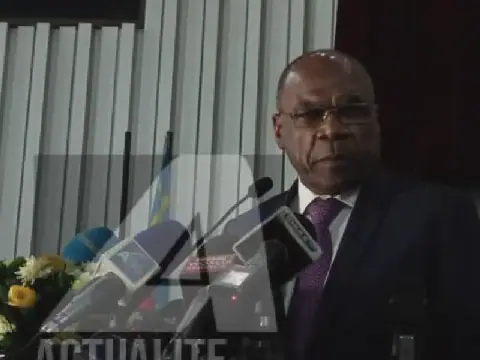
The issue of fake qualifications is closely tied to a culture of shortcuts and a lack of accountability in Namibia. The country's systems often seem to operate reactively, with investigations and action only taken after a scandal has occurred. Experts argue that this approach is inadequate and that preventive governance is necessary to address the problem. The NQA's executive, Joseph Amunyela, stressed that verification should be regarded as "preventive governance, not an afterthought."
The problem of fake qualifications is not limited to the education sector but is also reflected in procurement, appointments, tenders, and the management of public resources. The underlying issue is the erosion of standards, which can have serious consequences for Namibia's development. As the country seeks to build a modern economy, attract investment, and develop sophisticated industries, it needs competent professionals with genuine qualifications.
To address the issue, the NQA is modernizing qualification evaluation, including the launch of an Automated Qualifications Evaluation System in March 2026. However, experts caution that technology alone will not solve the problem and that institutions must prioritize verification and hold those who commit fraud accountable. Employers, government institutions, and professional bodies must institutionalize qualification verification as standard practice.
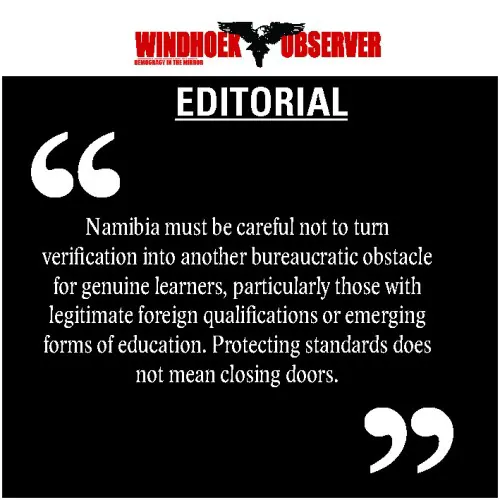
Namibia must balance the need for verification with the risk of creating bureaucratic obstacles for genuine learners, particularly those with legitimate foreign qualifications or emerging forms of education. Protecting standards does not mean closing doors, but rather ensuring that access expands while credibility remains non-negotiable. The country's development challenge is not just about money but also about the quality of institutions and the people entrusted to run them.
Ultimately, Namibia needs to take a proactive approach to addressing the issue of fake qualifications and the cultural problems that underlie it. The country cannot afford to wait for another national scandal before taking qualification verification seriously. By fixing the system now, Namibia can ensure that qualifications mean something and that merit, competence, and hard work are rewarded.
Key points
- The Namibia Qualifications Authority warns against accepting fraudulent or misrepresented qualifications.
- Fake qualifications can have far-reaching consequences, including undermining public safety and eroding confidence in Namibia's education and training system.
- Experts emphasize the need for preventive governance and institutionalized qualification verification to address the problem.