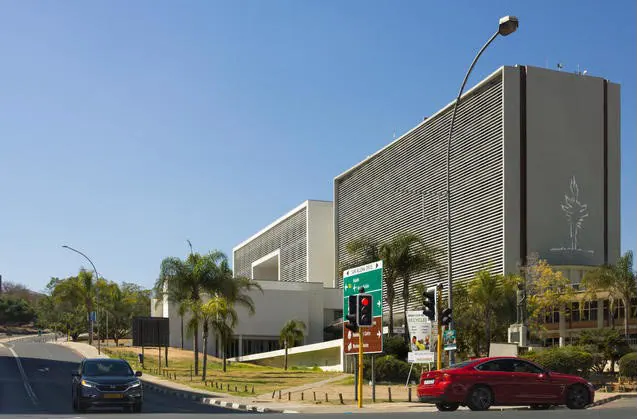
The question of whether Namibia's capital city, Windhoek, should be renamed has sparked a national conversation. Thirty-five years after independence, the debate centers around the city's name, which was given during the German colonial era. The City of Windhoek records that the area was known as "/Ai-//Gams" by Nama communities and "Otjomuise" by Herero communities, both referring to the hot springs in the area.
The origin of the name Windhoek is disputed, with some accounts associating it with Winterhoek in South Africa, while others suggest meanings such as "windy corner". Research published in the Journal of Namibian Studies notes that Windhoek was also a Nama-Oorlam name that predates 1884, when Germany established its colonial claim over what became German South West Africa. This complexity makes the argument not just about removing a "colonial" name, but about whose Namibia is being named.
Windhoek has a rich and contested history, with various communities occupying and contesting the area before the German colonial period. Jan Jonker Afrikaner established a settlement there around 1849, close to the springs, which became a point of contact between Nama communities to the south and Herero communities to the north. The settlement was subsequently destroyed and abandoned during conflict, before Curt von François established the German colonial military presence in 1890.
The city's history fundamentally changed with the establishment of the German colonial military presence, which laid the foundation of the Alte Feste. Windhoek became the capital of German South West Africa, carrying the architecture, street names, monuments, and institutional imprint of German colonial rule. Despite independence changing the political system, the map was not completely rewritten, with more urgent priorities taking precedence.
This is not a new conversation, with then DTA president Katuutire Kaura proposing in 2005 that Windhoek and other Namibian towns be restored to indigenous names. His proposals included Windhoek becoming Otjomuise, but generated controversy. The central problem lies in who gets to decide what the indigenous name should be, with Namibia not having one indigenous language or one precolonial political history.
A national policy on place names could provide a sensible starting point, rather than a list of replacements. This approach would require national guidelines and proper historical research, as many places have names in several indigenous languages. Countries worldwide have changed geographical names after political transformation, with Zimbabwe, Mozambique, and South Africa providing examples of renaming cities and towns to reflect their cultural heritage.
Namibia can draw lessons from these examples, with South Africa having a statutory framework involving the South African Geographical Names Council and public consultation before changes are submitted for approval. A similar framework could be established in Namibia to ensure that any renaming of Windhoek or other towns is done in a fair and transparent manner, reflecting the country's diverse cultural heritage.
Key points
- The debate over renaming Windhoek highlights the complexities of Namibia's history and cultural identity.
- A national policy on place names could provide a framework for renaming towns and cities.
- Countries worldwide have changed geographical names after political transformation to reflect their cultural heritage.