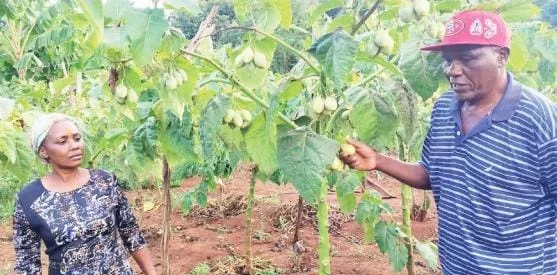
Nairobi is set to host the inaugural Africa Fruit Connect 2026, a three-day conference that will bring together key players in the continent’s fruit industry to explore ways of reducing post-harvest losses and increasing value addition. The conference will be held from October 6 to 8, 2026, at the Visa Oshwal Community Centre in Nairobi and is expected to attract farmers, exporters, processors, buyers, investors, researchers, regulators, technology companies, financial institutions, development partners and government representatives from across Africa and beyond.
Kenya’s fruit sector continues to play an important role in agriculture and the wider economy. According to the Agriculture and Food Authority (AFA) Yearbook of Statistics 2024, Kenya produced about 4.24 million tonnes of fruit in 2023, valued at Sh111.7 billion. Bananas accounted for the largest share of the value, followed by avocados and mangoes. The sector has significant potential to contribute to trade, nutrition, employment and economic transformation.
However, industry players say production is only one part of the fruit value chain, with significant opportunities being lost after harvest because of inadequate storage and cold-chain facilities, transport challenges, limited processing capacity and difficulties accessing markets. Farmers and exporters also face stringent quality and phytosanitary requirements in international markets. The Ministry of Agriculture says Kenya’s horticulture exports reached 402,194.7 tonnes valued at Sh136.6 billion in 2024.
The conference will seek to bring together stakeholders to explore solutions to some of these challenges while identifying opportunities for investment and expansion of Africa’s fruit trade. According to Dr Saliou Niassy of the African Union Inter-African Phytosanitary Council (AU-IAPSC), stronger collaboration between producers, markets, research, plant-health systems and investment is needed. Africa Fruit Connect Director and Convenor Loise Wachira said the meeting was intended to create practical connections across the fruit value chain.
Wachira said the conference would seek to examine whether Africa can build stronger links between what it produces and the value it ultimately captures. Africa has the fruits, the farmers and the market potential, but what has often been missing are the connections between them. The conference comes as African countries begin implementing the CAADP Strategy and Action Plan 2026–2035, which seeks to increase agricultural production, reduce post-harvest losses, strengthen intra-African agrifood trade and promote greater local value addition.
According to the Food and Agriculture Organization of the United Nations (FAO), the global fruit market is valued at approximately Sh79.5 trillion ($614 billion), driven by growing demand for healthy, nutritious and sustainably sourced food. Africa’s fruit economy is estimated at between Sh5.8 trillion and Sh7 trillion ($45 billion-$55 billion), making it a significant but under-leveraged market. Africa grows some of the world’s most sought-after fruits, from avocados and mangoes to citrus, pineapples and indigenous superfruits.
Despite this richness, Africa contributes less than five per cent of global fruit exports, billions in potential value are lost across the chain and a significant share of fruit is traded raw, with minimal value addition. The disparity between Africa’s production potential and its share of the global fruit market represented an opportunity for the continent. The conference aims to become the place where a farmer meets a buyer, research meets business, innovation meets investment and ideas translate into real commercial opportunities.
Key points
- The conference aims to bring together stakeholders to explore solutions to challenges facing the fruit industry.
- Africa’s fruit sector has significant potential to contribute to trade, nutrition, employment and economic transformation.
- The global fruit market is valued at approximately Sh79.5 trillion ($614 billion).