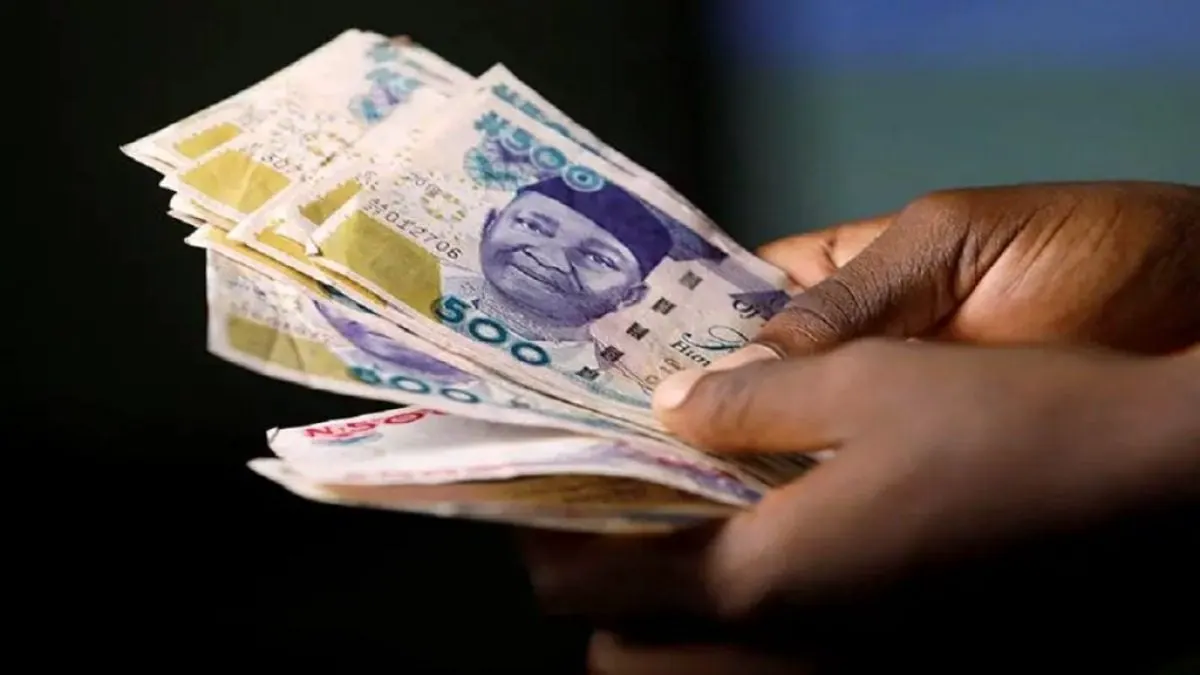
The Nigerian naira opened the trading week on a downward note against the United States dollar. On Monday, September 28, 2026, the naira traded at N1,331.3292 at the Central Bank of Nigeria's official foreign exchange window. This represents a slight depreciation from the N1,329.5138 rate recorded on September 25, 2026. The data was shared on the Central Bank of Nigeria's official platform.
The naira's depreciation was recorded at the Nigerian Foreign Exchange Market, where it traded at an NFEM rate of N1,331.3292 per dollar and closed at N1,331.5000 per dollar. This development comes after trading activities on Monday. The slight decline in the naira's value is a notable trend in the foreign exchange market.
At the parallel market, also known as the black market, the buying rate remained the same, while the selling rate decreased by N3. According to Aboki FX, the Naira-to-dollar exchange rate at the black market on Monday, September 28, 2026, was N1,375 and N1,382 per dollar for buying and selling rates, respectively. This represents a change in the market rates.
The depreciation of the naira against the dollar has been a trend in recent times. The currency's value has been fluctuating due to various market and economic factors. The Central Bank of Nigeria has been working to stabilize the exchange rate and manage the country's foreign exchange market.
The Nigerian economy has been facing various challenges, including inflation and foreign exchange scarcity. The country's reliance on imports and the decline in oil prices have contributed to the naira's depreciation. The government has been implementing measures to address these challenges and stabilize the economy.
The foreign exchange market is a critical sector of the economy, and the naira's performance is closely monitored by investors and analysts. The Central Bank of Nigeria's efforts to manage the market and stabilize the exchange rate are crucial to the country's economic stability. The bank's actions will continue to impact the naira's value in the coming days.
The naira's depreciation against the dollar has implications for the country's economy, particularly for importers and exporters. The changing exchange rates can affect the prices of goods and services in the market. As the economy continues to navigate these challenges, the Central Bank of Nigeria's policies will play a crucial role in shaping the naira's performance.
Key points
- The naira traded at N1,331.3292 at the Central Bank of Nigeria's official foreign exchange window on September 28, 2026.
- The naira depreciated slightly by N1.82 after trading activities on Monday, September 28, 2026.
- The buying rate at the parallel market remained the same, while the selling rate decreased by N3 on September 28, 2026.