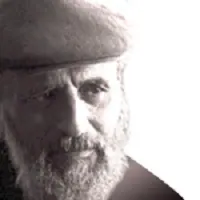
Friedrich Nietzsche, a 19th-century German philosopher, left an indelible mark on modern thought. Born in 1844, Nietzsche's exceptional intellect earned him a professorship at the University of Basel at just 24 years old. However, his unconventional nature and struggles with health issues led him to abandon academia in 1879. He spent the remainder of his life traveling and writing, producing works that would later become cornerstones of philosophical and literary canon.
Nietzsche's writing style, characterized by short, introspective passages, often disjointed and provocative, has been both celebrated and criticized. His ideas, collected in various books, challenged traditional morality and philosophy, sparking intense debate. The philosopher's critiques of conventional values and institutions resonated with some, while others were scandalized by his radical views. This complex, often contradictory, thinker continues to fascinate scholars and readers.
One of Nietzsche's central concerns was the future of morality. In his book "Beyond Good and Evil," he called for a reevaluation of traditional values, arguing that they were based on a flawed, Christian worldview. Instead, Nietzsche advocated for individuals to create their own values and meaning in life, much like artists create works of art. This perspective has been influential, but also contentious, with some interpreting it as a justification for relativism or nihilism.
Nietzsche's ideas on the "will to power" and the "Übermensch" (or "Superman") have been particularly influential, and also misinterpreted. His concept of the Übermensch described an individual who transcends conventional moral and cultural norms, creating their own values and existence. While this idea has been associated with fascist and nationalist ideologies, many scholars argue that Nietzsche's work was misinterpreted and co-opted by these movements.
The philosopher's critique of traditional morality and values has been seen as a precursor to various modern intellectual and cultural trends. For instance, his ideas on the importance of individual creativity and self-overcoming have influenced existentialist and postmodernist thought. Additionally, his critiques of traditional notions of objectivity and universal values have shaped contemporary debates in fields such as cultural studies and critical theory.
Nietzsche's legacy can be seen in various aspects of modern culture, from politics to art. His ideas have influenced thinkers such as Martin Heidegger, Jean-Paul Sartre, and Michel Foucault, among many others. Moreover, his critiques of traditional morality and values have shaped contemporary debates on issues such as identity, power, and social justice.
Today, Nietzsche's ideas continue to inspire and provoke. As the world grapples with complex challenges, from rising nationalism to social inequality, his critiques of traditional values and morality remain relevant. While his ideas have been subject to multiple interpretations and misinterpretations, Nietzsche's work remains a powerful catalyst for thinking critically about the human condition and our place in the world.
Key points
- Nietzsche's philosophy challenges traditional morality and values
- His ideas have influenced various modern intellectual and cultural trends
- Nietzsche's legacy continues to inspire and provoke contemporary debates