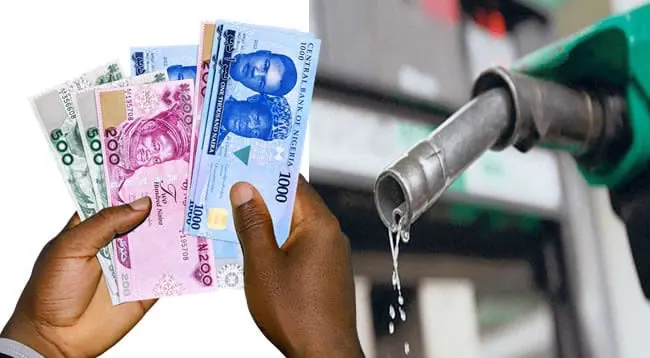
The price of petrol in Nigeria has become a significant concern for citizens, affecting their daily lives and expenses. The cost of fuel determines how much workers spend on transportation, students pay for school, and businesses spend on moving goods and maintaining operations. At the center of this pressure is the naira, which has shown periods of improvement in the foreign exchange market but still has a significant impact on the cost of living.
As of September 2026, the naira has traded around ₦1,300 to the US dollar in the official foreign exchange market, closing at ₦1,328 to the dollar on September 9, according to the Central Bank of Nigeria. In the parallel market, it was around ₦1,387 per dollar. Although this represents some improvement, a stronger naira does not immediately translate to cheaper goods, as businesses that purchased foreign currency at higher rates still need to recover their costs.
The recent increase in fuel prices is a clear example of the complicated relationship between the naira, crude oil market, and domestic energy costs. On September 12, the Dangote Petroleum Refinery increased its petrol gantry price from ₦1,265 to ₦1,350 per litre, representing the fourth upward adjustment since August 21. Within 22 days, its gantry price had risen by ₦185 per litre, or about 15.9 percent.
The impact of the fuel price increase is immediate for motorists, who need to spend more money to fill their tanks. Commercial transport operators also feel the pressure, as fuel is a significant expense for their daily business. The situation affects not only car owners but also Nigerians who rely on public transportation, as transport operators may raise fares in response to increased costs.
The National Bureau of Statistics reports an average petrol price of about ₦1,596.25 per litre, illustrating the wide variation that can exist between different locations and market conditions. Businesses that depend on petrol generators also feel the pressure, as the cost of operating these businesses rises when fuel becomes more expensive. Small shops, barbing salons, restaurants, and small factories all require fuel to maintain operations when public electricity is unreliable.
The consequences of rising fuel prices can be particularly difficult for low-income households, which may need to reduce expenses on food, education, and healthcare. Although a stronger naira should, in theory, reduce the local-currency cost of products linked to international markets, petrol prices can continue to rise if other costs increase simultaneously. The domestic petroleum market has seen higher international crude prices, logistics expenses, and distribution costs putting pressure on the market.
Nigeria's challenge is not simply to make the naira stronger or produce more petrol but to create an economy where improvements in the currency and domestic refining capacity eventually translate into meaningful relief for ordinary people. For now, the reality facing Nigerians is that even when the naira shows signs of stability, the cost of living can remain stubbornly high.
Key points
- The naira's performance has a significant impact on the cost of living in Nigeria.
- Rising fuel prices affect not only motorists but also businesses and low-income households.
- Nigeria's challenge is to create an economy where improvements in the currency and domestic refining capacity translate into relief for ordinary people.