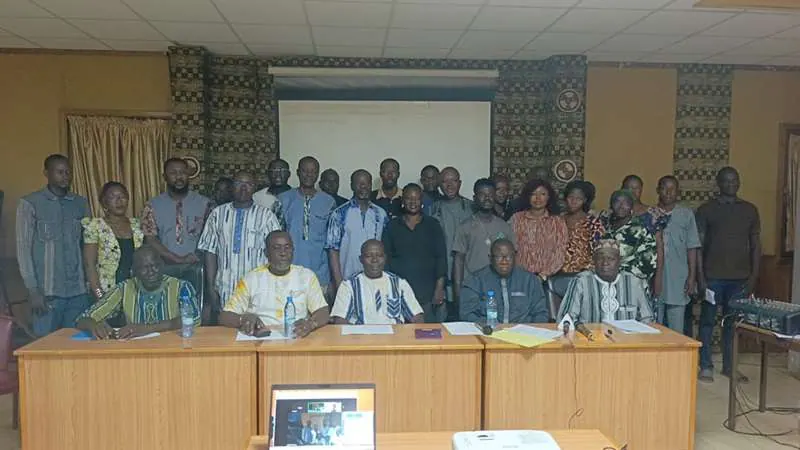
The Unitary Action of Syndicates (UAS) recently convened a workshop in Ouagadougou to enhance the capacity of trade unions in organizing workers on digital platforms. The event, which took place from September 17 to 19, 2026, was attended by union leaders and labor stakeholders. UAS President El Hadj Inoussa Sana highlighted the significant changes in the workforce due to technological advancements and digitalization of the economy. He emphasized that the platform economy offers new job opportunities and income sources but also poses challenges related to workers' rights, social protection, and collective representation.
The workshop aimed to equip union members with the knowledge, methods, and tools needed to understand the platform economy, identify workers, and organize them effectively. El Hadj Inoussa Sana noted that workers on digital platforms are integral to the workforce but often operate outside traditional structures, necessitating a review of union methods. The UAS president called for the development of new strategies to recruit and unionize platform workers, improve communication channels, and ensure their representation.
Coumba Diop, Country Director of the International Labor Organization (ILO) in Abidjan, highlighted the profound impact of digital platforms on the workforce. She noted that these platforms have become a significant part of the economy, particularly in sectors such as transportation, delivery, sales, and online services. In Burkina Faso, Diop cited statistics showing 28.1 million mobile connections and 5.75 million internet users in 2025, underscoring the vast potential of digital platforms.
However, Diop also pointed out the challenges faced by workers on these platforms, including unstable incomes, inadequate social protection, occupational risks, long working hours, and difficulties in understanding and contesting algorithmic decisions. The adoption of ILO Convention 193 on decent work in the platform economy in June 2026 was hailed as a significant step forward. The convention addresses key issues such as freedom of association, collective bargaining, social protection, and transparency in automated decision-making.
El Hadj Inoussa Sana emphasized the need for concrete actions to implement the new international norm. One of the main challenges discussed during the workshop was organizing dispersed platform workers who are difficult to reach through traditional union methods. Coumba Diop stressed the importance of unions engaging with these workers and finding innovative ways to organize them. The UAS president called on union members to reflect on new forms of recruitment, communication strategies, and mechanisms for effective representation.
The workshop provided a platform for union leaders to discuss strategies for adapting to the changing workforce dynamics. The UAS aims to enhance the capacity of trade unions to organize and represent workers on digital platforms effectively. By doing so, the organization seeks to address the challenges faced by platform workers and promote decent work conditions.
The event concluded with a renewed commitment to addressing the challenges posed by the platform economy. Trade unions in Burkina Faso are expected to play a more active role in organizing and representing workers on digital platforms. The adoption of Convention 193 and the UAS workshop mark significant steps toward promoting decent work conditions and protecting the rights of platform workers in Burkina Faso.
Key points
- The Unitary Action of Syndicates (UAS) in Burkina Faso has called on trade unions to adapt their methods to organize workers on digital platforms effectively.