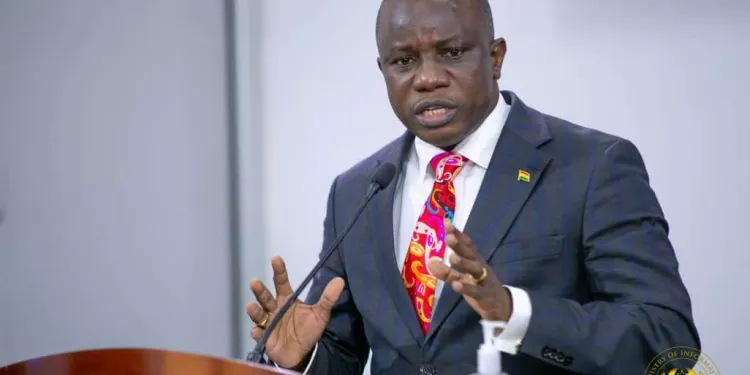
Former Minister of Defence, Dominic Nitiwul, has clarified that officials of the Narcotics Control Commission (NACOC) were not removed from the Tema Port under the previous administration. Speaking on TV3's The KeyPoints on September 19, Mr Nitiwul said NACOC officers remained at the port but were only prevented from participating in physical container inspections. He explained that the decision was part of broader port reforms introduced in 2018.
According to Mr Nitiwul, the presence of over 20 state agencies involved in inspecting containers at the ports caused heavy delays and complaints from importers and the business community. He said government, through a Cabinet memo, reduced the inspection agencies to just three – the Ghana Revenue Authority, the Ghana Ports and Harbours Authority, and the Ghana Standards Authority – to ease congestion. This move aimed to prevent the inconvenience caused to customers and the corruption that had become prevalent.
Mr Nitiwul stated that multiple inspections had become an avenue for extortion and bureaucratic delays. The 2018 decision to exclude NACOC from the Joint Container Inspection regime has been criticised by security analysts for weakening Ghana's ability to detect narcotics. This decision has been questioned following the interception of a container of plastic waste originating from Ghana at the Port of Dunkirk in France on September 7.
French Customs discovered 3.9 metric tonnes of cocaine valued at about €225 million concealed in the shipment. The incident has put the spotlight on Ghana's port security and the role of NACOC in inspecting containers. President John Dramani Mahama convened a high-level emergency meeting at the Presidency on Wednesday, September 17, with stakeholders in national security, narcotics control and the transport sector.
At the meeting, the President directed that NACOC be immediately reinstated to the Joint Container Inspection regime. A senior government official said, "You cannot fight narcotics if the lead anti-narcotics agency is taken out of the port." President Mahama also gave all security and regulatory agencies operating at Ghana's ports two weeks to submit a comprehensive framework to harmonise and coordinate operations.
The President announced the formation of a Joint Taskforce to streamline inspections and reduce bureaucratic delays. NACOC has since arrested three suspects in Ghana in connection with the 3.9-tonne cocaine shipment, which French and Dutch authorities have linked to fugitive Dutch drug lord Jos Leijdekkers, known as "Bolle Jos." The arrests demonstrate NACOC's crucial role in combating narcotics.
The incident and subsequent reactions highlight the need for effective coordination and collaboration among security and regulatory agencies operating at Ghana's ports. The government's decision to reinstate NACOC to the Joint Container Inspection regime and the formation of a Joint Taskforce aim to strengthen port security and prevent similar incidents in the future.
Key points
- NACOC was not removed from Tema Port but stopped from inspecting containers as part of 2018 port reforms.
- The 2018 decision to exclude NACOC from the Joint Container Inspection regime has been criticised for weakening Ghana's ability to detect narcotics.
- President Mahama has directed NACOC's reinstatement to the Joint Container Inspection regime and the formation of a Joint Taskforce to streamline inspections.