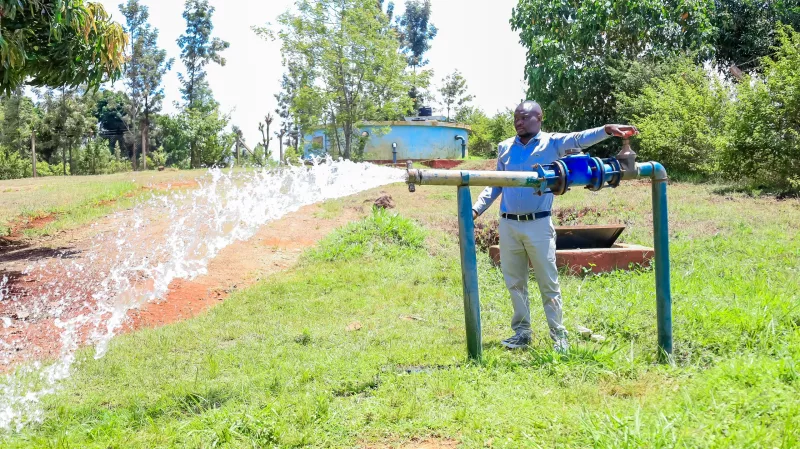
For years, residents of Mwea in Kirinyaga county relied on irrigation canals for drinking, cooking, washing, and other household needs, exposing families to water-borne diseases. The situation has changed following the implementation of the Mwea-Makima Water Project, with diarrhoea cases in the area falling significantly. According to county health data, the project has had a profound impact on the health and wellbeing of residents. The project is one of the major initiatives implemented by Governor Anne Waiguru's administration.
The Mwea-Makima Water Project has provided safe water to about 30,000 people in more than 7,500 households across Gathigiriri, Nyangati, Thiba, Mutiithi, Wamumu, and Tebere wards. Water and Environment executive Kinyua Mutugi said the project had addressed a longstanding challenge faced by residents who depended on irrigation canals for domestic use. He noted that before the project's implementation, people were exposed to water-related diseases due to the use of contaminated water from rice canals.
The project has extended water services to various areas, including Rurii, Mutiithi town, Maendeleo, Thiba North and South, Haraka, Ngurubani town, Kimbimbi, Mbui Njeru, and parts of Nyangati, as well as villages across Gathigiriri. More than 200 water projects have been implemented during Waiguru's tenure, improving access to clean water while supporting better hygiene and sanitation. Her administration has invested in water pipelines, storage tanks, and boreholes across the county to improve water connectivity.
County Director of Public Health Peter Irungu said routine health data showed a significant decline in diarrhoea cases in Mwea following increased access to clean water. He said the area recorded 19,061 diarrhoea cases in the 2018/19 financial year, but the number had dropped to 6,900 cases by the 2025/26 financial year, representing a reduction of about 63%. This decline demonstrates the health benefits of investing in safe water, sanitation, and hygiene.
Residents have felt the impact of the project in their homes and businesses. Hotel operator Henry Mugo from Tebere ward said clean water was now reaching areas that had previously struggled with supply. He noted that improved water access had benefited businesses and households in remote areas, including Githogondo. Mugo expressed satisfaction with the quality of the water, saying it has reduced stomach problems.
The gains in water, hygiene, and sanitation have also been complemented by the construction and operationalisation of the Kerugoya-Kutus Bulk Sewer Project, which has improved waste management while reducing health and environmental risks. Mutugi said residents previously relied on exhausters and biodigesters to manage waste, but the sewer system had provided a more efficient way of disposing of wastewater and reducing the risk of contamination and pollution.
The sewer project has benefited both private and public institutions, particularly in Kerugoya and Kutus. At Alber School in Kutus, proprietor Alfred Nyaga said connecting the institution to the sewer system had improved hygiene and eliminated the unpleasant smell that previously affected the school. Nyaga noted that the project has relieved the school of the exorbitant cost of emptying septic tanks.
Key points
- The Mwea-Makima Water Project has reduced diarrhoea cases by 63% in Kirinyaga county, benefiting 30,000 people across 7,500 households.