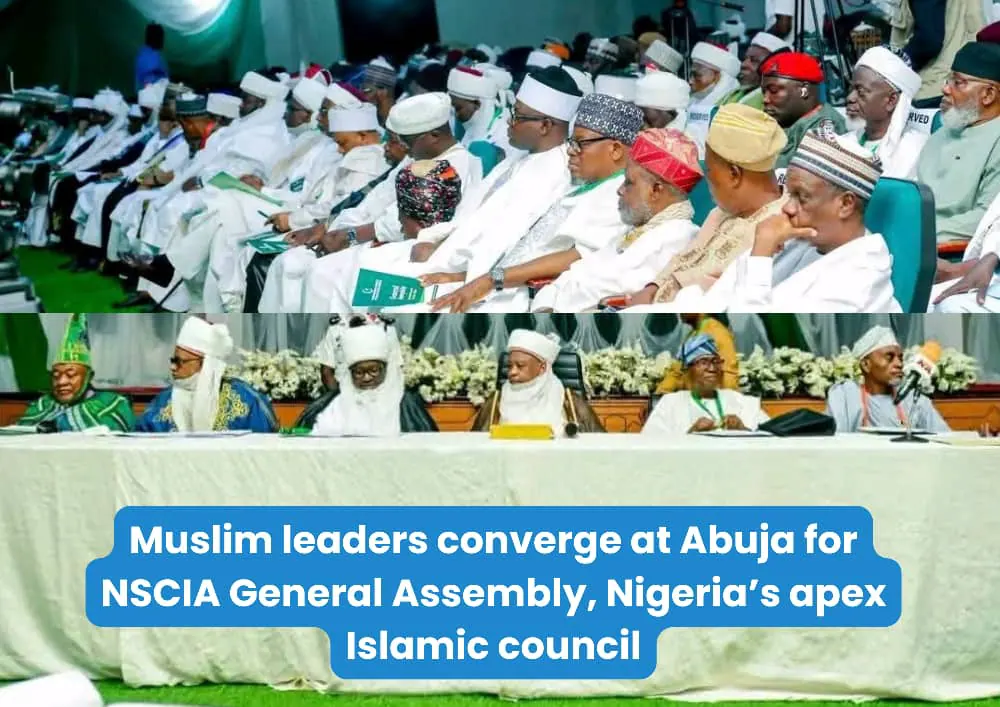
The Nigerian Supreme Council for Islamic Affairs (NSCIA) has convened its General Assembly in Abuja, bringing together Muslim leaders, traditional rulers, and prominent personalities to discuss issues affecting the Muslim Ummah and Nigeria. The assembly, held on October 1, 2026, at the National Mosque, was presided over by the Sultan of Sokoto, Alhaji Muhammad Sa'ad Abubakar. This gathering marked the first full meeting of the Council's highest decision-making organ in about seven years.
The General Assembly featured discussions on Muslim unity, religious freedom, education, Hajj administration, and public responsibility. The gathering also included a Special National Prayer for Nigeria, held on September 30, which sought divine guidance, protection, and blessings for the country and its citizens. Representatives from the 36 states and the Federal Capital Territory were in attendance, making it a broad and national representation.
Sultan Abubakar explained that the long interval between General Assemblies was due to financial constraints and the need for certain matters to be considered by the full General Assembly. He described the meeting as an opportunity for Muslims to come together as "one big family of Islam" and deliberate on matters affecting the Ummah and the country. The Sultan urged Muslims to pay greater attention to their responsibilities, citing the significant situation in Nigeria and the world.
Muslim unity was a dominant theme of the Assembly, with the Sultan stressing the importance of Muslims working together despite differences. He urged Muslims to remain conscious of their shared faith and responsibilities while respecting differences within the wider society. The Council's structure brings together different Islamic organisations, State Councils, and Muslim stakeholders, giving the General Assembly a national platform for consultation and coordination.
The Sultan addressed the issue of religious freedom and conversion, stressing that Islam does not support coercion in matters of faith. He called for Muslims to be allowed to practise their religion without hindrance while also urging them to respect the rights and freedoms of people of other faiths. The Sultan also recognised the contributions of Muslims who serve the community without seeking public recognition.
A major leadership development at the General Assembly was the ratification of the appointment of Alhaji Rasaki Oladejo, President of the Muslim Ummah of South West Nigeria (MUSWEN), as a member of the Council's Board of Trustees. Oladejo, an eminent financial expert and former Deputy Director General of the Nigerian Stock Exchange, succeeds the late Alhaji (Dr) Sakariyau Olayiwola Babalola. This appointment strengthens the representation of the South West Muslim community within the national Islamic council.
The NSCIA General Assembly concluded with a call for Muslims to be more conscious of their responsibilities and to work towards unity and peaceful coexistence. The Sultan clarified the Council's position on politics, stressing that it is not a political organisation or a vehicle for partisan politics. The Council engages political actors and governments to address Muslim concerns, but it does not intend to become a partisan political organisation.
Key points
- The NSCIA General Assembly was held in Abuja on October 1, 2026.
- The Sultan of Sokoto, Alhaji Muhammad Sa'ad Abubakar, presided over the assembly.
- Alhaji Rasaki Oladejo was appointed as a member of the Council's Board of Trustees.