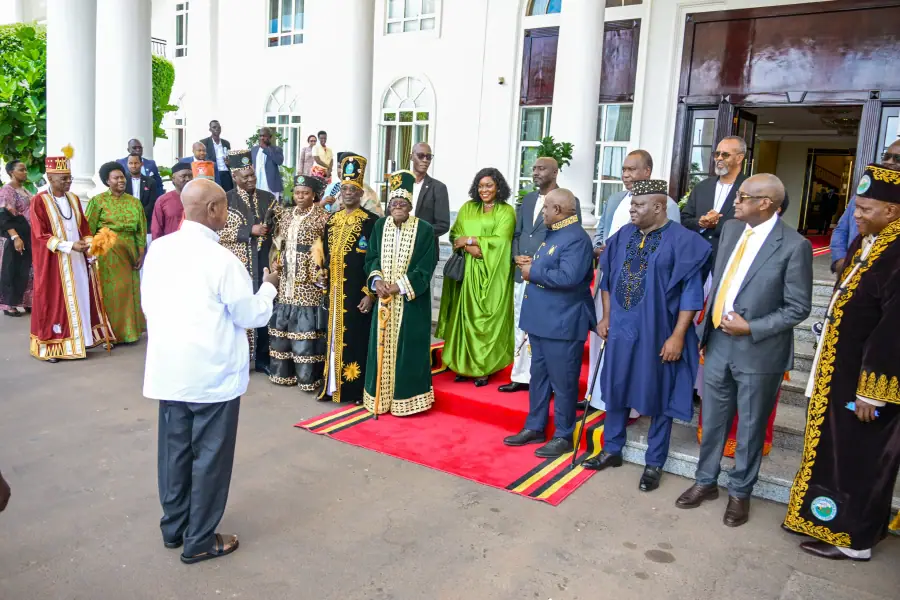
President Yoweri Kaguta Museveni has called on traditional and cultural leaders across Uganda to strengthen national unity, preserve indigenous knowledge, and promote cultural heritage. He made the call while addressing cultural leaders from across Uganda during the Cultural Leaders Conference held at State House Entebbe. Museveni emphasized the importance of cultural institutions in preserving the country's diverse cultural identities while contributing to efforts aimed at building a united, peaceful, and prosperous nation.
Museveni noted that indigenous African societies had well-established economic and social systems built around agriculture, livestock keeping, crafts, traditional medicine, and other specialized occupations, collectively described as Emyooga. These traditional occupations provided communities with specialized skills, livelihoods, and economic foundations that remain relevant to Uganda's development aspirations. He observed that tribal chauvinism and inadequate integration weakened African societies, limiting their ability to unite and maximize opportunities for collective prosperity.
The President said this historical experience informed the National Resistance Movement (NRM) Government's emphasis on patriotism and Pan-Africanism, which he described as important principles for overcoming ethnic divisions and promoting broader economic cooperation. He urged cultural leaders to encourage their communities to embrace national identity and recognize the importance of integration beyond tribal boundaries. Museveni emphasized that Uganda's cultural institutions have an important responsibility to preserve the country's diverse cultural identities.
According to Museveni, cultural leaders play a critical role in promoting cultural heritage and preserving indigenous knowledge. He encouraged them to work with the government to develop a comprehensive strategy for cultural preservation and promotion. The President also acknowledged the importance of cultural institutions in promoting national unity and stability. He urged cultural leaders to use their influence to promote peaceful coexistence and social cohesion.
The Cultural Leaders Conference held at State House Entebbe brought together cultural leaders from across Uganda to discuss issues related to cultural preservation and promotion. The conference provided a platform for cultural leaders to share their experiences and best practices in promoting cultural heritage. Museveni's address to the conference was part of his efforts to engage with cultural leaders and encourage them to play a more active role in promoting national development.
The President's call to cultural leaders comes at a time when Uganda is grappling with issues related to cultural preservation and promotion. The country has a rich cultural heritage, with over 50 languages spoken and a diverse range of cultural practices. However, cultural institutions face numerous challenges, including inadequate funding and lack of support from the government. Museveni's address to cultural leaders is expected to inspire a renewed commitment to cultural preservation and promotion.
In conclusion, President Museveni's address to cultural leaders emphasized the importance of preserving Uganda's diverse cultural identities and promoting cultural heritage. He urged cultural leaders to work with the government to develop a comprehensive strategy for cultural preservation and promotion. The President's call to action is expected to inspire a renewed commitment to cultural preservation and promotion, and to contribute to Uganda's socio-economic transformation.
Key points
- President Museveni urges cultural leaders to preserve Uganda's diverse cultural identities and promote cultural heritage.
- The President emphasizes the importance of patriotism and Pan-Africanism in overcoming ethnic divisions and promoting broader economic cooperation.
- Cultural leaders play a critical role in promoting cultural heritage and preserving indigenous knowledge.