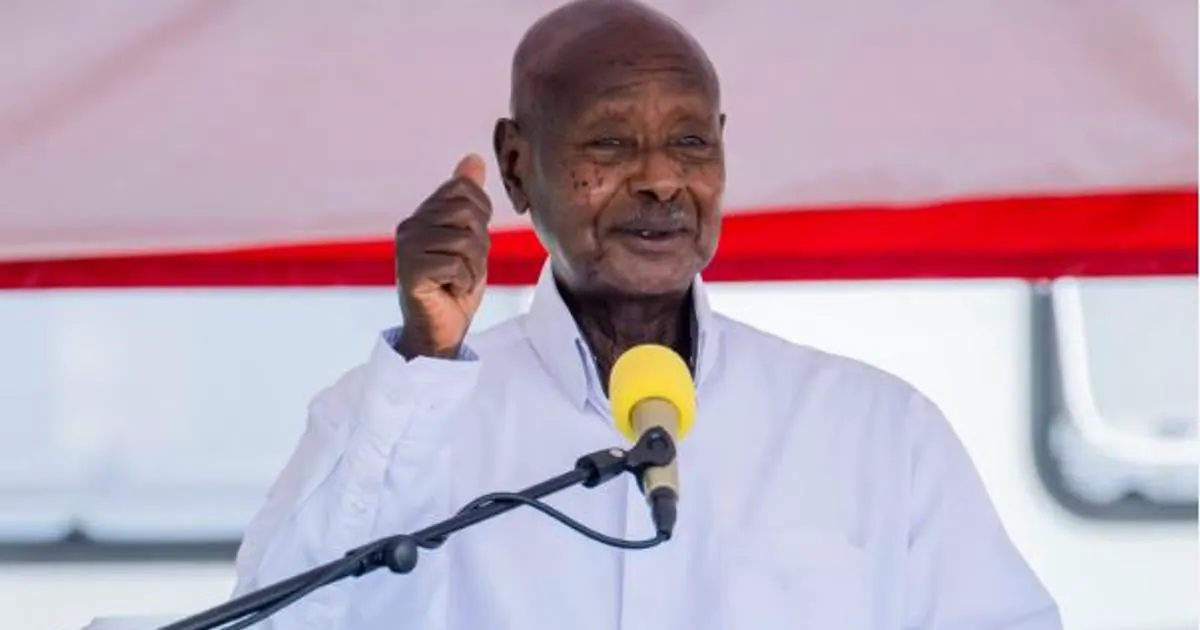
Uganda's President Yoweri Museveni has made shocking revelations about a government-to-government fuel deal between Uganda and Kenya. On September 18, Museveni disclosed that Kenya had duped Uganda into purchasing petroleum products through middlemen, contrary to the initial agreement. This deal was presented as a government-to-government arrangement aimed at reducing fuel prices for citizens. However, Museveni revealed that Uganda ended up paying more due to the involvement of middlemen.
According to Museveni, a Kenyan senator was the first to bring this issue to his attention. Subsequent investigations by Ugandan authorities led to the termination of the deal. Museveni made these statements during the groundbreaking ceremony for a 320-million-litre petroleum storage terminal in Mpigi District, Uganda. Data presented at the event supported his claims, showing that Uganda paid a premium of $118 per metric tonne for diesel under the G-to-G deal, compared to $83 under its current arrangement.
The data also revealed that Uganda paid $97.50 per metric tonne for petrol, which fell to $61.50 per metric tonne under the new arrangement. For aviation fuel, the premium decreased from $114.25 to $79.25 per metric tonne. These revelations have sent shockwaves across the region, placing Kenyan President William Ruto and his administration under scrutiny. The deal was initially rolled out by Ruto as a way to lower fuel prices for Kenyan citizens.
In response to Museveni's statements, the Motorists Association of Kenya (MAK) has demanded a full forensic audit of Kenya's government-to-government fuel procurement system. The association questions the transparency of the fuel-pricing system in Kenya, citing concerns about cartels and middlemen. MAK also called for a thorough scrutiny of the Energy and Petroleum Regulatory Authority (EPRA) to address these concerns.
The MAK demands include a complete disclosure of the actual landed cost of every petroleum cargo, the parties involved, and every margin added before the product reaches the consumer. They also request an independent review of EPRA's pricing framework to ensure its independence and transparency. Additionally, MAK insists that anyone found guilty of fraud, abuse of office, or unlawful enrichment must face the law.
EPRA currently calculates maximum pump prices using a statutory pricing formula that includes landed cost, transport, storage, margins, taxes, and other approved costs. However, the public has raised concerns about the verification and independence of these components. The motorists association emphasizes the need for transparency and accountability in the fuel-pricing system.
The controversy surrounding the G-to-G fuel deal has raised significant questions about Kenya's fuel procurement system. The Kenyan government must address these concerns and provide transparency to regain public trust. The situation remains unfolding as stakeholders await further developments and actions from the Kenyan administration.
Key points
- - The G-to-G fuel deal between Uganda and Kenya involved middlemen, causing Uganda to pay more for petroleum products. - The Motorists Association of Kenya demands a forensic audit of Kenya's fuel procurement system. - The controversy has raised concerns about the transparency and accountability of Kenya's fuel-pricing system.