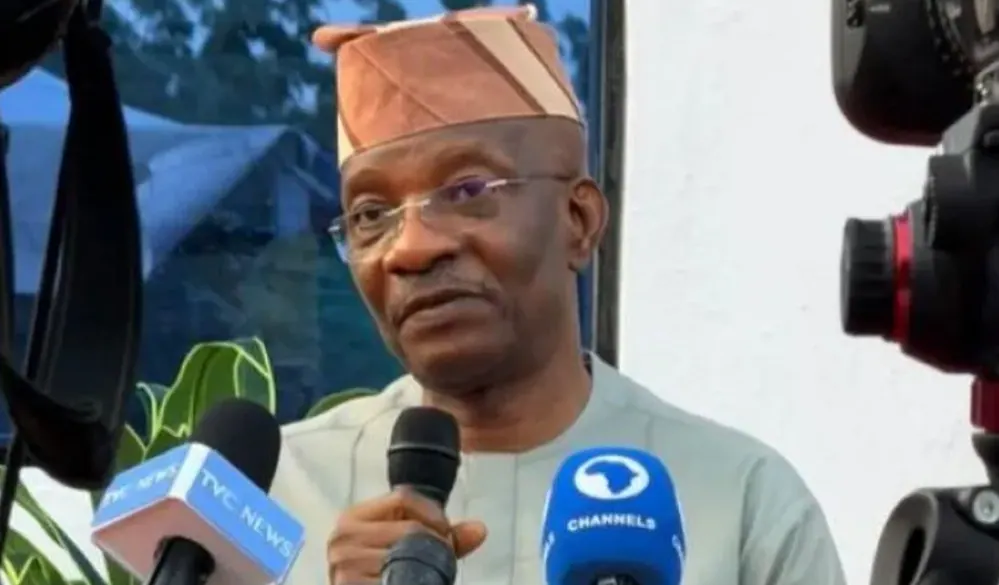
Former Inspector-General of Police, Dr. Kayode Egbetokun, has called for a constitutionally defined multi-level policing system in Nigeria. He made this statement at the 20th International Conference and General Assembly of the Society for Peace Studies and Practice in Ibadan, Oyo State. Egbetokun emphasized that maintaining a single federal police structure for a population of over 230 million people is inherently ungovernable. He stressed the need for a fundamental reform of institutional governance to address Nigeria's internal security deficit.
Egbetokun suggested that a multi-level policing system comprising federal, state, and community levels would be more effective. He advised policymakers to approach the devolution of policing powers to states and local communities with caution to avoid chaos. According to Egbetokun, security governance means clarity of roles. He also noted that local security challenges are tied to global criminal syndicates, rendering isolated national responses ineffective against organized violence.
The former IGP observed that terrorism, banditry, cybercrime, arms trafficking, drug trafficking, and illicit financial flows are not local problems but global networks with local franchises. He cited the example of an AK-47 recovered from a forest in Zamfara, which was likely manufactured in Eastern Europe, trafficked through Libya, and financed with ransom from kidnapping. Egbetokun emphasized that Nigeria's local insecurity is part of a global supply chain.
Egbetokun urged a shift in national priorities from rigid state protection to citizens' welfare. He insisted that economic deprivation breeds violent instability and that policing poverty with bullets is a losing strategy. The former IGP called for a redefinition of the National Security Strategy around the daily security of Nigerians, including food security, job security, health security, and school security.
To improve operational tactics, Egbetokun recommended data-driven strategies and tighter oversight of digital spaces. He suggested building a security knowledge economy and establishing research centers within police colleges, military institutions, and security agencies. Egbetokun also emphasized the need to govern the information space against disinformation, hate speech, and extremist propaganda while protecting free speech.
INEC Chairman, Prof. Joash Amupitan, acknowledged the rising wave of insecurity across the country over the past four years. He cited the spread of insurgency, organized banditry, regional agitations, mass abductions, and persistent attacks on electoral facilities as major hurdles facing election management. Amupitan emphasized that the Commission is drawing on institutional experience and conducting comprehensive risk assessments to safeguard voters, ad-hoc personnel, and electoral infrastructure.
Amupitan stressed that ensuring voting rights in conflict-affected areas is both a logistical necessity and a fundamental obligation of equal citizenship. He commended the Society for Peace Studies and Practice for providing a platform to strengthen national preparedness against borderless threats like extremist ideology, illicit finance, and regional instability. The event provided a forum for stakeholders to discuss security governance and global dynamics.
Key points
- Dr. Kayode Egbetokun advocates for a multi-level policing system in Nigeria.
- The system should comprise federal, state, and community levels with clear rules of engagement, funding, and accountability.
- Egbetokun emphasizes the need for a fundamental reform of institutional governance to address Nigeria's internal security deficit.